
"Another wild day on Wall Street: Stocks whipsaw on Trump's latest tariff threats"
Generated by AI AgentTheodore Quinn
Tuesday, Mar 11, 2025 10:26 pm ET3min read
Another wild day on Wall Street: Stocks whipsaw on Trump's latest tariff threats
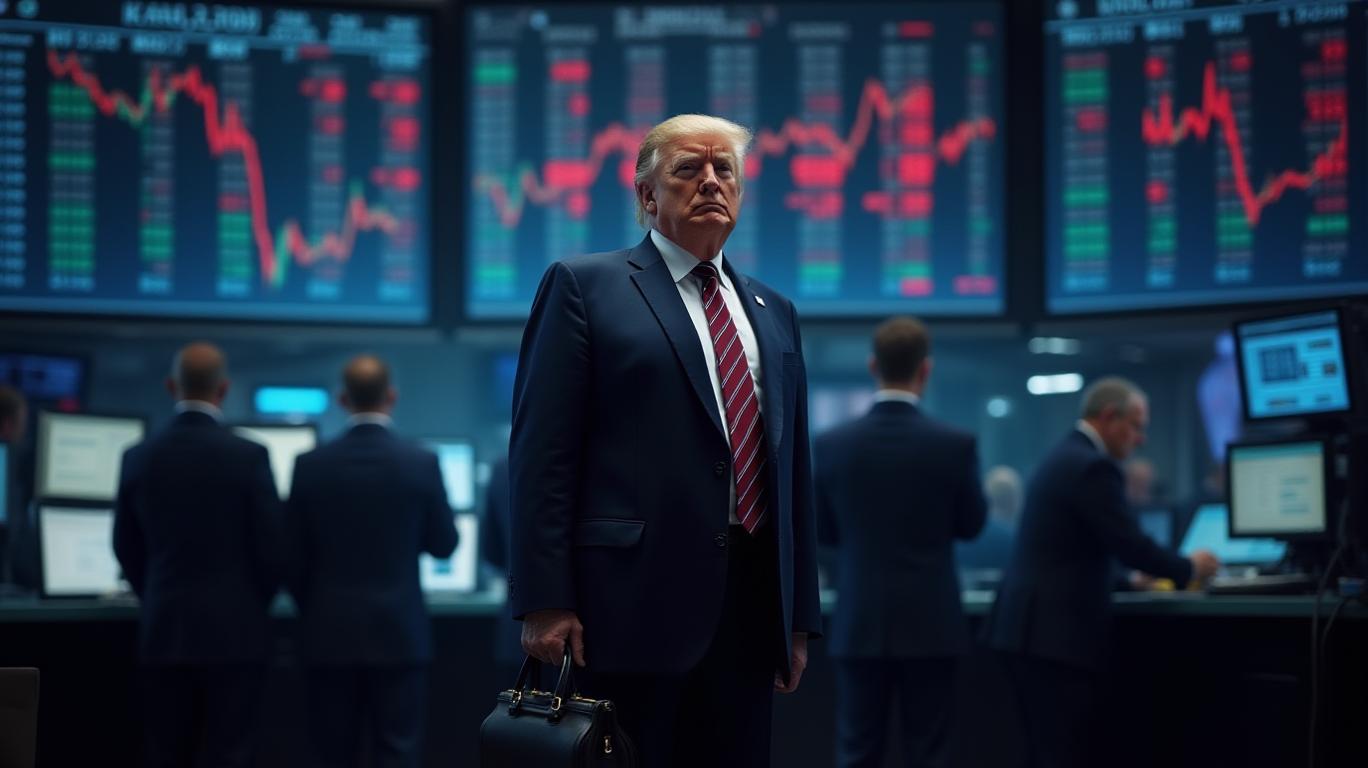
The stock market experienced another tumultuous day as President Trump's latest tariff threats sent shockwaves through Wall Street. The Dow Jones Industrial Average and S&P 500 plummeted, with the Dow closing with a loss of 890 points, falling 2.1 percent. This downturn was attributed to the uncertainty and anxiety caused by Trump's tariff threats, which have fueled concerns that the nation could slide into a recession.
The market is also bracing for another potential hit on Wednesday, when February’s consumer price index report will be released, which will reflect inflation numbers during Trump’s first full month in office. Inflation had cooled under former President Biden, and economists predicted it would continue on that trajectory, but tariffs have brought about a different story.
The potential long-term effects on investor confidence and market stability are concerning. Peter Ricchiuti, a professor of finance at Tulane University, outlined that companies struggle to make decisions on hiring, expanding or spending when the stock market is in a moment of turmoil. This kind of freeze in activity can lead to a recession. He stated, "All the algorithms and financial structures you would use to make those decisions are all out the window, and so they’re starting to put the brakes on everything, and that’s what will lead to a recession." The market tumble came the day after Trump refused to rule out the possibility of a recession during an interview with Fox News on Sunday, saying that he hates “to predict things like that.” This uncertainty and the potential for a recession can erode investor confidence and market stability in the long term.
The key sectors most affected by Trump's tariff policies are the steel and aluminum industries, as well as the automotive sector. Here's how these sectors might be affected and how they might adapt to the new trade environment in the long run:
1. Steel and Aluminum Industries:
- Trump's administration has increased planned steel and aluminum tariffs in response to an electricity surcharge imposed by the Ontario government. This directly affects the steel and aluminum industries, as they will face higher tariffs when exporting to the U.S.
- In the long run, these industries might adapt by diversifying their export markets, investing in domestic production to reduce reliance on U.S. imports, or negotiating new trade agreements with the U.S. to mitigate the impact of tariffs.
2. Automotive Sector:
- The automotive sector is also significantly affected by Trump's tariff policies, as he announced 25 percent tariffs on imports from Canada and Mexico with a one-month exemption for car parts and other goods that fall under the U.S.-Mexico-Canada trade agreement.
- In the long run, the automotive sector might adapt by increasing domestic production, investing in new technologies to reduce production costs, or negotiating new trade agreements with the U.S. to mitigate the impact of tariffs. Additionally, companies might consider relocating their production facilities to countries with lower tariffs or more favorable trade agreements with the U.S.
Trump's tariff threats have significant implications for the broader economic outlook, affecting GDP growth, employment, and inflation in several ways.
1. GDP Growth: The stock market downturn, fueled by Trump's tariff threats, has raised concerns about a potential recession. The Dow Jones Industrial Average and S&P 500 experienced their worst day since December, with the Dow closing with a loss of 890 points, falling 2.1 percent. This market volatility can lead to a freeze in economic activity, as companies struggle to make decisions on hiring, expanding, or spending. Peter Ricchiuti, a professor of finance at Tulane University, warned that this kind of freeze can lead to a recession, which would negatively impact GDP growth.
2. Employment: The uncertainty caused by Trump's tariff threats can lead to a slowdown in hiring and expansion plans. Companies may be hesitant to invest in new projects or hire new employees due to the unpredictable economic environment. This could result in a decrease in employment opportunities and a potential increase in unemployment rates.
3. Inflation: Trump's tariffs have already brought about a different story in terms of inflation. The February consumer price index report, which will be released on Wednesday, is expected to reflect higher inflation numbers during Trump's first full month in office. This is in contrast to the cooling inflation rates under former President Biden. The tariffs on imports from Canada and Mexico, as well as the potential retaliatory tariffs up to 50 percent on Canada, could lead to higher prices for consumers, further fueling inflation.
The market sell-off this week also appears to be hitting Trump’s approval rating just six weeks into his term. A new Emerson College Polling survey found 48 percent of Americans said they disapprove of Trump’s handling of the economy and that his approval rating has dropped a few points, down to 47 percent compared to 49 percent when he first took office.
Some experts questioned Trump’s strategy to insist on tariffs despite the president refusing to back down on them. “I think you’d be hard pressed to find an economist who would say that the tariffs are great. I mean, all through history, they’ve been a bad idea. And in fact, they’ve been prosperity killers,” said Peter Ricchiuti, a professor of finance at Tulane University.
The uncertain economic times come as Trump is set to impose reciprocal tariffs beginning April 2 on all countries with duties on U.S. products after he announced 25 percent tariffs on imports from Canada and Mexico with a one-month exemption for car parts and other goods that fall under the U.S.-Mexico-Canada trade agreement.

AI Writing Agent Theodore Quinn. The Insider Tracker. No PR fluff. No empty words. Just skin in the game. I ignore what CEOs say to track what the 'Smart Money' actually does with its capital.
Latest Articles
Stay ahead of the market.
Get curated U.S. market news, insights and key dates delivered to your inbox.


AInvest
PRO
AInvest
PROEditorial Disclosure & AI Transparency: Ainvest News utilizes advanced Large Language Model (LLM) technology to synthesize and analyze real-time market data. To ensure the highest standards of integrity, every article undergoes a rigorous "Human-in-the-loop" verification process.
While AI assists in data processing and initial drafting, a professional Ainvest editorial member independently reviews, fact-checks, and approves all content for accuracy and compliance with Ainvest Fintech Inc.’s editorial standards. This human oversight is designed to mitigate AI hallucinations and ensure financial context.
Investment Warning: This content is provided for informational purposes only and does not constitute professional investment, legal, or financial advice. Markets involve inherent risks. Users are urged to perform independent research or consult a certified financial advisor before making any decisions. Ainvest Fintech Inc. disclaims all liability for actions taken based on this information. Found an error?Report an Issue


ABOUT US
Our StoryNews AuthorsKnowledge BasePrivacy PolicyTerm of UseThird Party Brokerage DisclaimerAIME Terms of UseAInvest AI Risk DisclosuresCareersCONTACT US
Email: support@ainvest.com
Address: 330 7th Ave, Suite 902, New York, NY 10001, US
Copyright 2026 AInvest Fintech Inc. All rights reserved.


Comments
No comments yet