
Wienerschnitzel's Walmart Play: A Recipe for Fast-Food Dominance
The fast-food industry is in the midst of a seismic shift. As consumers demand convenience, affordability, and novelty, brands are turning to strategic retail partnerships to capture market share. Wienerschnitzel, the world's largest hot dog franchise, has just made a bold move that could redefine its growth trajectory—and investors should take notice. By embedding its iconic hot dog stands inside Walmart stores, Wienerschnitzel is leveraging the retail giant's foot traffic to expand its footprint while minimizing costs. This isn't just a partnership; it's a blueprint for how quick-service brands can thrive in an evolving landscape.
The Strategic Play: Why Walmart?
Wienerschnitzel's six new Walmart locations—set to open by fall 2025 in cities like Puyallup, WA, and Reno, NV—are the first step in a calculated push into non-traditional venues. These stores are chosen not randomly but for their high-traffic profiles and underserved dining needs. By piggybacking on Walmart's existing infrastructure, Wienerschnitzel avoids the costly process of securing standalone locations. Instead, it gains instant access to millions of shoppers, who can now grab a Chili Cheese Dog or a Junkyard Dog alongside their groceries.
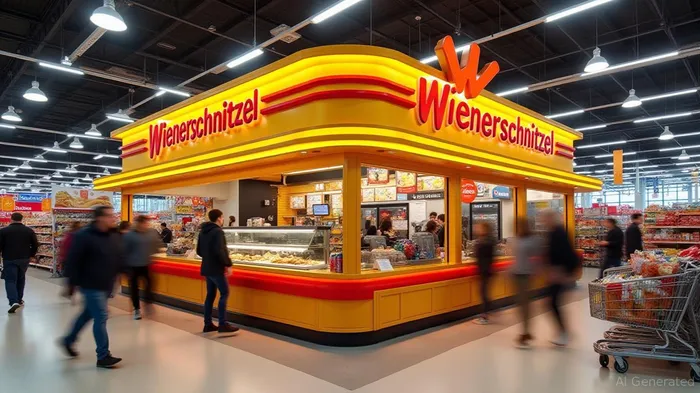
This partnership isn't just about convenience—it's about economies of scale. With each Walmart location operated by local franchisees (a model that has fueled Wienerschnitzel's success for decades), the brand retains minimal upfront capital expenditure while expanding its reach. Consider this: Wienerschnitzel already operates 340 franchised locations and has 50 more in development. Pairing that scale with Walmart's retail dominance could accelerate growth exponentially.
The Bigger Picture: Non-Traditional Growth
Walmart is just the tip of the iceberg. Wienerschnitzel's strategy goes far beyond grocery stores. The brand is eyeing airports, military bases, theme parks, and even convenience stores—any high-traffic venue where hungry customers need quick, craveable food. Shak Turner, the newly appointed Director of Franchise Expansion, calls this a “new era” for the brand, one that capitalizes on its West Coast legacy while filling a void for franchisees seeking diverse opportunities.
The data backs this approach. shows that brands like Dunkin' and Domino's, which have aggressively partnered with retailers and third-party platforms, have outperformed the broader restaurant sector. Wienerschnitzel's move mirrors this playbook, but with a twist: its menu—a mix of nostalgic classics (Tastee Freez desserts!) and bold innovations (Jalapeño Poppers?)—appeals to a broad demographic, from families to Gen Z snackers.
Tech-Driven Efficiency: The Secret Sauce
Behind the scenes, Wienerschnitzel is investing in technology to keep operations lean. Its March 2025 partnership with Presto Phoenix to deploy voice AI in drive-throughs isn't just a gimmick—it's a competitive edge. Faster order times, reduced labor costs, and seamless integration with Walmart's logistics could make these locations among the most efficient in the chain. As labor costs rise and consumer expectations for speed grow, this tech-first approach positions Wienerschnitzel to scale without sacrificing margins.
Risks? Sure. But the Upside is Massive.
Critics might question whether Walmart shoppers will prioritize hot dogs over, say, salads or sandwiches. Others might cite the challenges of operating in crowded food courts. But Wienerschnitzel's track record speaks for itself. Its franchising model has withstood decades of market shifts, and its menu has staying power—just look at the cult following for its Chili Cheese Dog. Meanwhile, Walmart's own struggles to revitalize its food offerings (think of its failed Sam's Club bakery) suggest it's eager to partner with brands that can drive traffic.
The Investment Thesis: Act Now
This isn't just a story about Wienerschnitzel—it's about the future of fast food. The brand's strategic pivot into retail partnerships, combined with its tech-driven efficiency and scalable franchise model, creates a compelling growth profile. While Wienerschnitzel isn't publicly traded (it's part of the Galardi Group), investors can still benefit by backing companies that share its DNA. Think of Restaurant Brands International (QSR), which owns Tim Hortons and Burger King, or Chipotle (CMG), which has mastered the “food in high-traffic places” strategy.
Alternatively, consider ETFs like the Consumer Discretionary Select Sector SPDR Fund (XLY), which holds retail and food giants, or the Global X Food & Agribusiness ETF (MOO), which tracks companies in the food industry. Wienerschnitzel's Walmart move is a harbinger of what's to come: a world where fast food isn't just eaten in restaurants but seamlessly integrated into every corner of daily life.
The clock is ticking. Wienerschnitzel's first Walmart locations open this fall—and so does the window to capitalize on this trend. For investors, this isn't just about hot dogs. It's about betting on a brand that's redefining what fast food can be.
— Joe Weisenthal

Delivering real-time insights and analysis on emerging financial trends and market movements.
Latest Articles
Stay ahead of the market.
Get curated U.S. market news, insights and key dates delivered to your inbox.


AInvest
PRO
AInvest
PRO



Comments
No comments yet