
Why NVIDIA's Recent Dip is Normal and What Investors Should Know
In recent months, NVIDIA's stock has experienced a decline.
Currently, the chipmaker's stock price has fallen to $116, a 14% drop from the historical high of $135 it reached in June. During the summer slump, the stock price once reached to its lowest at $98, a 38% decrease. Despite this, the stock price has increased nearly tenfold over the past five years.
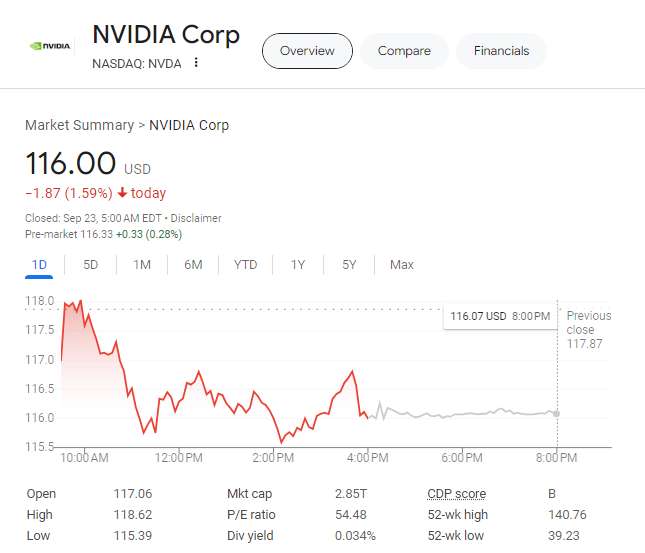
However, investors should not rush to sell: research shows that such declines in stocks like NVIDIA are normal, as their stock prices have experienced exponential growth.
A variety of related factors have contributed to the decline in the stock price of this artificial intelligence leader. When NVIDIA's stock price reached $135, investors locked in profits by selling. Emerging competition from chipmakers like AMD threatens some of NVIDIA's sales, making the relatively smaller AMD a more attractive choice at this time. At the same time, although the demand for AI chips is growing rapidly, it is well known that the growth of all chipmakers will slow down in the coming years.
This is not the end of NVIDIA's brilliant journey. For rare stocks that have experienced explosive growth, it is normal to have significant declines periodically. According to Trivariate Research's analysis of 84 stocks that have grown tenfold in five years, historically, the average maximum drawdown of these stocks is 48%.
The most severe selling is not worrying. Among the 84 stocks identified by Trivariate, the largest drawdown was GameStop's 89% over more than three years. But that stock is an exception; GameStop's rise was not due to the company's fundamentals. Its earnings have been shrinking, and the tenfold return in early 2021 was driven by the Reddit (RDDT.N) and meme stock craze.
NVIDIA is completely different from GameStop. According to FactSet's analysis, analysts still expect the chip company to achieve double-digit annual earnings growth in the coming years. NVIDIA's stock is currently trading at a lower short-term earnings expectation multiple, so continued earnings growth could drive the stock price up.
Such prospects make NVIDIA more like Tesla. In the five years ending in May 2017, Tesla's stock price increased more than tenfold. The demand for electric vehicles, like today's chip demand, is explosively growing. During those five years, Tesla's stock had the largest drawdown of 50%, which lasted for a year and a half until February 2016. Since then, the stock price has increased twentyfold. Yes, electric vehicle competition has emerged, but the overall industry growth is still favorable to Tesla.
Perhaps NVIDIA also has a similar future. Just hold on patiently and wait for the long-term returns.

Expert analysis on U.S. markets and macro trends, delivering clear perspectives behind major market moves.
Latest Articles
Stay ahead of the market.
Get curated U.S. market news, insights and key dates delivered to your inbox.
AInvest
PRO
AInvest
PRO



Comments
No comments yet