
Why Gas Utilities Are Struggling Despite Housing Market Shifts
The gas utilities sector has faced a puzzling decline over the past 42 days, with demand trends diverging from traditional housing market dynamics. While lower mortgage rates typically boost housing demand—and with it, energy consumption—the current environment tells a different story. Here's why gas utilities are under pressure despite shifts in the housing market, and what investors should do about it.
The Contradiction Unraveled
At first glance, the data appears contradictory: mortgage rates remain elevated, not low, stifling housing demand. The U.S. 30-year mortgage rate averaged 6.71% in early July, down slightly from recent peaks but still historically high. This has dampened both existing-home sales (down 5.1% year-over-year) and new construction (up only 3.2% YoY in June). High borrowing costs are the key culprit, making housing less affordable and slowing the pace of new builds.
Gas utilities, which rely on steady demand from households and businesses, are feeling the pinch. Lower housing activity means fewer new homes needing gas infrastructure, while existing homeowners may cut back on utility spending to cope with higher mortgage payments.
Key Data Drivers
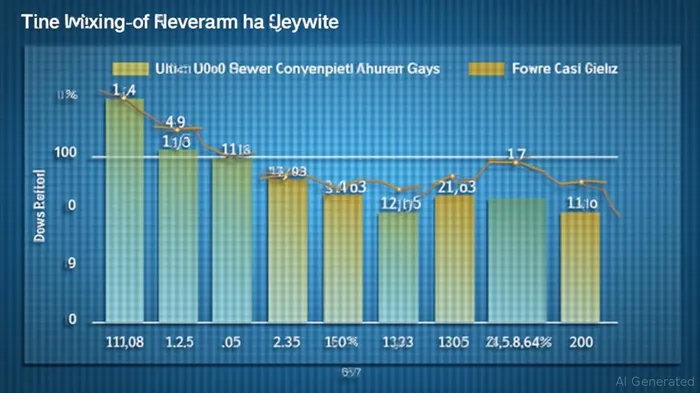
The chart above shows the tight correlation between rising rates and declining gas utility stocks. As rates climbed into late spring, XLU (the gas utility ETF) fell over 8%, reflecting investor skepticism about future demand.
Three Reasons Gas Demand Is Slipping
1. Solar Power's Surge
Solar generation increased by 30% year-over-year in May, displacing natural gas in the power sector. The EIA projects solar's share of U.S. electricity generation to hit 7% in 2025, up from 5% in 2024. This shift reduces the need for gas-fired power plants, especially during daylight hours.
Coal's Cost Advantage
Higher gas prices ($3.11/MMBtu in May 2025 vs. $2.19/MMBtu in 2024) made coal more economical. Coal-fired generation rose by 90 GWh/day in May, siphoning demand from gas.Regional Supply Constraints
Pipeline outages and maintenance in regions like the Pacific Northwest caused localized price spikes. For example, the Northwest Sumas spot price jumped by $1.52/MMBtu in early July due to constrained supply. Such volatility discourages long-term commitments to gas infrastructure.
The Housing Market's Role
While new construction is growing modestly, it's not enough to offset the drag from existing-home sales. The South, which accounts for nearly half of U.S. housing starts, saw a 10.5% MoM decline in May, while the West experienced a 5.4% MoM drop in existing-home sales. This regional mismatch leaves gas utilities with uneven demand patterns.
Investment Implications
The gas utilities sector faces a multi-year challenge. Until mortgage rates meaningfully decline or housing demand surges, utilities like Duke Energy (DUK) and Sempra Energy (SRE) will struggle. Investors should instead focus on sectors benefiting from new construction:
- Building Materials: Companies like Lowe's (LOW) and Wolfe Corporation (WOLF) are poised to gain as lower-priced new homes attract buyers.
- Real Estate Development: ETFs like the SPDR S&P Homebuilders ETF (XHB) have historically outperformed utilities in high-rate environments, delivering 20.34% annual returns from 2020–2025 during Fed rate-hold periods.
Conclusion
Gas utilities are caught in a perfect storm of high mortgage rates, renewable competition, and infrastructure bottlenecks. While housing starts show modest growth, it's not enough to offset the sector's headwinds. Investors would be wise to avoid utilities and instead bet on the construction-related sectors that thrive in this environment. The “higher for longer” Fed policy means this trend is likely to persist through 2025—and possibly beyond.
The chart underscores the stark divergence: XHB has gained over 25% since May 2023, while XLU has lost nearly 10%. This isn't just a short-term blip—it's a structural shift investors must acknowledge.

Stay ahead of the market.
Get curated U.S. market news, insights and key dates delivered to your inbox.
AInvest
PRO
AInvest
PRO



Comments
No comments yet