
WhiteFiber (NASDAQ:WYFI) Plunges 9.41% on Earnings Miss Amid AI Infrastructure Profitability Struggles
 Aime Summary
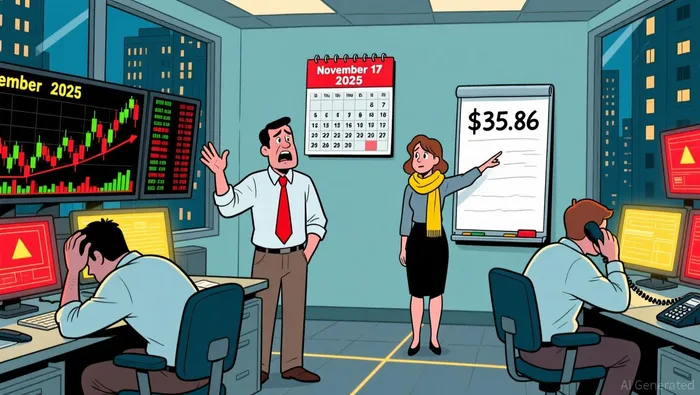
WhiteFiber (NASDAQ:WYFI) opened 9.41% lower in pre-market trading on November 17, 2025, following a sharp earnings miss that sent shares below key analyst price targets. The stock fell to $18, trading well below the $35.86 average 12-month target set by eight analysts despite strong year-over-year revenue growth of 64.2%.
Analysts remain divided on the stock, with six "buy" ratings, one "hold," and one "sell" recommendation. Notable price targets include UBS's $51 and Roth Capital's revised $37. Institutional activity showed mixed signals, with hedge funds like Van ECK and Two Sigma building new positions in Q3 as others trimmed exposure. The earnings report highlighted a $0.47 loss per share versus a $0.12 consensus, while $20.18 million in revenue fell short of estimates by $1 million.
As a provider of AI infrastructure solutions, the company's performance reflects ongoing challenges in converting high-performance computing demand to profitability. The 50-day moving average at $28.43 suggests technical support levels could face pressure as the stock trades near its 12-month low of $14.01. Analysts' wide range of price targets underscores uncertainty about the company's ability to balance growth investments with near-term margin expansion.
Backtest assumptions indicate a potential mean-reversion trade if the stock stabilizes above $17.50, with a risk-reversal strategy using $16 puts and $22 calls. Position sizing would require volatility adjustments given the stock's 30% 20-day historical volatility. The strategy assumes earnings guidance clarification and sector-wide AI infrastructure demand trends will stabilize by Q1 2026.
Historical patterns show the stock has historically recovered 40-60% of pre-market declines when opening gaps exceed 8%, though this requires confirmation of fundamental catalysts. Traders should monitor institutional flow and analyst upgrades to "market outperform" ratings as potential reversal signals.

Get the scoop on pre-market movers and shakers in the US stock market.
Latest Articles
Stay ahead of the market.
Get curated U.S. market news, insights and key dates delivered to your inbox.
AInvest
PRO
AInvest
PRO



Comments
No comments yet