
White House Unveils Crypto Strategy Amid Ongoing Reserve Secrecy
 Aime Summary
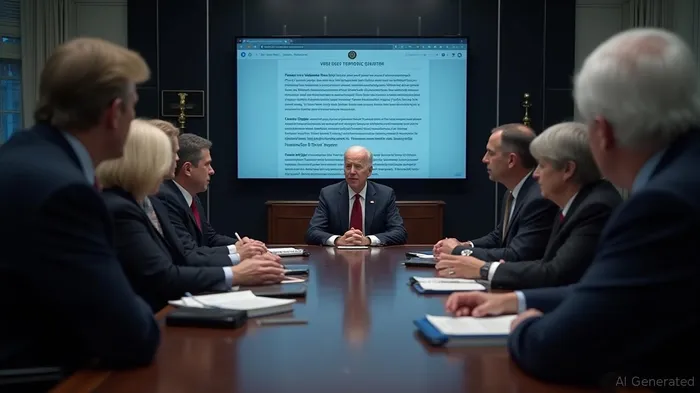
The White House recently released a 166-page report on digital assets, marking a pivotal shift in the U.S. government’s approach to the crypto sector. President Donald Trump, who has consistently championed a pro-crypto agenda, fulfilled a key campaign promise by establishing a working group composed of top administration figures, including Treasury Secretary Scott Bessent and AI and Crypto Czar David Sacks. This group was tasked with shaping a new regulatory environment for digital assets, a departure from the stricter enforcement approach taken by the previous administration [1].
The report outlines a multi-pronged strategy for advancing U.S. crypto policy, including the implementation of the Genius Act, a recently passed Congress bill regulating stablecoins, and the modernization of anti-money laundering rules. Administration officials have described the report as the “most comprehensive product ever produced regarding digital assets,” highlighting a shift toward collaboration and regulatory clarity [1].
Despite the report’s emphasis on regulatory development, it has been criticized for omitting specific details about the U.S. government’s own digital assetDAAQ-- holdings. While the administration has indicated that more information will be forthcoming, the absence of concrete data on the government’s digital asset reserve has sparked speculation and skepticism among market participants. Some industry observers argue that the lack of transparency undermines the report’s legitimacy as a strategic framework and reduces its value as a guide for future policy [1].
This development follows a broader trend of shifting political dynamics in the crypto space. The previous administration’s regulatory crackdown led to enforcement actions against major crypto companies, prompting the industry to shift its political strategy toward electing pro-crypto candidates. This effort appears to have borne fruit with Trump’s election and subsequent executive actions, including the formation of the working group and the pardon of Silk Road founder Ross Ulbricht [1].
The White House report also acknowledges the ongoing legislative challenges, particularly regarding the stalled market structure bill, which would provide a more comprehensive regulatory framework for cryptocurrency issuance and exchange operations. While the administration supports the House’s Clarity Act as a guiding framework, it has not yet secured broader legislative consensus. Until Congress passes a market structure bill, many participants in the crypto space will remain in regulatory limbo [1].
As the global interest in blockchain and digital assets continues to grow—particularly in regions such as the United Arab Emirates—the U.S. faces increasing pressure to establish a transparent and stable regulatory environment. Without a clear path for disclosing its own digital asset holdings, the U.S. risks falling behind in the global race for crypto leadership [1].
Sources:
[1] White House crypto report hails achievements, but offers no details on digital asset reserve (https://fortune.com/crypto/2025/07/30/trump-crypto-digital-assets-report-white-house-genius-act/)
[2] GCC BUSINESS WATCH (https://gccbusinesswatch.com/)

Stay ahead of the market.
Get curated U.S. market news, insights and key dates delivered to your inbox.


AInvest
PRO
AInvest
PRO



Comments
No comments yet