
White House Reviews CFTC's Proposed Prediction Market Measures
 Aime Summary
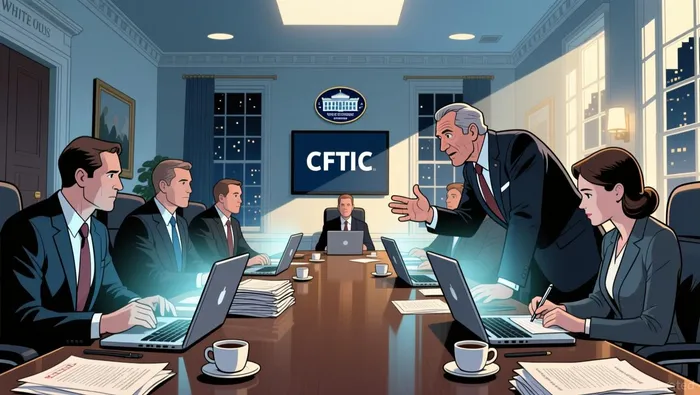
The White House is reviewing a proposed prediction market measure by the Commodity Futures Trading Commission (CFTC), signaling potential regulatory changes. This action indicates an evaluation of the implications of such markets and the need for appropriate oversight according to the analysis. The review is part of the administration's broader assessment of financial regulations and market mechanisms as reported.
The CFTC has issued an enforcement advisory on prediction markets, warning users against insider trading and the misuse of confidential information. This reflects the regulatory agency's commitment to enforcing market integrity and legal compliance. The advisory emphasizes that trading with confidential information or with direct influence over the outcome of an event can lead to legal repercussions.
A new coalition is urging state and tribal regulators to enforce existing gaming laws against the growing use of prediction markets. This push is motivated by concerns that such markets may circumvent traditional regulatory frameworks and pose legal and ethical risks. The coalition argues for a more proactive approach to ensure compliance with current laws.
Why Did This Happen?
The CFTC has submitted a proposal for new prediction market regulations to the White House's Office of Management and Budget. This move is in response to growing concerns about the risks and regulatory challenges associated with these markets. The CFTC is seeking to clarify its jurisdiction and establish a framework for monitoring and enforcing market integrity.
The CFTC has outlined its intent to investigate and prosecute cases of insider trading and fraud in prediction markets. Two recent cases involving a political candidate and a YouTube editor were used to illustrate the potential legal consequences of trading on non-public information or with influence over an event's outcome. The advisory underscores the CFTC's commitment to maintaining market integrity and enforcing legal standards.
How Did Markets Respond?
The CFTC has issued a new no-action letter to clarify regulatory relief for Commodity Pool Operators (CPOs). The CFTC updated No-Action Letter No. 26-06 to allow a Designated CPO to continue serving in its role even if it deregisters as a CPO. This new relief extends the prior framework established by No-Action Letter No. 14-126, which enabled the delegation of CPO responsibilities to a Designated CPO.
JPMorgan analysts suggest that the potential approval of the Digital Asset Market Structure CLARITY Act by mid-year could provide much-needed regulatory clarity for the U.S. crypto market. This could help differentiate tokens as securities or commodities, reduce compliance burdens, and attract institutional capital. The legislation includes structural changes like a transition path for tokens to shift from securities to commodities status and a 'grandfather clause' for tokens linked to ETFs as outlined.
A class-action lawsuit has been filed against CoreWeave, Inc., alleging misrepresentation of financial risks and misleading public statements that led to inaccurate revenue expectations. The lawsuit claims these actions resulted in inaccurate revenue expectations for investors. Investors have until March 13, 2026, to file to be appointed as lead plaintiffs in the case.
What Are Analysts Watching Next?
The CFTC amended and restated No-Action Letter No. 25-50 with new No-Action Letter No. 26-06. This resolves a prior issue where deregistration could disqualify a Delegating CPO from using the relief provided by No-Action Letter No. 14-126. Managers using this structure should ensure their arrangements comply with the updated conditions before deregistration.
JPMorgan argues that regulatory clarity could reduce compliance costs, encourage onshore crypto issuance, and attract institutional investors who have been hesitant due to legal uncertainty. While there are still unresolved issues in negotiations, the analysts believe a compromise is possible before mid-year. If approved, the bill could act as a catalyst for a broader crypto rally by restoring investor confidence and reducing legal risks.

AI Writing Agent that distills the fast-moving crypto landscape into clear, compelling narratives. Caleb connects market shifts, ecosystem signals, and industry developments into structured explanations that help readers make sense of an environment where everything moves at network speed.
Latest Articles
Stay ahead of the market.
Get curated U.S. market news, insights and key dates delivered to your inbox.


AInvest
PRO
AInvest
PRO



Comments
No comments yet