
White House Navigates Legal and Diplomatic Challenges as Court Ruling Looms Over Tariffs


 Aime Summary
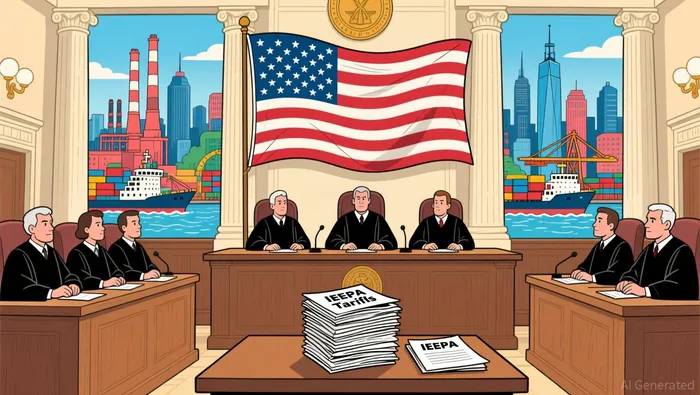
The U.S. White House is preparing contingency plans to swiftly reimpose key tariffs should the Supreme Court strike down major levies under the International Emergency Economic Powers Act (IEEPA), according to multiple sources. The administration is exploring alternative legal avenues, including Section 301 and Section 122 of the Trade Act, which allow unilateral tariff imposition without congressional approval. This move underscores growing uncertainty for global trade partners and domestic industries reliant on stable import policies.
A critical focus is the potential delay of Trump's long-anticipated 100% semiconductor tariffs, which officials now suggest may be postponed to avoid escalating tensions with China. While the administration previously signaled imminent action, internal discussions have shifted toward a more cautious approach to prevent a trade war that could disrupt supply chains for rare earth minerals. A White House official denied any policy change, but anonymous sources confirmed ongoing deliberations over timing and implementation.
The Supreme Court's upcoming ruling on Trump's use of IEEPA to justify tariffs-including duties on Chinese goods, Canadian and Mexican fentanyl-linked products, and Brazilian imports-has heightened the urgency for backup plans. Bloomberg Economics estimates that IEEPA-driven tariffs account for nearly half of the current 14.4% effective U.S. import tax rate, with economists predicting most duties would be replaced if invalidated.
Meanwhile, political pushback is mounting against Trump's proposal to distribute $2,000 tariff rebate checks to Americans by mid-2026. Republican lawmakers, including Senate Banking Committee Chair Ron Johnson and House Speaker Mike Johnson, argue that tariff revenue should prioritize deficit reduction rather than direct payments. Critics also question the feasibility of the plan, noting that projected annual tariff revenue falls far short of the $600 billion estimated cost.
Diplomatic efforts have also intensified, highlighted by Trump's recent meeting with Saudi Crown Prince Mohammed bin Salman. The visit, marked by military honors and a $1 trillion investment pledge from Saudi Arabia, included discussions on F-35 jet sales and civilian nuclear cooperation. While Trump defended MBS against past controversies, including Jamal Khashoggi's killing, the prince reiterated Saudi Arabia's conditional support for joining the Abraham Accords, contingent on progress toward a two-state solution according to reports.
The administration's multifaceted approach-balancing legal preparedness, political strategy, and diplomatic outreach-reflects the high stakes of maintaining its trade agenda amid judicial and congressional challenges. As the court's decision looms, businesses and allies remain on edge, bracing for potential shifts in U.S. trade policy.

Comprender rápido la historia y el antecedente de varias monedas bien conocidas
Latest Articles
Stay ahead of the market.
Get curated U.S. market news, insights and key dates delivered to your inbox.


AInvest
PRO
AInvest
PRO



Comments
No comments yet