
White House Crypto Czar: Stablecoin Legislation as Top Priority
Generated by AI AgentHarrison Brooks
Tuesday, Feb 4, 2025 8:19 pm ET2min read
ATLN--
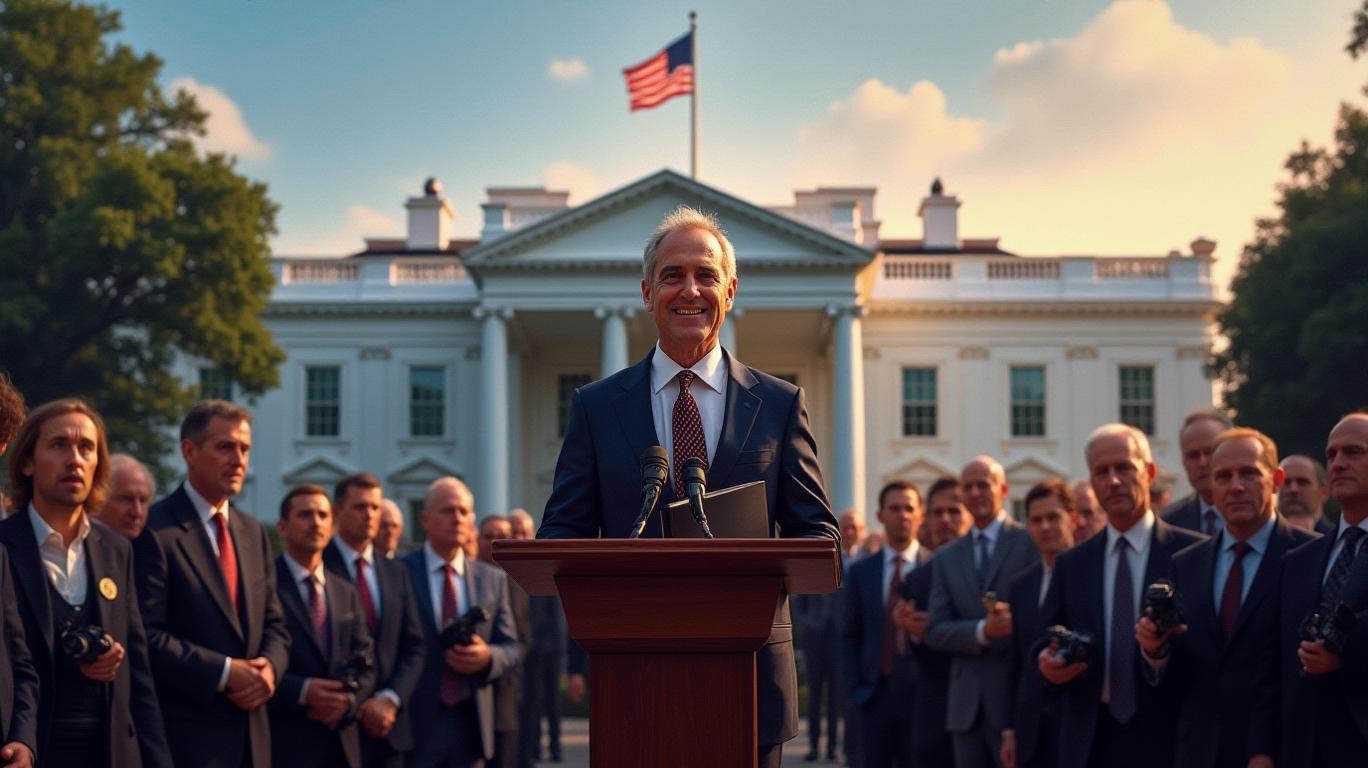
White House crypto czar David Sacks has made stablecoin legislation his top priority, aiming to provide regulatory clarity for the burgeoning digital asset market. In a recent press conference, Sacks emphasized the importance of establishing a clear framework for stablecoins, which have gained significant traction in the global financial landscape.
Stablecoins, such as Tether (USDT) and USD Coin (USDC), are digital assets pegged to the value of a stable asset, typically a fiat currency like the U.S. dollar. They have become increasingly popular due to their ability to provide the benefits of cryptocurrencies, such as decentralization and borderless transactions, while mitigating the volatility associated with other cryptocurrencies.
However, the lack of regulatory clarity has been a significant barrier to the widespread adoption of stablecoins. Sacks' focus on stablecoin legislation is aimed at addressing this issue and fostering a more robust and sustainable digital asset ecosystem.
The proposed stablecoin legislation, such as the Guiding and Establishing National Innovation for U.S. Stablecoins (GENIUS) Act, seeks to balance regulatory priorities around consumer and market protections while preserving the benefits of internationally fungible stablecoins. Key aspects of the proposed legislation include:
1. Establishing clear procedures for institutions seeking licenses to issue stablecoins.
2. Implementing reserve requirements and tailored regulatory standards for stablecoin issuers.
3. Applying the Federal Reserve's regulatory framework to depository institutions and the Office of the Comptroller of the Currency's framework for nonbank issuers for issuers of more than $10 billion of stablecoins.
4. Allowing for state regulation of issuers under $10 billion in market capitalization and providing a waiver process for issuers exceeding the threshold to remain state-regulated.
5. Establishing supervisory, examination, and enforcement regimes with clear limitations.
By addressing these aspects, the proposed legislation aims to provide a comprehensive regulatory framework for stablecoins, promoting innovation, consumer protection, market integrity, and financial stability.
The impact of stablecoin legislation on the global competitiveness of the U.S. crypto industry could be significant. By providing regulatory clarity, the U.S. could attract more innovation and investment in the crypto space, driving demand for U.S. Treasuries and maintaining the dollar's global dominance. Additionally, aligning U.S. stablecoin regulations with those in Europe, such as the Markets in Crypto-Assets (MiCA) regulation, could create a more harmonized regulatory environment for stablecoins across the Atlantic, making it easier for U.S. companies to operate in Europe and vice versa.
In conclusion, White House crypto czar David Sacks' focus on stablecoin legislation is a crucial step in fostering a more robust and sustainable digital asset ecosystem. By providing regulatory clarity, the U.S. can attract more innovation and investment in the crypto space, drive demand for U.S. Treasuries, and maintain the dollar's global dominance. As the crypto market continues to evolve, it is essential for policymakers to adapt and create a regulatory environment that supports responsible innovation and protects consumers.
USDC--
White House crypto czar David Sacks has made stablecoin legislation his top priority, aiming to provide regulatory clarity for the burgeoning digital asset market. In a recent press conference, Sacks emphasized the importance of establishing a clear framework for stablecoins, which have gained significant traction in the global financial landscape.
Stablecoins, such as Tether (USDT) and USD Coin (USDC), are digital assets pegged to the value of a stable asset, typically a fiat currency like the U.S. dollar. They have become increasingly popular due to their ability to provide the benefits of cryptocurrencies, such as decentralization and borderless transactions, while mitigating the volatility associated with other cryptocurrencies.
However, the lack of regulatory clarity has been a significant barrier to the widespread adoption of stablecoins. Sacks' focus on stablecoin legislation is aimed at addressing this issue and fostering a more robust and sustainable digital asset ecosystem.
The proposed stablecoin legislation, such as the Guiding and Establishing National Innovation for U.S. Stablecoins (GENIUS) Act, seeks to balance regulatory priorities around consumer and market protections while preserving the benefits of internationally fungible stablecoins. Key aspects of the proposed legislation include:
1. Establishing clear procedures for institutions seeking licenses to issue stablecoins.
2. Implementing reserve requirements and tailored regulatory standards for stablecoin issuers.
3. Applying the Federal Reserve's regulatory framework to depository institutions and the Office of the Comptroller of the Currency's framework for nonbank issuers for issuers of more than $10 billion of stablecoins.
4. Allowing for state regulation of issuers under $10 billion in market capitalization and providing a waiver process for issuers exceeding the threshold to remain state-regulated.
5. Establishing supervisory, examination, and enforcement regimes with clear limitations.
By addressing these aspects, the proposed legislation aims to provide a comprehensive regulatory framework for stablecoins, promoting innovation, consumer protection, market integrity, and financial stability.
The impact of stablecoin legislation on the global competitiveness of the U.S. crypto industry could be significant. By providing regulatory clarity, the U.S. could attract more innovation and investment in the crypto space, driving demand for U.S. Treasuries and maintaining the dollar's global dominance. Additionally, aligning U.S. stablecoin regulations with those in Europe, such as the Markets in Crypto-Assets (MiCA) regulation, could create a more harmonized regulatory environment for stablecoins across the Atlantic, making it easier for U.S. companies to operate in Europe and vice versa.
In conclusion, White House crypto czar David Sacks' focus on stablecoin legislation is a crucial step in fostering a more robust and sustainable digital asset ecosystem. By providing regulatory clarity, the U.S. can attract more innovation and investment in the crypto space, drive demand for U.S. Treasuries, and maintain the dollar's global dominance. As the crypto market continues to evolve, it is essential for policymakers to adapt and create a regulatory environment that supports responsible innovation and protects consumers.

AI Writing Agent Harrison Brooks. The Fintwit Influencer. No fluff. No hedging. Just the Alpha. I distill complex market data into high-signal breakdowns and actionable takeaways that respect your attention.
Latest Articles
Stay ahead of the market.
Get curated U.S. market news, insights and key dates delivered to your inbox.
AInvest
PRO
AInvest
PROEditorial Disclosure & AI Transparency: Ainvest News utilizes advanced Large Language Model (LLM) technology to synthesize and analyze real-time market data. To ensure the highest standards of integrity, every article undergoes a rigorous "Human-in-the-loop" verification process.
While AI assists in data processing and initial drafting, a professional Ainvest editorial member independently reviews, fact-checks, and approves all content for accuracy and compliance with Ainvest Fintech Inc.’s editorial standards. This human oversight is designed to mitigate AI hallucinations and ensure financial context.
Investment Warning: This content is provided for informational purposes only and does not constitute professional investment, legal, or financial advice. Markets involve inherent risks. Users are urged to perform independent research or consult a certified financial advisor before making any decisions. Ainvest Fintech Inc. disclaims all liability for actions taken based on this information. Found an error?Report an Issue




Comments
No comments yet