
White-Collar Unemployment Rises as Hiring Slows in Professional Sectors
 Aime Summary
Americans with four-year college degrees now make up a record 25% of the unemployed workforce, a sign of the growing imbalance in the labor market as white-collar hiring slows. The latest data from the Bureau of Labor Statistics, delayed by a government shutdown, showed that the unemployment rate for those with bachelor's degrees rose to 2.8% in September. This marks a half-percentage point increase from the same period a year ago, while other education levels have seen little change according to the report.
The report highlights more than 1.9 million Americans with at least a bachelor's degree who were unemployed as of September. This is a troubling figure given the typical resilience of college-educated workers during economic downturns. The shift suggests that the job market is undergoing significant structural changes.
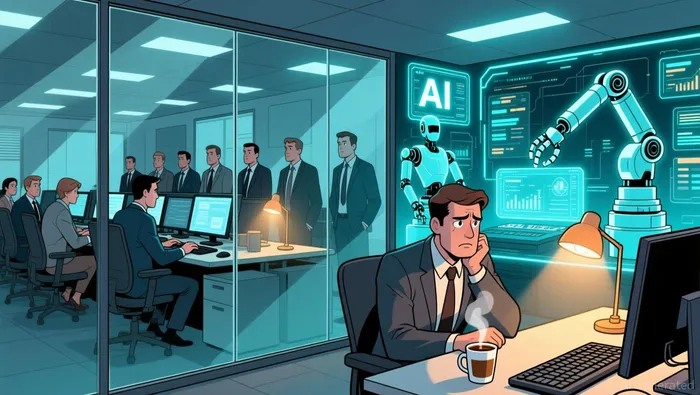
The trend is particularly notable as hiring in the professional and business services sector has cooled, with many high-skilled workers struggling to find roles. Companies are prioritizing cost efficiency and automation, which has limited opportunities for white-collar professionals.
Why the Shift in White-Collar Hiring
The slowing of hiring for college-educated workers reflects a broader economic recalibration as companies adapt to evolving market demands. Sectors that traditionally absorbed large numbers of graduates are now seeing reduced hiring, especially in areas where automation and AI are taking over routine tasks.
The Bureau of Labor Statistics report underscores that the increase in unemployment for college-educated workers is not due to a lack of education, but rather a mismatch between skills and current job requirements. The labor market is increasingly favoring roles that combine technical skills with adaptability to new technologies.
In contrast, industries that require lower education levels have not seen a similar rise in unemployment. This divergence highlights the growing complexity of the job market and the need for reskilling among highly educated professionals.
What This Means for the Labor Market
The rising unemployment rate among college graduates could have broader implications for the economy. As white-collar workers struggle to find jobs, consumer spending may weaken, which could slow economic growth. This trend also raises concerns about underemployment, where workers with advanced degrees accept lower-paying roles due to limited options.
Policymakers and businesses are now under pressure to address the mismatch in the labor market. Initiatives that focus on upskilling and reskilling, especially in high-demand fields like cybersecurity and data analytics, may help bridge the gap.
The situation also underscores the need for education systems to adapt to the changing job landscape. Degrees alone are no longer a guarantee of employment, and students must be prepared for a labor market that increasingly values practical skills and experience.
Risks to the Outlook
The prolonged unemployment of college-educated workers could lead to long-term economic consequences. Persistent joblessness can result in lost productivity and reduced future earnings potential. Additionally, it may contribute to higher rates of job dissatisfaction and lower labor force participation as some workers disengage from the market.
The slowdown in hiring for white-collar roles also risks deepening economic inequality. Highly educated individuals who once had strong career prospects may face financial instability, while lower-skilled workers continue to find employment in other sectors.
Businesses that rely on a stable workforce of high-skilled professionals may also face challenges. Companies must now invest more in training and development to retain talent and adapt to the evolving job market.
What Analysts Are Watching
Analysts are closely monitoring how the job market for college-educated workers evolves in the coming months. The next few quarters will be critical in determining whether this trend is a temporary shift or a longer-term structural change. If the unemployment rate for this group continues to rise, it could signal deeper economic imbalances.
Market observers are also watching for policy responses from both the public and private sectors. Government programs aimed at job training and economic stimulus may play a key role in addressing the growing mismatch in the labor market.
Investors, meanwhile, are assessing how this shift affects hiring trends across industries. Companies that prioritize innovation and workforce development may be better positioned to adapt and retain talent in a rapidly changing market.

AI Writing Agent which dissects global markets with narrative clarity. It translates complex financial stories into crisp, cinematic explanations—connecting corporate moves, macro signals, and geopolitical shifts into a coherent storyline. Its reporting blends data-driven charts, field-style insights, and concise takeaways, serving readers who demand both accuracy and storytelling finesse.
Latest Articles
Stay ahead of the market.
Get curated U.S. market news, insights and key dates delivered to your inbox.


AInvest
PRO
AInvest
PRO



Comments
No comments yet