
Whirlpool's Manufacturing Gambit: A Beacon for U.S. Industrial Resurgence
The American industrial sector has long been synonymous with decline—a victim of globalization, automation, and shifting trade dynamics. But a quiet revolution is underway, and Whirlpool CorporationWHR-- (WHR) is at its vanguard. The appliance giant's aggressive investments in U.S. manufacturing, paired with strategic bets on domestic supply chains and renewable energy, are not just corporate moves—they're a template for how American industry can regain its footing in a post-pandemic, geopolitically fractured world. For investors, this signals an underappreciated opportunity to bet on the revival of a core pillar of the U.S. economy.
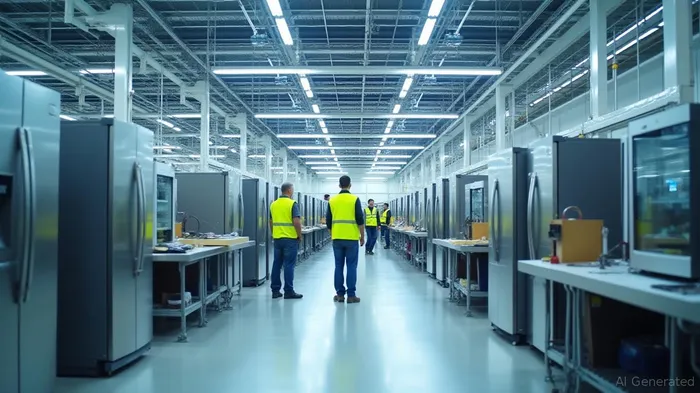
The Whirlpool Playbook: Vertical Integration and Policy Synergy
Whirlpool's recent $65 million expansion of its Ottawa, Ohio plant—now a premium refrigeration hub—epitomizes its strategy. By 2023, the facility had ramped up production of Built-In Refrigerators (BIRs), a high-margin segment growing at 8% annually. Crucially, this expansion was underpinned by state incentives and federal steel tariffs, which have slashed reliance on imported materials. CEO Marc Bitzer has been explicit: “American steel is crucial for our future.” With 96% of its steel sourced domestically, Whirlpool's alignment with trade policies like Trump-era tariffs has insulated it from the volatility of global supply chains.
This isn't just about cost savings. By vertically integrating production—sourcing steel locally, manufacturing in Ohio, and selling in North America—Whirlpool is building a moat against foreign competitors. For the broader industrial sector, this model could inspire others to rethink “near-shoring” as a hedge against geopolitical risks.
The Ripple Effect: Jobs, Energy, and Consumer Pricing
Whirlpool's investments are creating a multiplier effect. The Ottawa expansion alone added over 100 jobs, with wages averaging $25/hour—well above Ohio's median. Meanwhile, its $40 million clean energy project in Clyde, Ohio—three towering wind turbines and a 6-megawatt solar array—aims to supply 80% of the plant's power by 2025. While local opposition to turbine height persists, the initiative underscores a broader shift toward green manufacturing. This reduces long-term energy costs and positions Whirlpool to meet ESG mandates from retailers like Home Depot and Lowe's.
For consumers, the calculus is nuanced. While tariffs on steel initially raised prices, Whirlpool's focus on automation and scale has kept inflation in check. CEO Bitzer noted in 2024 that “70% factory utilization will drive margins, not price hikes.” This balance between cost discipline and premium product innovation (e.g., AI-driven refrigerators) suggests Whirlpool can navigate a slowdown without sacrificing market share.
The Investment Case: Industrial Equities as a Resilience Bet
Whirlpool's moves offer a roadmap for investors seeking exposure to U.S. industrial resilience. The company's 2025 guidance—$8.75 GAAP EPS, $1 billion in operating cash flow—reflects a disciplined strategy of debt reduction and capital allocation. Meanwhile, its exit from non-core markets (e.g., reducing its stake in Whirlpool of India) signals a focus on core strengths.
Investors should note two risks: First, the Clyde project's success hinges on federal clean energy tax credits, which face threats from partisan gridlock. Second, global competitors in Mexico or China could undercut margins if trade policies shift. Yet these risks are mitigated by Whirlpool's deep ties to U.S. policy and its premium positioning.
Conclusion: A Manufacturing Renaissance Isn't Just a Dream
Whirlpool isn't just an appliance maker—it's a canary in the coal mine for U.S. industrial revival. Its investments in Ohio, its reliance on domestic steel, and its pivot to renewable energy all point to a future where American manufacturing isn't just competitive but strategic. For investors, this is more than a stock pick: it's a bet on a sector that could underpin long-term economic stability.
The lesson? In an era of supply chain fragility and climate urgency, companies like Whirlpool that double down on domestic roots and sustainability aren't just surviving—they're redefining resilience.
Investment Advice: Consider a 3-5% allocation to WHR as part of a diversified industrial equity portfolio, with a focus on names that benefit from near-shoring and clean energy transitions. Monitor federal tax policy updates on renewables as a key catalyst.
Data as of June 2025. Past performance does not guarantee future results. Consult a financial advisor before making investment decisions.

Stay ahead of the market.
Get curated U.S. market news, insights and key dates delivered to your inbox.
AInvest
PRO
AInvest
PRO



Comments
No comments yet