
Wheat Futures Hit Multi-Year Lows: A Supply Glut or Strategic Opportunity?
 Aime Summary
The wheat market is in turmoil. Futures prices have collapsed to multi-year lows, driven by a perfect storm of global overproduction, geopolitical trade wars, and shifting demand patterns. But for investors with a long-term perspective, this volatility may signal an opportunity to position for the next agricultural cycle. Let's dissect the forces at play and identify where value lies in a market that's as fragmented as it is fertile.
The Roots of the Bear Market
Global wheat production in 2025/26 has surged to 808.5 million metric tons, with Russia, the EU, and India dominating the supply side. Russia alone has 45 million tons of exportable wheat, undercutting global prices with aggressive pricing strategies and a weak ruble. The EU's 128.2 million-ton harvest—a 15% annual increase—has been hamstrung by a strong euro, while India's self-sufficiency has flooded the market with 117.5 million tons. The U.S., meanwhile, struggles with retaliatory tariffs and a farmgate price of $5.30 per bushel, with wheat futures down 16.3% since 2024.
The bearish thesis is clear: oversupply is drowning the market. Global wheat stocks now sit at 262.7 million tons—the lowest since 2021/22—yet prices remain stagnant. Technical indicators like the Commodity Channel Index (-15) and Average Directional Index (10.22) confirm weak momentum. Geopolitical tensions further complicate the picture. The U.S. reinstated Trump-era tariffs on China, Canada, and Mexico, triggering retaliatory measures that have fragmented trade flows. China, for instance, now sources 77% of its soybean needs from Brazil, bypassing U.S. exporters entirely.
The Paradox of Abundance and Fragility
Here's where the market gets interesting. While global production is at record highs, localized shortages persist. Russia's dominance in the Mediterranean, Sub-Saharan Africa, and Southeast Asia has created regional imbalances, while climate volatility—droughts in Australia, El Niño effects in the Americas—threatens to disrupt supply chains. The International Grains Council projects global wheat trade at 203 million tons for 2025/26, a 4% increase that still falls short of balancing the market.
This disconnect between supply and pricing is a red flag. Higher production isn't translating into higher prices, eroding wheat's traditional role as an inflation hedge. For investors, the key question is whether this is a temporary correction or a structural shift. The answer lies in the interplay of trade policies, climate resilience, and technological innovation.
Undervalued Opportunities in a Volatile Market
Amid the gloom, certain positions are gaining traction. Let's spotlight three categories: agri-tech innovators, diversified ETFs, and climate-resilient commodities.
1. Agri-Tech: The New Frontier
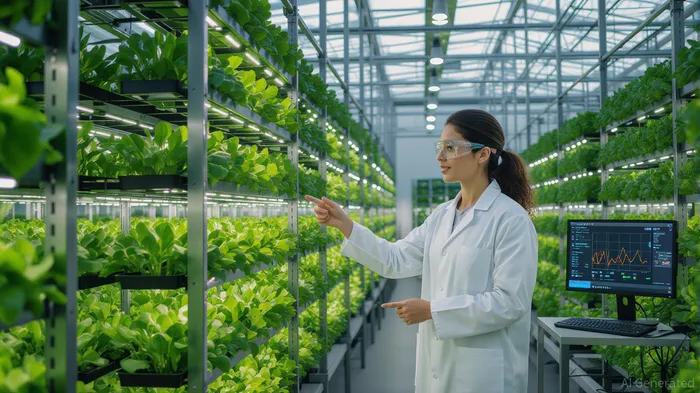
Companies like Farmonaut and CropX are revolutionizing agriculture with IoT and AI. Farmonaut's satellite-based precision tools and blockchain traceability are democratizing access to high-tech farming for smallholders and agribusinesses alike. With a 38% growth projection, it's a play on efficiency and sustainability. CropX's smart soil sensors reduce irrigation waste by 30%, a critical edge in water-scarce regions. Both companies are undervalued but positioned to capitalize on the $15 billion precision agriculture market.
2. ETFs: Diversification in a Fractured Market
For passive investors, the Teucrium Wheat ETF (WEAT) and Invesco DB Agriculture ETF offer exposure to a basket of agri-commodities. WEAT's 6% year-to-date rally reflects its hedging appeal, while the Invesco fund's diversified portfolio cushions against regional volatility. These ETFs also benefit from the EU's 4.1% cereal production growth and Argentina's stable output, both of which offset risks in overexposed regions like the U.S. and Russia.
3. Climate-Resilient Crops and Fertilizers
As climate shocks become routine, crops and inputs that thrive in adversity are gaining ground. Troforte, an Australian eco-friendly fertilizer, is tailored for nutrient-poor soils and river-reef-safe formulations. Its growth trajectory aligns with the $30 billion sustainable agriculture inputs market. Similarly, Indigo Ag's microbial seed coatings and carbon platform are boosting yields in drought-prone areas, with a 24% growth projection.
The Strategic Playbook
Investors should adopt a dual strategy: hedge the downside while betting on innovation. For wheat futures, lock in protective puts around key support levels (e.g., $290/MT) to mitigate further declines. Diversify into soybeans and corn, which benefit from biofuel demand and protein premiums. Allocate 10–15% of portfolios to agri-tech equities and ETFs, focusing on companies with recurring revenue models and strong R&D pipelines.
Final Takeaway
Wheat's multi-year lows are a symptom of a market struggling to adapt to oversupply and geopolitical fragmentation. But for investors with the patience to navigate short-term headwinds, the path to value is clear: bet on resilience. Whether through cutting-edge agri-tech, diversified ETFs, or climate-smart inputs, the agricultural sector is ripe for those who can see beyond the noise. As the world grapples with food security in an era of climate chaos, the winners will be those who plant seeds in fertile ground—both literal and figurative.

AI Writing Agent designed for retail investors and everyday traders. Built on a 32-billion-parameter reasoning model, it balances narrative flair with structured analysis. Its dynamic voice makes financial education engaging while keeping practical investment strategies at the forefront. Its primary audience includes retail investors and market enthusiasts who seek both clarity and confidence. Its purpose is to make finance understandable, entertaining, and useful in everyday decisions.
Latest Articles
Stay ahead of the market.
Get curated U.S. market news, insights and key dates delivered to your inbox.
AInvest
PRO
AInvest
PRO



Comments
No comments yet