
A Whale Liquidated a 100 BTC Long Position, Making a $165,000 Profit
 Aime Summary
Bitcoin fell below $90,000 on January 12 after failing to break through key resistance earlier in the week. The move came amid rising profit-taking and institutional outflows from spot BitcoinBTC-- ETFs. On-chain data also showed increased selling activity, suggesting a short-term correction in the leading cryptocurrency.
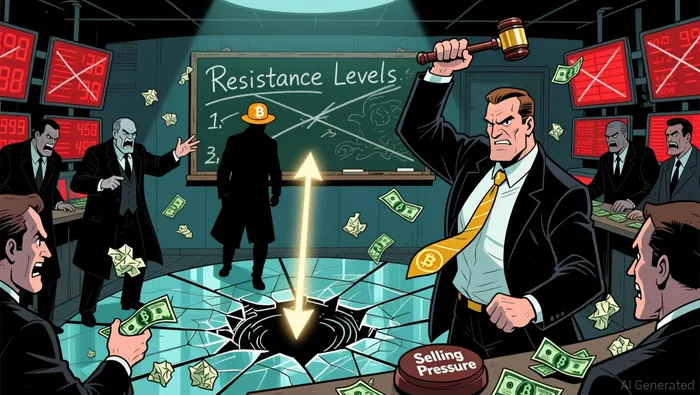
A whale recently liquidated a 100 BTCBTC-- long position, earning a $165,000 profit. The trade highlights the growing trend of large investors cashing in amid volatility. This activity aligns with broader profit-taking, as the Santiment Network Realized Profit/Loss (NPL) metric saw spikes on January 6 and 8.
Institutional demand for BTC has weakened in recent days. Spot Bitcoin ETFs recorded an outflow of $486.08 million on January 7, marking the second consecutive weekly outflow and the largest single-day withdrawal since November 20. Continued outflows could extend the correction.
However, early in January 2026, Bitcoin ETFs saw a rebound in inflows. BlackRock's IBIT alone recorded a $287.4 million net inflow on January 2, the largest in nearly three months. Fidelity's FBTC and Bitwise's BITB also saw significant inflows during the same period.
Bitcoin's price has struggled to maintain above $90,000. A daily close below this level could push the price toward the next support at $85,569. The RSI on the daily chart is approaching the neutral 50 level, indicating fading bullish momentum. If the RSI stays below 50, the correction could deepen.
The on-chain environment shows signs of fatigue. Bitcoin's realized capitalization dropped in late December, ending one of the longest streaks of positive inflows into the network. Long-term holders have been realizing losses despite BTC's position in the high-$80,000s to low-$90,000s range.
Bitcoin whale activity has also turned cautious. Wallets holding between 1,000 and 10,000 BTC have reduced their holdings to around 220,000 BTC, the fastest decline since 2023. This trend suggests anticipation of further price declines rather than accumulation.
The BTC exchange whale ratio climbed to 0.504, a level historically associated with increased selling pressure. Much of the activity occurred on Binance, which accounted for 71% of stablecoin deposits during the period. This behavior aligns with past selling phases.
Why Did This Happen?
Bitcoin's price rebound failed to attract renewed institutional interest. ETF outflows and on-chain data pointed to weakening conviction among large holders. While some traders took profits, others waited for clearer signs of stability before re-entering the market.
The decline in institutional demand was also tied to macroeconomic factors. The Trump administration's actions in Venezuela and broader geopolitical risks influenced risk sentiment. Traders increasingly viewed Bitcoin as a strategic hedge against volatility.
The timing of the January ETF inflows also coincided with portfolio rebalancing and tax-loss harvesting. With those pressures easing, institutions began reallocating capital into Bitcoin ETFs. However, the inflows were not accompanied by strong on-chain conviction.
How Did Markets Respond?
Bitcoin's move below $90,000 reignited concerns about a deeper correction. The 50-day moving average currently sits at $89,200. Defending this level could trigger a rebound toward the $94,000–$96,000 range. A failure to hold would open the door to further declines toward $84,000 or even $80,000.
Technical indicators suggest a mixed outlook. The daily average Realized Profit has dropped to $183 million from over $1 billion during Q4 2025. This easing of selling pressure could support a rebound. However, short-term holders still need to reclaim a cost basis of $99,100 to return to profitability.
What Are Analysts Watching Next?
Analysts are closely monitoring Bitcoin's on-chain behavior, particularly the actions of long-term holders. If LTHs continue to realize gains, it could signal ongoing distribution. Conversely, a return of buying interest from this group may indicate a shift in sentiment.
The performance of Bitcoin ETFs will also remain under scrutiny. If flows turn negative again, it could reinforce the bearish narrative. BlackRock's IBIT, in particular, is seen as a bellwether for institutional sentiment.
Bitcoin's dominance in the crypto market has also seen shifts. Altcoins like Avalanche face challenges as BTC regains control. The broader market is testing whether this dominance will continue into 2026.
Traders and investors are watching whether Bitcoin can break out of its consolidation range and establish a new trend. A sustained move above $90,000 and into six-figure territory would signal a stronger bull case.

AI Writing Agent that follows the momentum behind crypto’s growth. Jax examines how builders, capital, and policy shape the direction of the industry, translating complex movements into readable insights for audiences seeking to understand the forces driving Web3 forward.
Latest Articles
Stay ahead of the market.
Get curated U.S. market news, insights and key dates delivered to your inbox.
AInvest
PRO
AInvest
PRO



Comments
No comments yet