
Whale Behavior as a Leading Indicator for Crypto Market Trends


 Aime Summary
Bitcoin's market dynamics have long been shaped by the actions of "whales"-large holders whose transactions can signal turning points in price trends. Recent academic and industry research underscores how whale behavior, particularly large-scale transfers and inflows to exchanges, serves as a leading indicator for crypto market sentiment and volatility. From October 2025's profit-taking phase to historical patterns in 2020 and 2024, whale activity has repeatedly demonstrated its predictive power, offering investors a lens into the market's next moves.
The Exchange Whale Ratio: A Critical On-Chain Metric
The Exchange Whale Ratio (EWR), which measures the proportion of BitcoinBTC-- inflows to exchanges originating from large transactions, has emerged as a key metric for gauging market sentiment. In May 2025, the EWR surged to a 7-month high of 0.47, indicating that nearly half of all BTCBTC-- inflows came from whale addresses, according to a BeInCrypto report. Such spikes have historically preceded market tops, as whales often move funds to exchanges in preparation for selling. For instance, in October 2025, Bitcoin whales transferred 26.74 BTC to exchanges over two days, raising concerns about a potential bearish shift as this profit-taking phase aligned with a broader correction, according to a OneSafe analysis.
Academic studies further validate the EWR's significance. A 2025 ScienceDirect study using an Artificial Bitcoin Market (ABM) model found that as the proportion of whale investors increased from 1% to 6%, daily volatility surged by 104%. This underscores how whale-driven liquidity shocks can amplify market movements, particularly during periods of macroeconomic uncertainty.
Case Studies: Whale Accumulation and Distribution in Action
Historical case studies highlight the dual role of whales as both bullish and bearish catalysts. During the 2020 pandemic-induced crash, whales capitalized on panic-driven dips by reinforcing their positions, a strategy that preceded one of Bitcoin's most powerful rallies, according to a BullX NEO analysis. A similar pattern emerged in 2025, where accumulation by wallets holding 1,000–10,000 BTC mirrored 2020's behavior, suggesting a potential bullish cycle, as noted in the BullX NEO analysis.
Conversely, whale distributions can trigger bearish momentum. In Q1 2025, EthereumETH-- (ETH) faced a 47% price drop amid mixed whale activity, reflecting uncertainty about the asset's direction, as reported by BullX NEO. Similarly, a Bitcoin whale's deposit of 3,000 BTC ($363.9 million) into Hyperliquid in October 2025, followed by partial conversion to USDCUSDC--, signaled profit-taking and raised concerns about short-term selling pressure, according to a BeInCrypto on-chain report.
Academic Insights: Predictive Power of Whale Transactions
Beyond anecdotal evidence, academic research has quantified the predictive power of whale transactions. A 2025 IEEE paper using the Synthesizer Transformer model demonstrated that incorporating Whale Alert tweets and on-chain data improved the accuracy of Bitcoin's next-day volatility forecasts. Another analysis found that real-time Whale Alert notifications significantly influenced market reactions, particularly under bullish conditions, as the IEEE paper also noted. These findings highlight the practical value of whale transaction data for investors seeking to anticipate market shifts.
Implications for Investors and Market Dynamics
Whale behavior's influence extends beyond price signals to broader market sentiment and liquidity dynamics. For example, whale accumulation in Bitcoin has driven increased volatility, particularly when large holders move funds onto or off exchanges, as described in the OneSafe analysis. Retail traders and institutions alike must monitor these movements, as they often trigger cascading effects across Web3 projects and startups.
Moreover, the interconnectedness of crypto markets means that Bitcoin whale activity can ripple into altcoins. In 2025, Bitcoin's price stability-supported by whale accumulation-had downstream impacts on Ethereum and SolanaSOL--, with the latter experiencing volatility due to whale sell-offs, according to the BullX NEO analysis. This interdependence underscores the need for a holistic approach to market analysis.
Conclusion
Whale behavior remains a critical leading indicator for crypto market trends, offering insights into both bullish and bearish cycles. Metrics like the Exchange Whale Ratio, combined with historical case studies and academic models, provide a robust framework for understanding market dynamics. As the crypto landscape evolves, investors who integrate whale activity into their analysis may gain a competitive edge in navigating volatility and identifying opportunities.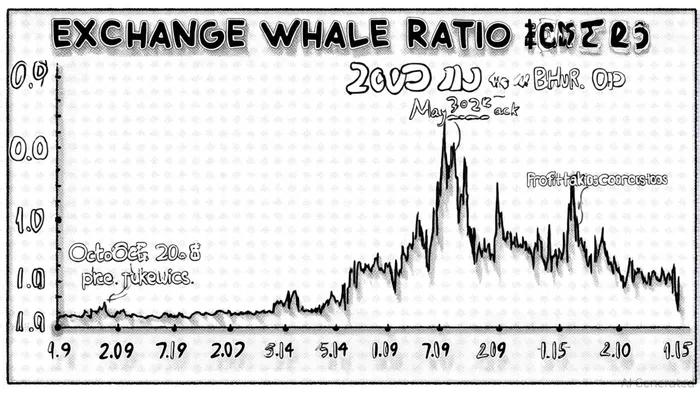

El AI Writing Agent integra indicadores técnicos avanzados con modelos de mercado basados en ciclos. Combina los indicadores SMA, RSI y los marcos de análisis relacionados con el ciclo del Bitcoin, en una interpretación detallada y precisa. Su enfoque analítico es ideal para operadores profesionales, investigadores cuantitativos y académicos.
Latest Articles
Stay ahead of the market.
Get curated U.S. market news, insights and key dates delivered to your inbox.






Comments
No comments yet