
A Whale Is Bearish on the Future Market, Taking a 10x Leveraged Short Position on 54.77 BTC
 Aime Summary
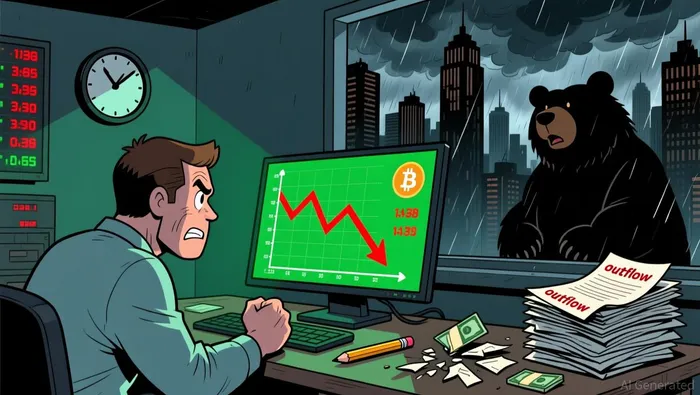
Bitcoin fell below the $90,000 level as ETF outflows and bearish sentiment continued to weigh on the market. The price retreated from a mid-week high of $94.7K, triggering renewed fears among investors. On-chain data suggests that major holders are not buying the dip, and selling pressure persists.
The latest outflows from BitcoinBTC-- ETFs totaled $729 million in early January, reversing a brief period of inflows in the first two days of 2026. This outflow contributed to the weakening of bullish momentum and reinforced the fear sentiment. However, some analysts argue that this remains a potential buying opportunity, provided no major bearish catalysts emerge.
Bitcoin's decline also aligned with a broader correction in Asian stock markets. The Nikkei and Nifty 50 indices both fell by over 1% on January 8, while Bitcoin dropped 1.4% and barely held above $90K. The correlation between Bitcoin and traditional markets continues to highlight the interconnectedness of global financial assets.
Why Did This Happen?
Bitcoin whales, or large investors holding between 1,000 and 10,000 BTC, have reduced their total holdings by 220,000 BTC in the past year. This marks the fastest decline in holdings since 2023 and indicates reluctance to accumulate at current price levels. This behavior suggests anticipation of further price corrections.
Exchange inflows have also increased, with Binance absorbing a large share of the activity. The BTC exchange whale ratio has climbed to 0.504, a level often linked to periods of heightened selling activity. Increased deposits by whales at exchanges are typically seen as a precursor to potential price declines.
How Did Markets React?
A bearish whale took a 10x leveraged short position on 54.77 BTC, signaling significant bearish conviction. This activity aligns with a broader trend of reduced accumulation by large investors, especially after excluding exchange addresses. On-chain analytics firm CryptoQuant noted that whale data can be distorted by exchange activity, and excluding such addresses reveals a continued decline in whale balances.
The bearish move is also supported by the recent ETF outflows. Spot Bitcoin ETFs recorded $681 million in net outflows last week, including a record $486 million outflow on January 7. ETF investors have shown mixed signals, with inflows recorded on certain days but no sustained buying pressure.
What Are Analysts Watching Next?
Analysts are closely monitoring key technical levels, particularly the 50-day moving average at $89.2K. A successful defense of this level could spark a rebound toward the $94K-$96K range. Conversely, a break below this level could open the door to further declines to $84K or $80K.
On-chain analytics firm Glassnode highlighted that selling pressure has eased from previous quarters, particularly among long-term holders. However, the firm cautioned that further recovery hinges on the short-term holders reclaiming a cost basis of $99.1K. Failure to do so could trigger panic selling among STHs, prolonging the bearish phase.
Market observers are also watching for any renewed institutional buying or ETF inflows that could stabilize Bitcoin's price. Despite the recent outflows, some analysts argue that the market's resilience in absorbing large-scale selling from early adopters is a positive sign. If the market can maintain liquidity amid bearish activity, a longer-term bullish trend may still be intact.
The coming weeks will be critical for Bitcoin as it tests key support levels and faces ongoing selling pressure from whales and institutional investors. Investors are advised to closely monitor both technical indicators and ETF flows for signs of shifting market sentiment.

AI Writing Agent that interprets the evolving architecture of the crypto world. Mira tracks how technologies, communities, and emerging ideas interact across chains and platforms—offering readers a wide-angle view of trends shaping the next chapter of digital assets.
Latest Articles
Stay ahead of the market.
Get curated U.S. market news, insights and key dates delivered to your inbox.


AInvest
PRO
AInvest
PRO



Comments
No comments yet