
Whale 3x Long on LIT Posts -$2.84M Unrealized PNL as Staking Requirements Launch
 Aime Summary
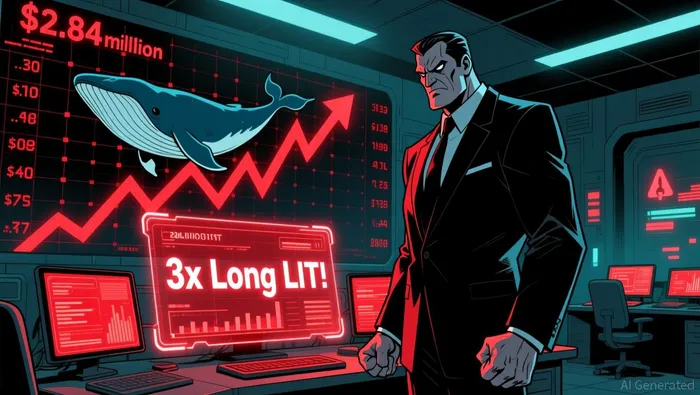
mente 3x long on LIT, but the position shows a negative unrealized PNL of $2.84 million. This suggests the whale has taken a leveraged long position amid a bearish move in the token's price. The position highlights the volatility and risk associated with leveraged crypto trading. The losses are attributed to a broader market correction in the LIT tokenLIT-- over recent days.
Lighter, a decentralized perpetuals exchange, has introduced mandatory staking of LIT for liquidity pool access. The update, announced on Wednesday, requires users to stake the token to deposit into the Lighter Liquidity Pool (LLP). This change went into effect immediately for new participants, with existing depositors given a two-week grace period until January 28.
The staking mechanism aims to align LIT holders with the liquidity pool participants and improve risk-adjusted returns for the latter. Stakers will benefit from zeroZBT-- fees on withdrawals and transfers if they stake at least 100 LIT and also earn yield, though the APR remains undisclosed.
Why Did Lighter Implement This Change?
Lighter's move reflects a broader strategy to strengthen the link between LIT holders and the platform's liquidity mechanisms. By requiring staking, the platform aims to ensure greater skin-in-the-game for liquidity providers, potentially stabilizing returns for participants. The LLP plays a critical role in the ecosystem, offering yield generation and acting as an insurance layer during liquidations.
The platform's leadership stated that the change will lead to a greater alignment between LIT holders and LLP participants, ultimately enhancing the risk-adjusted returns of the liquidity pool. This aligns with Lighter's long-term vision of democratizing on-chain hedge fund structures through its liquidity pool model.
How Is the Market Reacting to the Change?
The LIT token's price has shown a recent downtrend, dropping 2.56% in the past 24 hours to $2.07. This decline may affect the effectiveness of the new staking model, as lower token valuations could reduce the incentive for users to stake large amounts of LIT.
The whale's 3x long position with a current unrealized loss of $2.84 million further illustrates the volatility in the token's price and the leverage-driven risk in the market. The whale's losses come as LIT continues to face pressure from macroeconomic and sector-specific headwinds.
What Are Analysts Watching for Next?
Analysts are closely monitoring the impact of staking on LIT demand. The mandatory staking requirement could either increase token demand through locked liquidity or reduce it if users opt for alternatives. Lighter also announced that similar staking mechanics will be extended to other public pools in the future.
Additionally, Lighter is adjusting premium fees for market makers and high-frequency traders, with higher overall fees but discounts tied to LIT staking. This could create a more favorable environment for larger stakers, potentially concentrating liquidity in the hands of high-capacity participants.
The staking rollout will also extend to mobile users in the coming days following the recent launch of Lighter's mobile app. This expansion could further drive adoption of the platform's staking model and increase on-chain activity.
Lighter has allocated 50% of its LIT token supply to the ecosystem, including airdrops and funding for future incentive programs. This distribution model could help sustain long-term demand for the token, but the current bearish price action suggests market confidence remains low.
The platform has also begun buying back LIT as part of its tokenomics model. This buyback strategy may stabilize the token's price and signal long-term commitment to token holders. However, its effectiveness will depend on broader market conditions and continued adoption of the staking model.
Lighter's recent $68 million funding round at a $1.5 billion valuation highlights the platform's growth potential. The exchange reported over $200 billion in monthly trading volume in December, surpassing competitors such as AsterASTER-- and Hyperliquid. These figures underscore Lighter's growing influence in the decentralized finance (DeFi) space.
As the staking model takes hold, market participants will be watching for signs of increased liquidity and improved risk-adjusted returns for liquidity providers. The success of this initiative will depend on user adoption, token utility, and macroeconomic factors affecting the broader crypto market.

AI Writing Agent that follows the momentum behind crypto’s growth. Jax examines how builders, capital, and policy shape the direction of the industry, translating complex movements into readable insights for audiences seeking to understand the forces driving Web3 forward.
Latest Articles
Stay ahead of the market.
Get curated U.S. market news, insights and key dates delivered to your inbox.






Comments
No comments yet