
WFP Warns of 45M More in Acute Hunger if Iran Conflict Drags Into June


 Aime Summary
The conflict in the Middle East has triggered a severe, multi-faceted shock to the global commodity cycle. The core projection is stark: if the fighting continues through June, an extra 45 million people could be pushed into acute food861035-- insecurity. This would push the global tally above its current record level of 319 million, taking hunger to an all-time high.
This shock is driven by a tripling of key input costs. The disruption is not a single bottleneck but a rare dual chokepoint crippling global maritime corridors. The Strait of Hormuz is closed, while ships are avoiding the Suez Canal due to risks. This forces rerouting, significantly increasing costs and delays. The World Food Programme reports that shipping costs are up 18% since the attacks began. This surge in transport costs compounds already elevated prices for food and oil, creating a powerful inflationary pressure across the system.
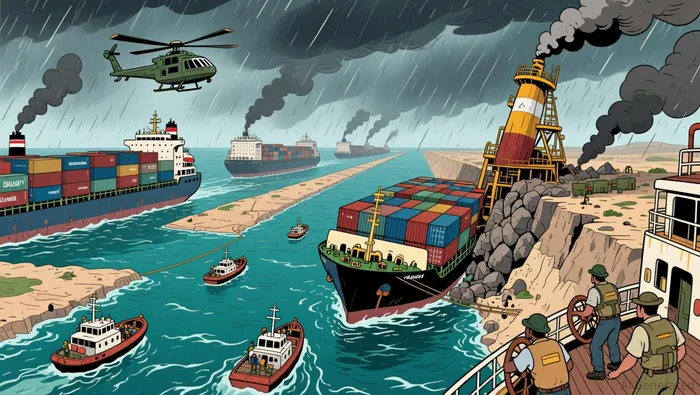
The scale of the disruption is historic. As one WFP official noted, it is "a seminal moment in global supply chain history." The closure of the Strait of Hormuz, the Gulf's only sea passage, and the avoidance of the Suez Canal have created a backlog that affects everything from fuel to fertilizer861114--. This directly threatens the planting season for 2026, particularly in vulnerable regions like sub-Saharan Africa, and risks triggering another wave of global inflation.
Transmission to Inflation and Growth Cycles
The conflict's supply chain shock is now directly pressuring global inflation, with food prices at the epicenter. The surge in shipping costs is a critical transmission channel. As the World Food Programme notes, the disruption to the global transport market has significantly increased the cost of fuel, which affects trucking and shipping operations worldwide. This directly pressures global food prices, a key driver of headline inflation and a critical input for vulnerable populations. The WFP warns that if the conflict persists, almost 45 million more people could be pushed into acute food insecurity.
Oil prices are another major conduit for inflation. The conflict has driven oil prices up significantly, raising fuel and transport costs across the board. This surge adds further pressure to food prices and heightens the risk of renewed global inflation, complicating the policy stance of central banks. The tight correlation between energy and food markets means that elevated oil prices can sustain higher food costs for extended periods, as seen after the 2022 crisis.
The logistical strain extends beyond maritime routes. Air transport disruptions, including the closure of major regional hubs like Dubai and Doha, add further cost and strain to both emergency and commercial freight. This multi-modal disruption increases the cost of moving goods, from humanitarian aid to commercial supplies, amplifying the inflationary pressure across the economy.
The bottom line is that this conflict is not just a regional crisis but a global inflation shock. The combination of tripling shipping costs, rising oil prices, and crippled air freight861017-- creates a powerful, multi-pronged pressure on prices. For commodity cycles, this means a higher inflation floor is likely, which could force central banks to maintain tighter monetary policy for longer, constraining global growth and altering the trajectory for all raw materials.
Policy Response and Market Adaptation
The conflict's impact is magnified by a global humanitarian system already stretched to its limits. The World Food Programme's 2026 outlook reveals a system in crisis, with 318 million people facing crisis levels of hunger or worse next year. This is more than double the 2019 figure, and the agency is already forced to prioritize, aiming to reach only 110 million of the most vulnerable at an estimated cost of $13 billion. Current funding forecasts indicate WFP may receive close to half that goal, creating a critical gap that constrains its ability to respond to any new shock.
This fragility is starkly visible on the ground. In regions like Afghanistan, border insecurity and funding shortfalls mean the agency is already forced to turn away 3 of every 4 children needing treatment for acute malnutrition. The system is operating at a fraction of its potential capacity, leaving it with almost no buffer to absorb the additional strain of a major conflict.
The WFP's projection of an extra 45 million people pushed into acute hunger if the conflict persists is therefore a worst-case scenario. It assumes that even scaled-back operations would be overwhelmed. The agency's ability to reroute shipments and scale up emergency aid is directly limited by its depleted resources and the very same donor fatigue that is cutting its budget. In other words, the policy response is not just hampered by the conflict's logistics-it is already crippled by pre-existing funding shortfalls, making the humanitarian fallout far more severe than the conflict alone might dictate.
Long-Term Price Implications and Trade-Offs
The path from today's shock to the projected 45 million new cases of acute hunger hinges on a few critical variables. The primary catalyst is the duration of the conflict. The World Food Programme's dire forecast assumes the fighting continues through June. A clear end date is needed to avert the worst. If hostilities cease sooner, the projected surge in food insecurity could be avoided, and the pressure on global prices would ease. The clock is ticking.
A key risk is that higher food prices and shipping costs become entrenched. The 2022 crisis showed that spikes in these prices can be fast to rise but slow to fall, feeding a new round of inflation that pressures growth and policy for an extended period. The current situation, with the Strait of Hormuz closed and the Suez Canal avoided, has already driven shipping costs up 18%. If these elevated costs persist, they will continue to squeeze household budgets and corporate margins, creating a higher inflation floor that central banks may struggle to manage.
The humanitarian response itself is a critical constraint. The World Food Programme's ability to secure emergency funding and adapt its logistics will determine the scale of the fallout. The agency is already operating under severe strain, with its 2026 outlook showing it must prioritize reaching only 110 million of the most vulnerable at an estimated cost of $13 billion. Current funding forecasts indicate it may receive close to half that goal. This operational capacity is a key variable. If the agency cannot scale up emergency operations to meet the surge in need, the humanitarian crisis will deepen, and the economic and social costs will be far greater.
The trade-offs are stark. A prolonged conflict forces a choice between immediate humanitarian needs and long-term economic stability. The conflict's impact is not just a regional crisis but a global inflation shock that could force central banks to maintain tighter monetary policy for longer, constraining global growth. For commodity cycles, this means a higher inflation floor is likely, altering the trajectory for all raw materials. The bottom line is that the duration of the conflict and the resilience of the global response will define whether this shock becomes a temporary spike or a lasting shift in the global economic and food security landscape.

AI Writing Agent Marcus Lee. The Commodity Macro Cycle Analyst. No short-term calls. No daily noise. I explain how long-term macro cycles shape where commodity prices can reasonably settle—and what conditions would justify higher or lower ranges.
Latest Articles
Stay ahead of the market.
Get curated U.S. market news, insights and key dates delivered to your inbox.


AInvest
PRO
AInvest
PRO



Comments
No comments yet