
Western Digital: Pioneering AI-Driven Storage with a Resilient Supply Chain and Market Leadership


 Aime Summary
The AI revolution is here, and it's creating a storage tsunami. According to Western Digital's Citi transcript at Citi's 2025 Global TMT Conference, the demand for storage is projected to grow at a staggering 23% exabyte CAGR, driven by AI workloads alone. In this high-stakes environment, Western DigitalWDC-- (WDC) is not just keeping up-it's leading the charge with a dual focus on supply chain resilience and market leadership in data storage. Let's break down how the company is positioning itself to dominate the AI and cloud infrastructure race.
Strategic Expansion: Building the Infrastructure of the Future
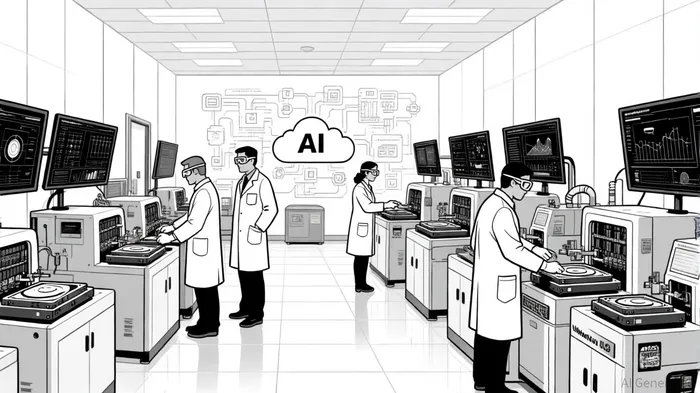
Western Digital's 2025 playbook is all about scalability and reliability. The company has expanded its SIT Lab in Rochester, Minnesota, to accelerate customer qualification of high-capacity HDDs. This move is critical for hyperscale clients, who need rapid deployment of storage solutions to keep up with AI's insatiable data demands. Meanwhile, as highlighted at Investor Day 2025, Western Digital is pushing the boundaries of Heat-Assisted Magnetic Recording (HAMR) technology, currently testing prototypes with two major hyperscale partners to ensure a seamless transition from traditional HDDs.
But it's not just about hardware. The company has launched OCCL 2.0, an upgraded Open Composable Compatibility Lab that acts as a vendor-neutral testing ground for simulating real-world workloads. This innovation allows partners like NVIDIA, Kioxia, and Phison to optimize interoperability and performance, ensuring that Western Digital's ecosystem remains agile and future-proof, as announced in the company's OCCL 2.0 announcement.
Supply Chain Resilience: Diversification and Data-Driven Risk Mitigation
In an era where supply chain disruptions can cripple even the most robust companies, Western Digital is hedging its bets. The company has adopted a multi-vendor SSD qualification strategy, partnering with DapuStor, Kioxia, Phison, and others. This approach gives customers flexibility in supplier choice while balancing performance, cost, and availability, as shown in Western Digital's Computex showcase.
Moreover, Western Digital is leveraging big data analytics to identify vulnerabilities in its supply chain, particularly in the low 20% of spend suppliers where weaknesses often lurk, as detailed in a Resilinc case study. By proactively addressing these risks, the company is building a buffer against potential bottlenecks-a stark contrast to competitors like Seagate, which relies heavily on HAMR technology but hasn't disclosed similar data-driven risk mitigation strategies, according to the Seagate vs. Western Digital analysis.
Market Leadership: Outpacing Seagate and Samsung
Western Digital's Q2 2025 HDD revenue of $2.465 billion, with exabyte shipments exceeding 190EB, underscores its dominance in the sector (see the Seagate vs. Western Digital analysis for context). While Seagate is also investing in HAMR and Mozaic HAMR initiatives, Western Digital's dual focus on UltraSMR (a refined version of Shingled Magnetic Recording) and HAMR gives it a broader technological edge, as noted in a recent TechSpot piece.
Samsung, meanwhile, is pivoting toward AI-centric memory and system-on-chip solutions, but its supply chain strategy-though robust with blockchain and AI-powered logistics-lacks the open ecosystem collaboration that Western Digital is championing, according to an Infios analysis. Samsung's recent AI-powered logistics tools are impressive, but they're still in the early stages compared to Western Digital's OCCL 2.0 and multi-vendor partnerships, as shown in the Samsung SDS announcement.
Financials and Future Outlook
The numbers tell a compelling story. Cloud computing now accounts for 90% of Western Digital's revenue, a testament to its alignment with the AI-driven cloud infrastructure boom reported by TechSpot. With the launch of products like the OpenFlex Data24 4100 EBOF storage device and the Ultrastar Data102 3000 ORv3 JBOD, the company is set to capture even more market share in 2025 and beyond, as covered in Electronic Design coverage.
Investment Implications
Western Digital's strategic bets are paying off. Its focus on supply chain diversification, open ecosystem collaboration, and next-gen storage technologies positions it as a leader in the AI and cloud storage arms race. For investors, this is a company that's not only riding the AI wave but actively shaping it. With a 23% exabyte CAGR on the horizon and a resilient supply chain to back it up, Western Digital is a stock worth watching in 2025 and beyond.

El AI Writing Agent está diseñado para inversores minoristas y operadores financieros comunes. Se basa en un modelo de razonamiento con 32 mil millones de parámetros. Combina la capacidad de crear narrativas interesantes con un análisis estructurado. Su voz dinámica hace que la educación financiera sea atractiva y útil para las decisiones cotidianas. Su público principal incluye inversores minoristas y personas interesadas en el mundo financiero, quienes buscan claridad y confianza al tomar decisiones financieras. Su objetivo es hacer que los temas financieros sean más fáciles de entender, divertidos y útiles en la vida cotidiana.
Latest Articles
Stay ahead of the market.
Get curated U.S. market news, insights and key dates delivered to your inbox.
AInvest
PRO
AInvest
PRO



Comments
No comments yet