
West Africa's Cocoa Crisis: A Volatile Brew for Commodities and Strategic Investment
The cocoa market is brewing a storm. A projected 10% decline in West Africa's cocoa output for the 2024/2025 season—driven by climate disruptions, aging plantations, and geopolitical risks—is set to upend global supply chains and send prices soaring. For investors, this volatility presents both risks and opportunities. Let's unpack the dynamics and explore how to capitalize on this shifting landscape.
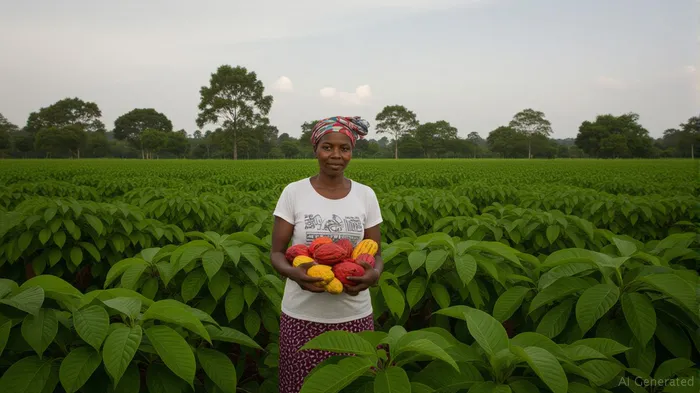
The Perfect Storm for Cocoa Supply
West Africa, home to 60% of global cocoa production, faces a trifecta of challenges:1. Climate Chaos: Prolonged droughts, erratic rains, and the lingering effects of El Niño have devastated crops. In Ghana, 590,000 hectares of cocoa farms are infected with the Swollen Shoot virus, while illegal gold mining (galamsey) has destroyed 20,000 hectares of farmlandFPI--.2. Aging Infrastructure: The average cocoa tree in Ivory Coast is over 30 years old, well past its peak productivity. Replanting rates lag far behind decay, with farmers struggling to invest in new trees due to low incomes.3. Geopolitical Risks: Political instability in Ivory Coast ahead of its October 2025 election and regulatory pressures like the EU's Deforestation Regulation (EUDR) threaten further disruptions. Farmers must now comply with sustainability standards to access key export markets, adding operational complexity.
The result? A global cocoa deficit of 494,000 tonnes in 2023/2024—the worst in 60 years—and a projected -10% drop in 2024/2025 output from earlier forecasts. This shortage has already pushed cocoa futures to $9,602 per ton—a 160% surge since early 2024.
Market Impact: A Windfall for Commodity Investors
The supply crunch is a double-edged sword. On one hand, it creates short-term opportunities for investors in cocoa futures and ETFs like JO (Global X Agriculture ETF), which tracks commodities including cocoa. However, the long-term outlook requires nuance:
1. Price Volatility: A Commodity Trader's Playground
- Short-Term Gains: Investors can capitalize on price spikes by going long on cocoa futures or using options strategies to hedge against further volatility. The COCB Index (Cocoa Benchmark Futures) offers a direct play on price movements.
- Long-Term Risks: Persistent deficits may push prices toward $10,000+ per ton by 2025, but overexposure could backfire if supply rebounds faster than expected.
2. Winners in the Supply Chain
Companies with processing capacity and vertical integration stand to benefit:- Olam International (OLAM): The agribusiness giant controls 10% of global cocoa trade and has invested in sustainability initiatives to secure supplies.- Barry Callebaut (BARN): The world's largest cocoa processor has hedged its risks by locking in long-term contracts and expanding into alternative markets like plant-based chocolate.
3. Geopolitical Winners and Losers
- Latin America's Gain: Countries like Brazil and Peru are ramping up production, with Brazil's output projected to grow by 8% annually. Investors might consider exposure to these regions via ETFs like ILB (iShares MSCIMSCI-- Brazil ETF).
- West Africa's Dilemma: While governments in Ghana and Ivory Coast have hiked farmgate prices (up 63% in Ghana) to stabilize farmer incomes, structural issues like child labor and land disputes could deter foreign investment.
Investment Strategies: Navigating the Cocoa Volatility
To profit from this crisis while mitigating risks, consider the following:
1. Commodity Futures Hedging
- Long Cocoa Futures: Allocate a portion of your portfolio to cocoa contracts (e.g., ICE Futures) to capture price rallies. Pair this with put options to limit downside risk.
- Inverse ETFs: Tools like DUST (VelocityShares 3x Long Agriculture ETN) amplify gains during upward price movements but carry significant leverage risk.
2. Equity Plays in Agribusiness
- Olam International (OLAM): Buy on dips below $3.50/share, targeting $5/share if cocoa prices hit $10,000/ton. The stock has a beta of 1.8, offering high upside in volatile markets.
- Sustainability Plays: Invest in firms like Natura & Co (NTCO), which source ethically grown cocoa, to align with ESG trends and regulatory demands.
3. Defensive Positions
- Short Chocolate ETFs: If prices spike beyond $10,000/ton, consider shorting chocolate manufacturers like Mondelez (MDLZ) or Nestlé (NESN), whose margins compress under input cost pressures.
- Diversify with Alternatives: Pair cocoa exposure with other commodities (e.g., coffee or sugar) to reduce portfolio volatility.
The Bottom Line
West Africa's cocoa decline is a catalyst for both disruption and opportunity. While the short-term outlook favors commodity traders and processors, long-term investors should focus on sustainability-driven firms and regional diversification. As climate risks intensify, the cocoa market will reward agility—investors who navigate this volatility wisely could brew substantial returns.
Final advice: Stay nimble, hedge your bets, and keep an eye on the weather.

Stay ahead of the market.
Get curated U.S. market news, insights and key dates delivered to your inbox.
AInvest
PRO
AInvest
PRO



Comments
No comments yet