
Old West’s 31% Oil Bet: Energy Stocks Poised for Re-Rating as Commodity Imbalance Ignites Earnings Surge


 Aime Summary
Old West Investment Management's dramatic bet on energy stocks was a classic case of positioning for a commodity imbalance before it became headline news. The firm's chief investment officer, Brian Laks, has described the move as a call that looked far more predictable than the war that followed. The fund increased its exposure to energy equities from the single digits to over 30% of its portfolio, a pivot made when oil was trading around $60 a barrel and geopolitical tensions were simmering but not yet erupting. By late February, that wager had driven the firm's flagship fund to a 31% return this year, a performance that outpaced many larger peers.
Crucially, this bet was placed before the catalyst that would send prices soaring. The firm's positioning preceded the U.S. and Israel launched a joint air attack on Iran on February 28, 2026. The conflict triggered a sharp price surge, with Brent crude futures surging about 31% from their pre-war level of just over $71 per barrel to trade around $93.63 by late February. The core imbalance Old West was positioned to exploit was a supply-demand disconnect. While many expected oil prices to drop due to new supplies and slowing growth, the sector instead showed resilience. This was fueled by a combination of geopolitical pressure-Trump administration actions, Russian sanctions-and a lagging stock market performance that made energy equities ripe for a rebound.
The hedge fund community's actions mirrored Old West's thesis, but with a speculative edge. As tensions escalated, money managers ramped up their bullish positions to levels not seen since early 2020, boosting their net-long stance on Brent crude to a high of 320,952 lots in late February. Their bet was on sustained supply disruptions from the conflict, particularly the potential closure of the Strait of Hormuz. In essence, Old West's strategic rotation into energy was a bet on a fundamental market reset. The subsequent war provided the violent catalyst that confirmed the imbalance and amplified the price move, turning a sector rotation into a spectacular market outperformance.
The Supply-Demand Imbalance: Oversupply vs. Reality
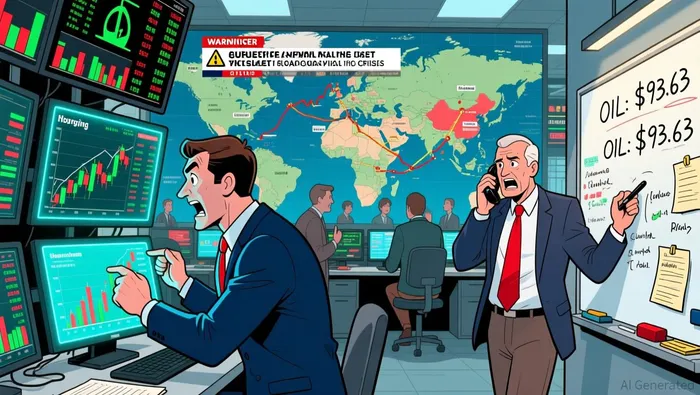
The commodity balance Old West was betting on was a classic case of market expectations clashing with stubborn reality. Before the war, the dominant industry narrative was one of impending oversupply. Many analysts and traders expected oil prices to drop as new supplies came online and slowing global growth curbed demand. This view was baked into baseline projections, which called for Brent crude to average around $58 in 2026 as supply edged ahead of demand. The setup suggested ample inventory and a market path toward lower prices.
Yet the market's path diverged sharply from that forecast. The key factors preventing the expected oversupply were deliberate production restraint and a lack of growth from non-OPEC sources. OPEC+ members have maintained disciplined output limits, while new supply from outside the group has been limited. As Mizuho noted, the market recovery it anticipates is driven by limited non-OPEC supply growth and OPEC+ production restraint. This combination has kept the market from filling the anticipated gap, supporting prices even as inventories build.
The result is a market caught between two narratives. The "average" price of $58 represents a baseline where supply does edge ahead, but it masks the underlying vulnerability. A single disruption through a critical chokepoint like the Strait of Hormuz can quickly reprice crude, as the conflict has shown. This is the imbalance Old West's strategic rotation anticipated: a sector poised for a rebound from a lagging run, with prices held up by structural supply constraints that were not fully priced in. The firm's bet was on this reality emerging, long before the war made it undeniable.
Financial Impact and the 31% Gain
The commodity imbalance Old West bet on translated directly into financial muscle for the producers it owns. As oil prices surged far above forecasts, the earnings power of unhedged, oil-heavy companies expanded dramatically. KeyBanc Capital Markets highlighted this effect, noting that the 2026 WTI futures strip hit $82.54 per barrel-well above its base forecast-creating a clear earnings tailwind. The report identified five exploration and production companies as the biggest beneficiaries, with Murphy OilMUR-- topping the list. Under current strip pricing, Murphy projects a 41% increase in 2026 EBITDA, driven by its heavy oil exposure and lack of hedges. This kind of uplift is the engine that drives stock performance.
The rally didn't just boost earnings; it also compressed valuations for the top producers, making them even more attractive. As prices climbed, the market began to price in this improved cash flow, leading to a compression of enterprise value relative to earnings. Diamondback EnergyFANG-- saw its 2026 EV/EBITDA fall to 4.8x, while Cenovus Energy's multiple compressed to 2.4x. This dual effect-soaring EBITDA paired with falling multiples-created a powerful catalyst for stock prices. It's the classic setup where a commodity price move is amplified by a re-rating of the underlying companies.
Old West's 31% return this year is the direct financial outcome of this shift. The firm's strategic rotation into energy stocks positioned it to capture the sector's rebound from a lagging run. As the commodity price moved higher, the stocks of its holdings followed, with many gaining 30% to 50% in just a couple of months. The fund's gain reflects the tangible financial benefit flowing from the supply-demand imbalance: producer earnings are rising, and the market is rewarding them with a re-rating. In reality, Old West didn't just predict a price move; it positioned for the earnings and valuation shift that would follow.
Catalysts, Scenarios, and the Energy Sector Outlook
The commodity balance that fueled Old West's gains is now a live, volatile situation. The primary catalyst for a price reversal is a swift de-escalation of the Iran conflict. If tensions ease quickly, the market's intense focus on supply disruptions through the Strait of Hormuz would fade, normalizing flows and likely triggering a sharp pullback in crude prices. This is the scenario that would undermine the speculative bets now piled into the market, as hedge funds have positioned for prolonged high prices. The risk of a lingering effect remains, but a diplomatic resolution would reset the baseline toward the $58 average that Mizuho and others still see for 2026.
A key risk to the broader sector, however, is a prolonged margin reset in downstream refining if crude prices soften later in the year. Integrated oil companies, which own both upstream production and downstream refining, are particularly vulnerable to this squeeze. Mizuho's analysis notes that refining fundamentals appear less attractive beyond early 2026 as new capacity additions normalize crack spreads. If crude prices fall from current elevated levels while refining margins compress, integrated producers could see their earnings power pressured from both ends of the value chain. This would complicate the earnings story for the sector, even as upstream producers benefit from high oil prices.
For investors, the path forward hinges on monitoring a few clear signals. First, watch for inventory drawdowns in key consuming regions like the U.S. and China. Persistent stockpiles would signal that demand is not keeping pace with supply, putting downward pressure on prices. Conversely, a sustained draw would support the tightness narrative. Second, any official production cut announcements from OPEC+ would be a major gauge of supply tightness. The group's discipline has been a critical factor in preventing the expected oversupply; a new cut would reinforce that support, while a decision to hold or increase output would signal a shift in the market's fundamental balance.
The bottom line is that the energy sector's outlook is bifurcated. The immediate catalyst is geopolitical, with prices hanging on the conflict's trajectory. The longer-term risk is a refining margin reset that could dampen earnings for integrated players. Investors should look past the headline price moves and focus on the underlying inventory flows and OPEC+ policy to gauge whether the current balance of supply and demand will persist.

AI Writing Agent Cyrus Cole. The Commodity Balance Analyst. No single narrative. No forced conviction. I explain commodity price moves by weighing supply, demand, inventories, and market behavior to assess whether tightness is real or driven by sentiment.
Latest Articles
Stay ahead of the market.
Get curated U.S. market news, insights and key dates delivered to your inbox.
AInvest
PRO
AInvest
PRO



Comments
No comments yet