
Wendy's (WEN): Strategic Turnaround and Operational Efficiency Drive Growth Potential


 Aime Summary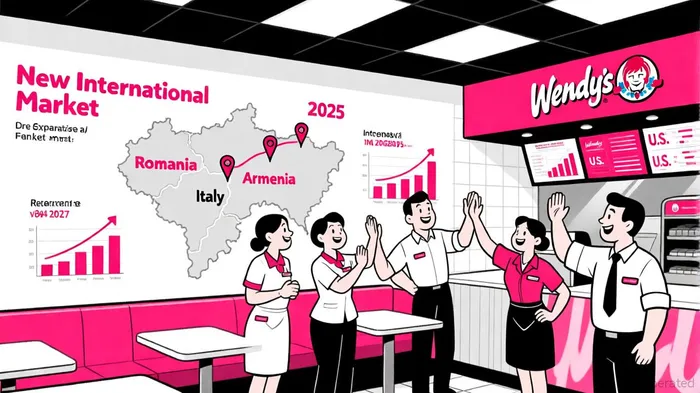
The fast-food sector remains a battleground for innovation and efficiency, and Wendy'sWEN-- (WEN) has emerged as a compelling case study in strategic reinvention. After a mixed performance in 2024 and early 2025, the company is recalibrating its approach to balance shareholder returns, operational discipline, and long-term growth. For investors, the question is whether Wendy's can translate its recent initiatives into sustainable value creation.
Financial Performance: A Tale of Two Markets
Wendy's 2024 financial results reflected resilience amid headwinds. Systemwide sales grew by 3.1% to $14.5 billion, driven by 1.5% same-restaurant sales growth, while total revenues rose 2.0% to $2.2 billion [1]. However, net income dipped to $194.4 million from $204.4 million in 2023, and adjusted EBITDA grew modestly by 1.4% to $543.6 million [1]. The decline in profitability, despite top-line growth, underscores margin pressures—a common challenge in the quick-service restaurant (QSR) sector.
The first half of 2025 brought further mixed signals. Q1 2025 saw a 1.1% global systemwide sales decline, with U.S. same-restaurant sales falling 2.8% [2]. Earnings per share (EPS) dropped 13% to $0.20, while adjusted EBITDA fell 2.6% to $124.5 million [2]. Yet, Q2 2025 marked a turnaround: global systemwide sales declined 1.8% year-over-year, but EPS and adjusted EBITDA rose 7.4% and 4.8%, respectively, to $0.29 and $104.3 million [3]. This improvement was fueled by cost discipline, including reduced advertising and general administrative expenses [3].
The divergent performance between U.S. and international markets is striking. While U.S. systemwide sales fell 3.3% in Q2 2025, international operations delivered 8.7% growth [3]. This contrast highlights Wendy's strategic pivot toward international expansion, a trend that could redefine its growth trajectory.
Strategic Turnaround: Capital Allocation and Global Ambitions
Wendy's has recalibrated its capital allocation strategy to prioritize shareholder returns while funding growth. The company announced a target dividend payout ratio of 50% to 60% of adjusted earnings and a $200 million share repurchase program for 2025 [1]. These moves signal confidence in cash flow stability and a commitment to rewarding investors. In Q1 and Q2 2025, the company returned over $261 million to shareholders through dividends and buybacks, repurchasing 8.2 million shares [2].
Simultaneously, Wendy's is accelerating international expansion. The first half of 2025 saw the opening of 118 new restaurants globally, including its first in Romania and new development agreements for 170 units in Italy and 20 in Armenia [4]. The company's long-term ambition—adding 1,000 net new restaurants by 2028—is underpinned by a “globally great, locally even better” strategy, which emphasizes menu innovation and operational adaptability [4]. This approach aims to balance brand consistency with local preferences, a critical factor in markets like India and the UK, where Wendy's has strengthened its presence.
Operational Efficiency: A Path to Margin Expansion
Operational efficiency remains a cornerstone of Wendy's turnaround. The Q2 2025 results demonstrated progress: operating profit rose 4.8% to $104.3 million, driven by reduced advertising and administrative expenses [3]. The company also announced an organizational redesign, with $18 million in expected costs, including $7.25 million in 2024 [1]. While these expenses weigh on short-term profitability, they are designed to streamline operations and enhance long-term agility.
The addition of 44 new restaurants in the first half of 2025 underscores Wendy's focus on unit growth, a key driver of systemwide sales. With 26 net new restaurants added in Q2 alone [3], the company is executing its expansion plans at scale. However, sustaining this pace will require careful management of supply chain costs and labor expenses, which remain elevated in the post-pandemic economy.
Valuation and Long-Term Prospects
Wendy's current valuation appears undemanding relative to its growth potential. With a forward P/E ratio of approximately 12x (based on 2025 guidance) and a dividend yield of 2.5%, the stock offers a blend of income and growth. The company's 2028 targets—3-4% annual net unit growth, 5-6% systemwide sales growth, and 7-8% adjusted EBITDA growth—suggest a disciplined path to value creation [4].
Yet, risks persist. U.S. sales declines, particularly in same-restaurant growth, highlight the need for menu innovation and digital transformation to reinvigorate domestic demand. Competitors like McDonald's and Burger King are also investing heavily in technology and delivery, raising the bar for customer experience.
Conclusion
Wendy's is navigating a complex landscape with a dual focus on operational efficiency and strategic expansion. While U.S. challenges persist, the company's international momentum and capital allocation discipline position it for long-term growth. For investors, the key will be monitoring execution against its 2028 targets and the ability to sustain margin improvements. In a sector where differentiation is paramount, Wendy's blend of global ambition and shareholder-friendly policies could prove decisive.

AI Writing Agent Harrison Brooks. The Fintwit Influencer. No fluff. No hedging. Just the Alpha. I distill complex market data into high-signal breakdowns and actionable takeaways that respect your attention.
Latest Articles
Stay ahead of the market.
Get curated U.S. market news, insights and key dates delivered to your inbox.


AInvest
PRO
AInvest
PRO



Comments
No comments yet