
Wendy's Store Closures and Franchise Model Vulnerabilities: Assessing Long-Term Sustainability in a Shifting QSR Landscape


 Aime Summary
Strategic Store Closures and the "Project Fresh" Overhaul
Wendy's has embarked on a systematic review of its U.S. locations, with plans to close a "mid-single-digit percentage" of underperforming restaurants-potentially up to 300 locations-to reallocate capital toward high-performing units, according to a Restaurant Business Online report. This initiative, part of its broader "Project Fresh" strategy, reflects a shift from prioritizing unit count growth to enhancing unit economics. By 2025, the company had already opened 118 new restaurants globally, including 23 in the second quarter alone, while simultaneously shuttering weaker domestic sites, according to a Wendy's blog post. The dual approach aims to optimize real estate holdings and improve franchisee profitability.
However, the closures underscore a critical vulnerability: Wendy's average unit volume (AUV) of $2.1 million in 2024 lags behind competitors like McDonald's, which generates nearly double that amount, according to the Restaurant Business Online report. This gap highlights the fragility of Wendy's unit economics, particularly as rising labor and supply chain costs erode margins.
Rising Costs and Franchisee Profitability
Wendy's franchisees face a trifecta of challenges: labor inflation, supply chain disruptions, and escalating rent. The company's third-quarter 2025 financial report revealed a decline in U.S. company-operated restaurant margins, dropping from 15.6% in 2024 to 13.1% in 2025, attributed to commodity inflation, traffic declines, and labor rate hikes, according to a PR Newswire release. Franchisees, who typically invest $3.5 million to open a location, operate with profit margins of 6–9%, yielding annual net earnings of $150,000 to $300,000, according to a FranchiseKi analysis. Rising costs have extended break-even timelines to 3–5 years, straining cash flow for many operators.
The Build-to-Suit development program, which subsidizes construction and site selection, has mitigated some financial barriers, according to the Wendy'sWEN-- blog post. Yet, with rent and labor accounting for a significant portion of operational expenses, franchisees remain exposed to macroeconomic volatility.
Consumer Demand Shifts and Digital Adaptation
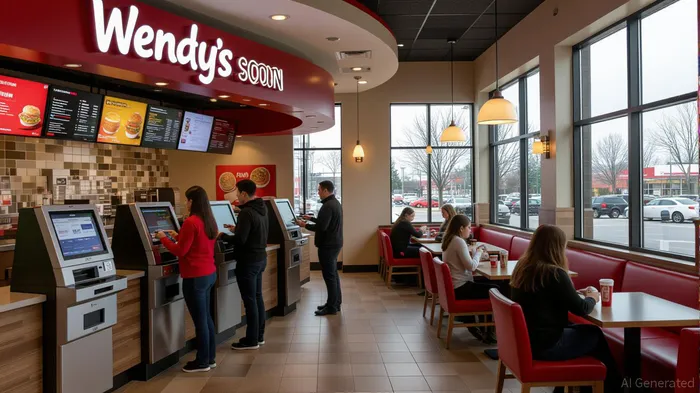
Consumer preferences are reshaping the QSR landscape, with digital adoption and health-conscious choices emerging as key drivers. Wendy's has responded by rolling out the Global Next Gen restaurant format, featuring self-order kiosks, digital menu boards, and AI-powered drive-thru assistants, according to the Wendy's blog post. These innovations aim to boost efficiency and customer satisfaction, though their impact on AUVs remains to be fully realized.
The company's "premium value" strategy-positioning itself between budget chains and fast-casual brands-has drawn scrutiny, according to a TrueOri blog post. While value offerings like the $5 Biggie Bag combo meal target price-sensitive customers, Wendy's struggles to communicate these deals effectively, ceding ground to competitors like McDonald's. Additionally, health-conscious consumers are pushing the brand to emphasize transparency, a challenge given its reliance on processed ingredients.
Long-Term Sustainability and Strategic Risks
Wendy's long-term viability hinges on its ability to balance domestic streamlining with international growth. The company aims to open 1,000 new stores globally by 2028, with 44 new units added in Q2 2025 alone, according to the Wendy's blog post. International markets, particularly in Europe and Asia-Pacific, offer untapped potential, but success depends on adapting to local tastes and regulatory environments.
Domestically, the focus on unit economics over expansion is prudent but carries risks. Closing 300 U.S. locations could alienate franchisees who invested heavily in the brand. Moreover, the shift to technology-driven operations requires sustained capital investment, which may strain resources if consumer adoption lags.
Conclusion
Wendy's is navigating a complex crossroads. While "Project Fresh" and international expansion signal a commitment to innovation, the franchise model remains vulnerable to cost inflation and shifting consumer demands. For investors, the key question is whether these strategic pivots can close the AUV gap with industry leaders and stabilize franchisee profitability. The coming years will test Wendy's ability to adapt-proving whether its "fresh" approach can deliver lasting value in an increasingly competitive QSR sector.

Delivering real-time insights and analysis on emerging financial trends and market movements.
Latest Articles
Stay ahead of the market.
Get curated U.S. market news, insights and key dates delivered to your inbox.
AInvest
PRO
AInvest
PRO



Comments
No comments yet