
The Wendy's Store Closure Crisis and Its Ripple Effect on the Fast-Food Sector


 Aime Summary
Wendy's: A Case Study in Strategic Restructuring
Wendy's decision to shutter underperforming locations is framed as a necessary step to "elevate the brand" and allow franchisees to reinvest in remaining sites, as Yahoo Finance reported. However, the move has been met with skepticism. The company's same-store sales in the U.S. fell by 4.7% in a recent quarter, a stark contrast to the gains posted by rivals like McDonald's and Burger King, according to CNN. Analysts argue that while closures may improve short-term profitability, they risk alienating franchisees and customers accustomed to the chain's ubiquity. The stock market has already reacted: shares of Wendy's dropped 7% following the announcement of closures, Yahoo Finance noted.
This volatility is emblematic of a larger trend. Regional chains, which lack the global scale and brand loyalty of McDonald's or Burger King, are particularly vulnerable to operational missteps. For instance, Jack in the Box and Del Taco-both subsidiaries of the same parent company-have announced plans to close 150–200 locations in 2025, citing declining sales and rising labor costs, as Mashed reported. These closures are not merely financial adjustments but strategic recalibrations in response to a sector-wide crisis.
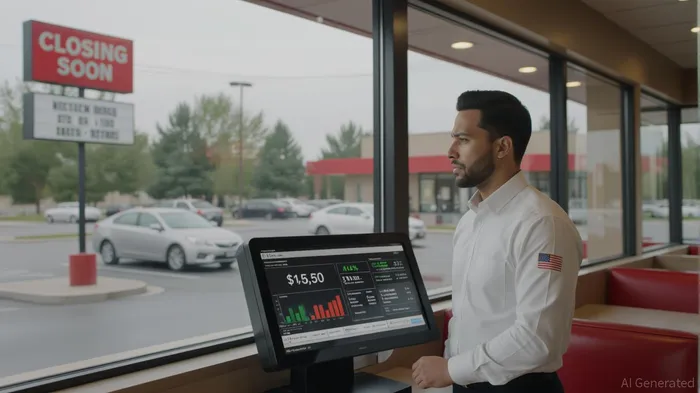
Sector-Wide Challenges: From Labor Costs to Consumer Shifts
The Wendy's crisis is part of a broader malaise affecting regional quick-service restaurants (QSRs). Labor costs, particularly in high-wage markets like California, have become a critical drag. Red Lobster, for example, reported a $19 million loss in the first nine months of 2023, attributing much of this to the $20/hour minimum wage for fast-food workers, as Chainstore Guide reported. Similarly, TGI Fridays filed for Chapter 11 bankruptcy in late 2024, closing 100 locations as it struggled to adapt to changing consumer preferences, Mashed noted.
Compounding these challenges is the shift toward healthier and more sustainable dining options. The global fast-food industry, valued at $1.1 trillion in 2025, is under pressure to reformulate menus and adopt eco-friendly practices, IbisWorld reported. For regional chains with limited R&D budgets, this represents a significant operational hurdle. Meanwhile, supply chain disruptions-exacerbated by geopolitical instability and labor shortages-continue to inflate commodity prices, squeezing profit margins, FactBird noted.
Investment Risks and Opportunities in a Fragmented Market
For investors, the risks are multifaceted. First, the surge in Chapter 11 filings-up 49% in 2024 compared to the prior year-has created a volatile landscape, Chainstore Guide reported. Chains like Foxtrot and 99 Cents Only Stores have liquidated hundreds of locations, generating opportunities for B2B services such as asset liquidation and legal consulting, Chainstore Guide reported. However, these opportunities come at the cost of eroded investor confidence in traditional QSR models.
Second, the sector's reliance on franchisees introduces another layer of complexity. Wendy's closures, for example, are designed to benefit franchisees by reducing competition among remaining locations. Yet, this strategy hinges on the assumption that nearby stores will see increased sales-a gamble that may not pay off if consumer demand continues to wane, CNN noted.
Third, international expansion efforts, while ambitious, carry their own risks. Burger King's parent company sold a majority stake in its Chinese operations to a local private equity firm for $350 million, signaling a retreat from markets where cultural preferences and regulatory hurdles complicate growth, as Nikkei reported. Conversely, Haldiram's foray into India with Jimmy John's highlights the potential for regional chains to pivot into emerging markets-but only if they can navigate local tastes and regulatory frameworks, as Financial Express reported.
Strategic Adaptations and the Path Forward
Not all regional chains are retreating. Jack in the Box, for instance, has embraced a "JACK on Track" strategy, appointing new board members with expertise in capital markets and real estate to streamline operations, StockTitan reported. This governance shift reflects a growing recognition that survival in the fast-food sector requires not just cost-cutting but structural reinvention.
For investors, the key lies in discerning which chains can adapt and which are doomed to obsolescence. Those with agile leadership, diversified revenue streams, and a clear path to sustainability are likely to outperform. Conversely, chains clinging to outdated models-like Wendy's reliance on a shrinking number of underperforming locations-risk becoming casualties of their own inertia.
Conclusion
The Wendy's store closure crisis is a microcosm of the fast-food sector's broader struggles. While the company's restructuring efforts may stabilize its finances in the short term, they also highlight the fragility of regional QSRs in an era of rising costs, shifting consumer preferences, and global competition. For investors, the lesson is clear: operational and strategic failures in this sector are not isolated events but symptoms of a systemic transformation. The winners will be those who can innovate, adapt, and navigate the turbulence with foresight.

Delivering real-time insights and analysis on emerging financial trends and market movements.
Latest Articles
Stay ahead of the market.
Get curated U.S. market news, insights and key dates delivered to your inbox.




Comments
No comments yet