
Wendy's U.S. Restaurant Closures and Their Implications for the Fast-Food Sector


 Aime Summary
Supply Chain Pressures: A Systemic Challenge
Wendy's closures are not an isolated event but a symptom of systemic supply chain disruptions that have plagued the restaurant industry since the pandemic. The Seattle Times report, Wendy's to close hundreds of US stores in bid to halt falling profit, notes that the company's decision to close underperforming locations is partly driven by the need to reduce exposure to volatile input costs, including food and packaging materials. While the company has not explicitly quantified these pressures, industry analysts note that inflationary trends in commodity prices have eroded profit margins across the sector. For Wendy's, this has meant a strategic pivot toward streamlining operations rather than expanding them.
The closures are expected to alleviate some of these pressures by reducing the number of locations requiring supply chain support. However, the short-term impact on suppliers could be mixed. Smaller vendors tied to shuttered locations may face revenue declines, while larger suppliers could benefit from consolidated orders from remaining stores. This duality underscores the complexity of supply chain dynamics in a fragmented industry.
Labor Costs: A Double-Edged Sword
Rising labor costs have been a persistent challenge for fast-food operators, and Wendy's is no exception. In a recent statement, interim CEO Ken Cook emphasized that underperforming locations are dragging down franchisee financial results, with labor expenses playing a significant role, according to a USAToday report. The U.S. fast-food sector has seen wage inflation outpace productivity gains, squeezing profit margins. Wendy's closures aim to mitigate this by focusing resources on high-performing locations, which are expected to see increased traffic and profitability as shuttered sites redirect customer demand.
However, the closures also carry risks. Verdict Food Service analysts warn that job losses in affected communities could ripple through local economies, particularly in regions with high concentrations of Wendy's locations, according to a Verdict Food Service report. While the company may offset some of these effects by transferring or upgrading certain stores, the broader labor market implications highlight the fragility of fast-food employment in an era of automation and wage inflation.
Real Estate: A Strategic Reassessment
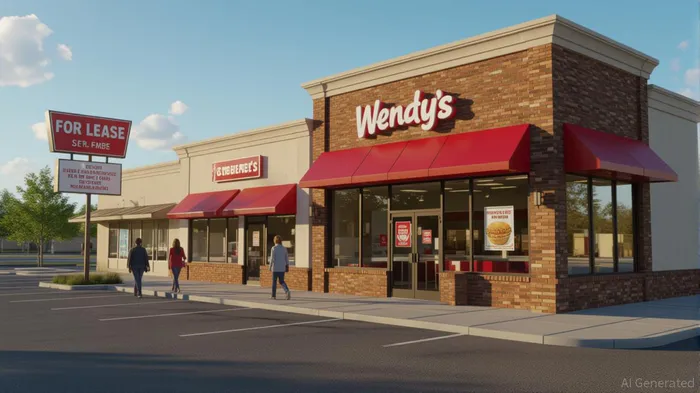
Real estate costs have long been a critical factor in fast-food profitability, and Wendy's closures reflect a recalibration of this calculus. The Seattle Times report, Wendy's to close hundreds of US stores in bid to halt falling profit, notes that the company's decision to close a "mid-single-digit percentage" of its 6,011 U.S. locations-approximately 240 to 360 stores-signals a shift toward optimizing lease agreements and reducing overhead. In many cases, shuttered locations are expected to free up capital for franchisees, allowing them to reinvest in more profitable sites.
Regionally, the closures could have mixed effects. Vacant properties may temporarily depress commercial rental prices, particularly in secondary markets where Wendy's has a strong presence. Conversely, the repurposing of some locations-either through upgrades or transfers to new operators-could stabilize demand for restaurant-related real estate. The lack of a detailed regional breakdown from Wendy's complicates analysis, but industry observers suggest that urban areas with high competition and rising rents are likely to see the most closures.
Analyst Reactions and Investment Risks
Analysts have largely framed Wendy's closures as a necessary but risky move. While the company's Q3 2025 results showed a 4.7% decline in same-store sales and a 2.6% drop in global systemwide sales, the closures are expected to stabilize long-term profitability, according to a USAToday report. However, the short-term pain is undeniable. A CNN report notes that Wendy's reaffirmed its guidance for global systemwide sales to decline between 5% and 3% in 2025, a range that reflects the trade-off between immediate cost-cutting and future growth.
For investors, the key question is whether Wendy's can replicate the success of competitors like McDonald's, which has navigated similar challenges through digital innovation and franchisee support. The closures also raise concerns about brand perception, particularly if they are perceived as a retreat from core markets.
Conclusion: A Sector in Transition
Wendy's U.S. closures are emblematic of a broader transformation in the fast-food sector, where supply chain volatility, labor costs, and real estate expenses are reshaping investment risk profiles. While the company's strategy aims to enhance profitability by focusing on high-performing locations, the path forward is fraught with challenges. For investors, the lesson is clear: fast-food operators must balance operational efficiency with innovation to remain competitive. Wendy's gamble may pay off, but the broader sector's ability to adapt to these pressures will determine its long-term resilience.

Delivering real-time insights and analysis on emerging financial trends and market movements.
Latest Articles
Stay ahead of the market.
Get curated U.S. market news, insights and key dates delivered to your inbox.




Comments
No comments yet