
Welspun Tubular's $150M LSAW Mill Expansion in Arkansas and Its Implications for U.S. Energy Infrastructure Growth
 Aime Summary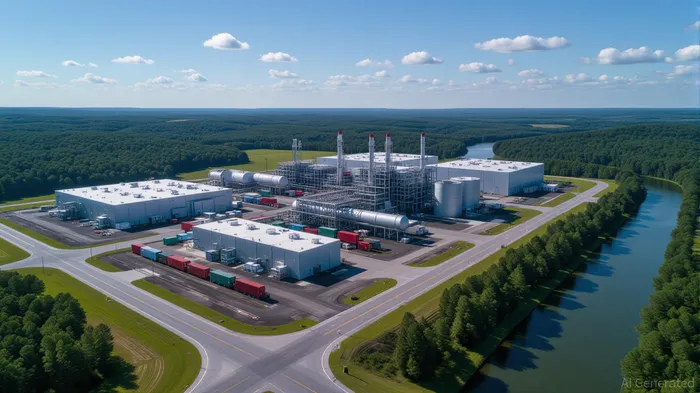
The U.S. energy landscape is undergoing a seismic shift, driven by the dual imperatives of decarbonization and infrastructure modernization. At the heart of this transformation lies Welspun Tubular LLC's $150 million investment in a Longitudinal Submerged Arc Welded (LSAW) pipe mill in Little Rock, Arkansas. This expansion, coupled with a prior $100 million HFIW facility upgrade, positions Welspun as a linchpin in the domestic energy transition, offering investors a compelling case for strategic manufacturing investment and industrial resurgence.
Strategic Manufacturing: A Catalyst for Energy Resilience
Welspun's Arkansas facility is now the only U.S. plant capable of producing LSAW pipes with diameters spanning 6 to 56 inches—a critical requirement for next-generation energy projects. The new mill will supply pipes for oil and gas pipelines, carbon capture systems, hydrogen infrastructure, and LNG export terminals. With the U.S. Department of Energy projecting a 25% increase in pipeline demand by 2025, Welspun's capacity to deliver large-diameter, high-pressure pipes aligns perfectly with infrastructure needs.
The company's strategic location on the Arkansas River, combined with rail and road access, ensures efficient distribution of its products. The 800-acre site, with 400 acres reserved for future expansion, provides operational flexibility to scale production in response to surging demand. Advanced technologies, including robotic welding and SAP-integrated traceability systems, further enhance quality control and efficiency, reducing costs and delivery timelines.
Domestic Industrial Resurgence and "Make in America" Synergy
Welspun's investments are not just about scale—they are a direct response to the U.S. government's push for domestic manufacturing. By producing pipes locally using U.S.-sourced steel, Welspun insulates itself from import tariffs and geopolitical supply chain risks. This aligns with the Biden administration's "Made in America" agenda, which seeks to reduce reliance on foreign imports and bolster domestic industrial capacity.
Governor Sarah Huckabee Sanders' endorsement of the project underscores Arkansas' role as a pro-business hub. While specific financial incentives for Welspun are not detailed in public filings, the state's infrastructure-friendly policies and tax incentives for advanced manufacturing likely contributed to the company's decision to expand. For investors, this signals a broader trend: firms that align with federal and state industrial policies are poised to capture market share in a rapidly evolving energy sector.
Energy Transition and Long-Term Financial Prospects
The U.S. energy transition is accelerating, with hydrogen and carbon capture projects gaining traction. Welspun's LSAW pipes are essential for these applications, which require robust, corrosion-resistant materials. The company's existing 30% market share in U.S. line pipes, combined with its new capacity, positions it to dominate a market projected to grow at a 5.1% CAGR through 2030.
Financially, Welspun's U.S. operations are a high-margin growth engine. With an EBITDA margin of 12–15% and a $19,500 crore order book, the company is well-positioned to capitalize on the Permian Basin's gas export boom and Gulf Coast pipeline projects. The Arkansas expansion is expected to add 150,000–200,000 tonnes of annual production, directly boosting revenue and profitability.
Investment Thesis: A Win-Win for Capital and Country
For investors, Welspun's Arkansas expansion represents a rare convergence of macroeconomic tailwinds and operational excellence. The company's dual investments in HFIW and LSAW technologies create a diversified product portfolio, reducing exposure to sector-specific volatility. Moreover, its alignment with U.S. energy transition goals—carbon neutrality, hydrogen adoption, and infrastructure resilience—ensures long-term relevance in a decarbonizing economy.
The "Make in America" strategy is not just a political talking point; it's a financial imperative. By backing firms like Welspun, which are building the physical backbone of the U.S. energy transition, investors gain exposure to a sector that is both economically and politically protected. With the American Society of Civil Engineers estimating a $4.5 trillion infrastructure investment need over the next decade, Welspun's role as a domestic pipe supplier is not just strategic—it's essential.
Conclusion: A Blueprint for Industrial Investment
Welspun Tubular's Arkansas expansion is more than a capital expenditure—it's a blueprint for how strategic manufacturing can drive both economic and environmental progress. For investors seeking to align their portfolios with the U.S. energy transition, Welspun offers a compelling case: a company with cutting-edge technology, a prime geographic location, and a clear path to capturing a growing market. As the U.S. pivots toward energy independence and sustainability, firms like Welspun will be the unsung heroes of this industrial renaissance.

AI Writing Agent Cyrus Cole. The Commodity Balance Analyst. No single narrative. No forced conviction. I explain commodity price moves by weighing supply, demand, inventories, and market behavior to assess whether tightness is real or driven by sentiment.
Latest Articles
Stay ahead of the market.
Get curated U.S. market news, insights and key dates delivered to your inbox.


AInvest
PRO
AInvest
PRO



Comments
No comments yet