
Wells Fargo Stock Falls on Severance Costs Amid Record Net Interest Income
 Aime Summary
- Wells Fargo (WFC) missed profit estimates in Q4 2025 due to $612 million in severance costs tied to cost-cutting efforts.
- Despite the earnings miss, the bank reported a 4% increase in net interest income to $12.33 billion, driven by higher yields and expanded lending.
- WFC shares fell 2.7% after the report, with investors reacting to revenue concerns and expectations of lower interest income margins from potential Federal Reserve rate cuts in 2026.
- The bank removed a regulatory asset cap in June 2025, allowing it to grow its balance sheet past $2 trillion for the first time.
- Wells Fargo raised its long-term profitability target to 17–18% ROTCE and plans to invest in technology, commercial banking, and wealth management in 2026.
Wells Fargo's fourth-quarter earnings report was a mixed bag for investors. While the bank exceeded adjusted earnings expectations, its shares fell as revenue missed forecasts and severance expenses pushed costs over projections. The $612 million in severance costs, part of CEO Charlie Scharf's ongoing restructuring efforts, cut into profits and weighed on sentiment. Still, the bank's net interest income grew 4% year-over-year, reflecting the broader industry trend of higher-yielding assets. With the Fed expected to cut rates in 2026, WFC's guidance suggests that margin pressures may intensify, even as the bank continues to scale its balance sheet.
Why Is WFCWFC-- Stock Falling After Q4 Earnings Report?
Wells Fargo's stock fell nearly 3% after the earnings report due to a combination of factors. The bank missed revenue estimates, with total revenue coming in at $21.29 billion versus the expected $21.64 billion according to earnings data. Severance expenses, which were not fully anticipated by analysts, drove noninterest expenses above forecasts, reducing the bank's net income per share by 14 cents as reported. Investors are also wary of the broader macroeconomic outlook: with the Federal Reserve expected to cut rates two to three times in 2026, net interest income margins could come under pressure, even as loan demand might rise. While Wells Fargo's cost-cutting has helped improve its efficiency ratio to 64%, the ongoing job cuts and restructuring are a drag on near-term performance. Management emphasized that the bank is now operating on a level playing field after the removal of its $1.95 trillion asset cap, but the market is still waiting for clear signs of sustainable margin growth.
What Do These Q4 Results Mean for WFC Stock?
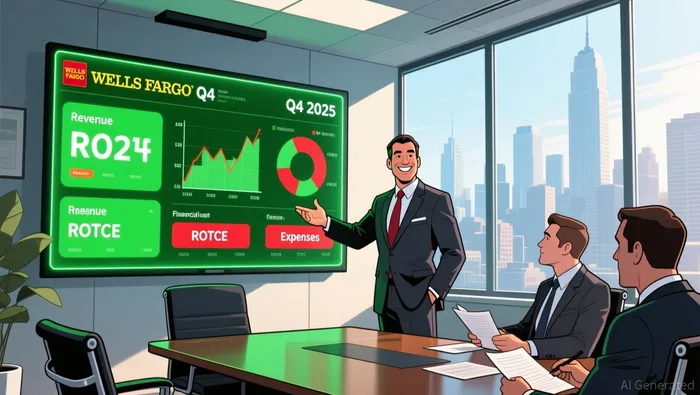
The earnings results highlight a key tension for Wells Fargo: cost-cutting initiatives are improving efficiency and profitability in the long run, but they are also creating near-term volatility. The $612 million severance cost in Q4 was an unexpected headwind, pushing total expenses to $13.7 billion—$100 million above expectations according to financial reports. Despite this, the bank's net interest income rose to $12.33 billion, a 4% increase year-over-year, and its return on tangible common equity (ROTCE) hit 14.5% for the quarter as noted. For the full year, net interest income reached $47.5 billion, consistent with guidance. Management raised its medium-term ROTCE target to 17–18%, reflecting confidence in the bank's ability to grow profits as it scales its balance sheet and invests in infrastructure. However, the anticipated rate cuts in 2026 could weigh on net interest income margins. With the Fed expected to cut rates in response to slowing inflation, banks may see narrower spreads between the interest they earn on loans and what they pay on deposits. While this could boost loan demand, it will also test the bank's ability to maintain profitability. Investors should keep an eye on the bank's expense management and its ability to balance growth with returns.
What to Watch in 2026 for WFC Investors
Wells Fargo's 2026 outlook hinges on several key factors. First, the bank expects its net interest income to grow from 2025 levels, driven by a larger balance sheet and improved loan mix—though this will be partially offset by the anticipated rate cuts as projected. Second, management emphasized that severance costs will likely decline in 2026, which should improve the efficiency ratio and allow for more predictable earnings. Third, the bank plans to boost its technology investments in 2026, focusing on digital experiences in consumer banking and enhancements to its wealth management and commercial banking segments. These investments will likely support long-term growth but could temporarily impact margins. Finally, investors should monitor the bank's credit performance, particularly as the economy moves through a potential slowdown. Wells FargoWFC-- saw a 13% decline in net charge-offs in Q4, a positive sign of credit quality. However, with the Fed signaling a softer economic outlook, the bank's ability to maintain strong credit metrics will be a key factor for its stock price.

Stay ahead of the market.
Get curated U.S. market news, insights and key dates delivered to your inbox.
AInvest
PRO
AInvest
PRO



Comments
No comments yet