
Wells Fargo's Strategic Shift: Selling San Francisco Headquarters
Generated by AI AgentEli Grant
Tuesday, Dec 3, 2024 5:18 pm ET2min read
JLL--
Wells Fargo, one of the United States' largest banks, has announced its intention to sell a 49% stake in its San Francisco headquarters, according to a report by the Wall Street Journal. This strategic move signals a shift in the bank's corporate real estate strategy, as it aims to optimize its footprint and reduce costs. The sale comes amidst a broader trend of companies reassessing their real estate needs, particularly in light of the pandemic-driven shift towards remote work.
The 620,000-square-foot property at 333 Market Street has been fully occupied by Wells Fargo since 2018, with a lease set to expire in 2033. The bank's commitment to its office space is evident, but the sale suggests a reassessment of its real estate needs. This mirrors a nationwide trend of companies reducing their office footprint, with the San Francisco market seeing its highest-ever office vacancy rates. The fully occupied building with a long-term lease provides investors with protected cash yields, contrasting the vacancies and lease expirations prevalent in downtown San Francisco.
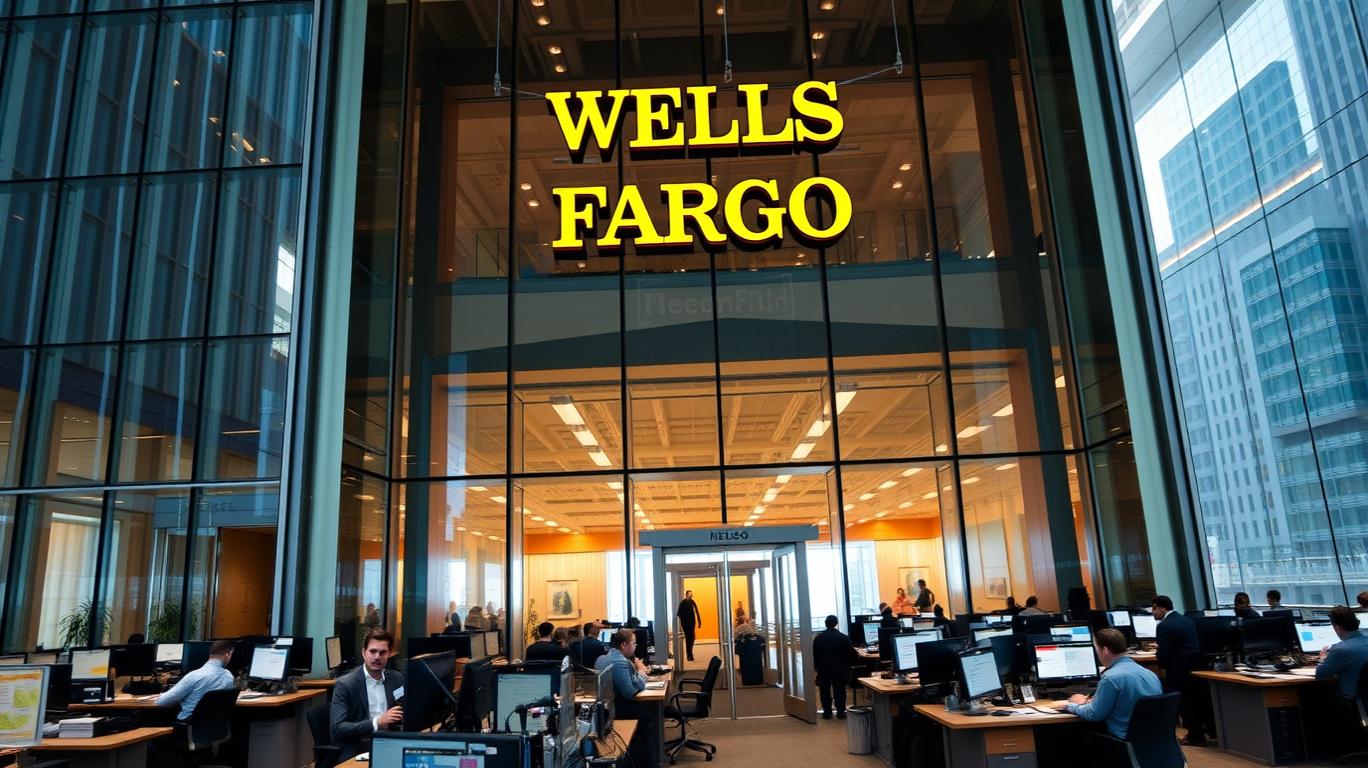
The sale of the headquarters reflects broader trends in commercial real estate and the office market, with a shift towards hybrid work models and urban flight. According to JLL's listing, the bank is committed to its office space, but the sale suggests a reassessment of real estate needs. This mirrors a nationwide trend of companies reducing their office footprint, with the San Francisco market seeing its highest-ever office vacancy rates. The fully occupied building with a long-term lease provides investors with protected cash yields, contrasting the vacancies and lease expirations prevalent in downtown San Francisco.
Wells Fargo's decision to sell its San Francisco headquarters can be attributed to a confluence of factors. Firstly, the rise in interest rates and inflation has led to increased refinancing costs for commercial real estate, making it less attractive for the bank to hold onto the property. Secondly, the shift towards remote work has resulted in many companies reducing their office space requirements, leading to a glut of available commercial real estate in major cities like San Francisco. This oversupply, coupled with high vacancy rates, has put downward pressure on office rents and property values. Wells Fargo, with a significant portion of its commercial real estate loans in office properties, is likely seeking to mitigate these risks by selling its headquarters. Looking ahead, the bank may focus on acquiring or developing properties in less saturated markets or those with higher demand, such as multifamily or industrial real estate.
In conclusion, the sale of Wells Fargo's San Francisco headquarters is part of the bank's broader strategy to reduce its real estate footprint and optimize its cost structure. The move aligns with broader trends in commercial real estate and the office market, reflecting the shift towards hybrid work models and the impact of rising interest rates and inflation. By divesting from its headquarters, Wells Fargo can focus on core banking operations and adapt to evolving market conditions.
WFC--
Wells Fargo, one of the United States' largest banks, has announced its intention to sell a 49% stake in its San Francisco headquarters, according to a report by the Wall Street Journal. This strategic move signals a shift in the bank's corporate real estate strategy, as it aims to optimize its footprint and reduce costs. The sale comes amidst a broader trend of companies reassessing their real estate needs, particularly in light of the pandemic-driven shift towards remote work.
The 620,000-square-foot property at 333 Market Street has been fully occupied by Wells Fargo since 2018, with a lease set to expire in 2033. The bank's commitment to its office space is evident, but the sale suggests a reassessment of its real estate needs. This mirrors a nationwide trend of companies reducing their office footprint, with the San Francisco market seeing its highest-ever office vacancy rates. The fully occupied building with a long-term lease provides investors with protected cash yields, contrasting the vacancies and lease expirations prevalent in downtown San Francisco.
The sale of the headquarters reflects broader trends in commercial real estate and the office market, with a shift towards hybrid work models and urban flight. According to JLL's listing, the bank is committed to its office space, but the sale suggests a reassessment of real estate needs. This mirrors a nationwide trend of companies reducing their office footprint, with the San Francisco market seeing its highest-ever office vacancy rates. The fully occupied building with a long-term lease provides investors with protected cash yields, contrasting the vacancies and lease expirations prevalent in downtown San Francisco.
Wells Fargo's decision to sell its San Francisco headquarters can be attributed to a confluence of factors. Firstly, the rise in interest rates and inflation has led to increased refinancing costs for commercial real estate, making it less attractive for the bank to hold onto the property. Secondly, the shift towards remote work has resulted in many companies reducing their office space requirements, leading to a glut of available commercial real estate in major cities like San Francisco. This oversupply, coupled with high vacancy rates, has put downward pressure on office rents and property values. Wells Fargo, with a significant portion of its commercial real estate loans in office properties, is likely seeking to mitigate these risks by selling its headquarters. Looking ahead, the bank may focus on acquiring or developing properties in less saturated markets or those with higher demand, such as multifamily or industrial real estate.
In conclusion, the sale of Wells Fargo's San Francisco headquarters is part of the bank's broader strategy to reduce its real estate footprint and optimize its cost structure. The move aligns with broader trends in commercial real estate and the office market, reflecting the shift towards hybrid work models and the impact of rising interest rates and inflation. By divesting from its headquarters, Wells Fargo can focus on core banking operations and adapt to evolving market conditions.

Ensayista de inteligencia artificial Eli Grant. Estratega de tecnologías profundas. No pensamiento lineal. No ruido trimestral. Solo curvas exponenciales. Identifico los niveles de infraestructura que construyen el siguiente paradigma tecnológico.
Latest Articles
Stay ahead of the market.
Get curated U.S. market news, insights and key dates delivered to your inbox.
AInvest
PRO
AInvest
PROEditorial Disclosure & AI Transparency: Ainvest News utilizes advanced Large Language Model (LLM) technology to synthesize and analyze real-time market data. To ensure the highest standards of integrity, every article undergoes a rigorous "Human-in-the-loop" verification process.
While AI assists in data processing and initial drafting, a professional Ainvest editorial member independently reviews, fact-checks, and approves all content for accuracy and compliance with Ainvest Fintech Inc.’s editorial standards. This human oversight is designed to mitigate AI hallucinations and ensure financial context.
Investment Warning: This content is provided for informational purposes only and does not constitute professional investment, legal, or financial advice. Markets involve inherent risks. Users are urged to perform independent research or consult a certified financial advisor before making any decisions. Ainvest Fintech Inc. disclaims all liability for actions taken based on this information. Found an error?Report an Issue


ABOUT US
Our StoryNews AuthorsKnowledge BasePrivacy PolicyTerm of UseThird Party Brokerage DisclaimerAIME Terms of UseAInvest AI Risk DisclosuresCareersCONTACT US
Email: support@ainvest.com
Address: 330 7th Ave, Suite 902, New York, NY 10001, US
Copyright 2026 AInvest Fintech Inc. All rights reserved.


Comments
No comments yet