
The Wegovy Divide: How Novo Nordisk's Split with Hims & Hers Signals a New Era for Telehealth and Weight-Management
The abrupt termination of Novo Nordisk's partnership with Hims & Hers in June 2025 has become a flashpoint in the rapidly evolving weight-management market. At the heart of the dispute lies Wegovy®, Novo's FDA-approved once-weekly injection for obesity, which has become a blockbuster drug amid soaring demand for effective weight-loss solutions. The fallout highlights a critical inflection point: as pharmaceutical giants and telehealth platforms vie for dominance in this $50 billion market, regulatory compliance and patient safety are increasingly dictating which players will thrive—and which will falter.
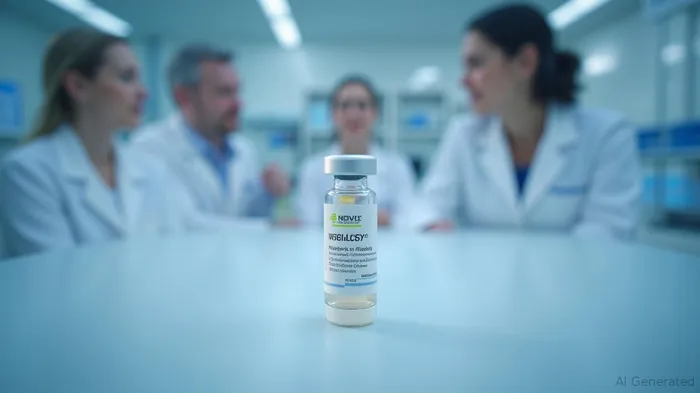
The Partnership Breakdown: Safety vs. Exploitation
Novo Nordisk's decision to cut ties with Hims & Hers was swift and decisive. The Danish firm accused its former partner of selling illegitimate, knockoff versions of Wegovy® sourced from unapproved foreign manufacturers, particularly in China. These compounded drugs, which sidestepped FDA oversight, allegedly contained active pharmaceutical ingredients (APIs) from facilities never inspected by U.S. regulators. Novo cited a Brookings Institute report highlighting systemic quality control violations at these foreign suppliers, arguing that Hims & Hers' actions endangered patients by distributing unsafe alternatives.
The FDA's resolution of the Wegovy® shortage in April 2025 had already made compounded versions illegal except in narrow exceptions. Yet Hims & Hers continued to promote these alternatives, which Novo claims were marketed under the guise of “personalized” prescriptions. This clash exposed a core tension: while telehealth platforms like Hims & Hers have long capitalized on convenience and cost savings, Novo NordiskNVO-- views their practices as a threat to both patient safety and its own market dominance.
The consequences were immediate. Hims & Hers' stock plummeted 20% post-announcement, a stark reminder of how regulatory missteps can cripple companies reliant on direct-to-consumer (DTC) pharma models. Meanwhile, Novo Nordisk reaffirmed its focus on partners like LifeMDLFMD-- and Ro, which prioritize compliance and patient education.
Regulatory Risks: The Telehealth Compliance Crucible
The Novo-Hims split underscores a broader regulatory reckoning for telehealth companies. The FDA's crackdown on compounded drugs—which are legally distinct from FDA-approved medications—has narrowed the window for DTC models reliant on workarounds. Compounding pharmacies, which reformulate FDA-approved drugs without prior approval, have long operated in a gray area. But with Wegovy®'s shortage resolved, the FDA is now enforcing stricter rules, leaving telehealth platforms with a choice: pivot to compliant partnerships or face liability.
For investors, this signals a clear risk: telehealth firms that prioritize volume over compliance may face existential threats as regulators and pharmaceutical titans tighten the screws. Conversely, companies like LifeMD, which recently secured a partnership with Novo Nordisk, could benefit from their adherence to regulatory standards.
Competitive Dynamics: The Pharma Playbook for Direct-to-Consumer
Novo Nordisk's strategy reveals a blueprint for pharma giants: control the narrative by owning the patient journey. By ending its partnership with Hims & Hers and redirecting patients to its NovoCare® Pharmacy, Novo is consolidating its grip on Wegovy® distribution. This move not only safeguards its $12 billion annual revenue stream but also positions the company as a trusted gatekeeper in a market rife with counterfeit risks.
The implications for competitors are profound. Eli Lilly's Mounjaro®, Wegovy's closest rival, is likely to face similar scrutiny if its partners engage in questionable practices. Meanwhile, emerging players like Ro, which emphasize clinical oversight, may gain an edge by aligning with regulators.
The Telehealth Sustainability Question: Can DTC Pharma Survive?
The Hims & Hers stumble raises existential questions about the viability of DTC pharma models. While platforms like these have democratized access to medications, their reliance on low-cost, high-volume sales often clashes with pharma companies' need for quality control. The Wegovy® case suggests that true sustainability requires telehealth firms to:
- Partner selectively: Align with pharma companies that enforce strict compliance, as LifeMD has done.
- Invest in authentication: Develop systems to verify drug sources and prevent counterfeits.
- Focus on education: Shift from “prescription mills” to patient-centric models that emphasize long-term health outcomes.
Without these adaptations, telehealth players risk becoming collateral damage in the FDA's enforcement actions.
Investment Implications: Navigating the New Landscape
For investors, the key is to separate the winners from the losers in this regulatory reshaping:
- Short Hims & Hers (HIMS): Unless the company pivots to compliant partnerships or pivots to non-pharma services, its stock remains vulnerable to further regulatory scrutiny and lost revenue.
- Buy Novo Nordisk (NVO): The company's control over its supply chain and strategic partnerships positions it to capitalize on Wegovy®'s enduring demand, even as competitors face headwinds.
- Monitor compliant telehealth plays: Firms like LifeMD (LFMD) or Teledoc (TDOC) that emphasize regulatory alignment and clinical rigor may outperform in this climate.
The era of “anything goes” in telehealth is ending. As Novo Nordisk's stance makes clear, the future of DTC pharma belongs to those who prioritize safety—and can prove it.
In the weight-management gold rush, the next few quarters will reveal whether telehealth platforms can adapt to survive or if they'll become casualties of their own convenience-driven ethos. For now, the writing is on the wall: in the $50 billion market for anti-obesity drugs, compliance isn't just a risk—it's a competitive advantage.

Delivering real-time insights and analysis on emerging financial trends and market movements.
Latest Articles
Stay ahead of the market.
Get curated U.S. market news, insights and key dates delivered to your inbox.
AInvest
PRO
AInvest
PRO



Comments
No comments yet