
U.S. Weekly Baker Hughes Oil Rig Count Actual 416, Previous 414.
ByAinvest
Friday, Sep 12, 2025 9:25 pm ET1min read
BKR--
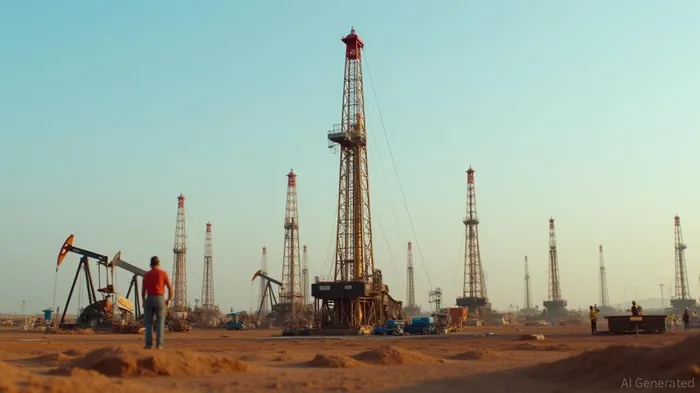
The number of oil rigs increased by 2 for the second consecutive week, reaching 416, which represents a 72-rig decline year over year. Meanwhile, the number of gas rigs remained unchanged at 118, marking a gain of 21 active gas rigs from the same period last year. The miscellaneous rig count stayed the same at 5 [1].
The latest data from the U.S. Energy Information Administration (EIA) showed that weekly U.S. crude oil production rose in the week ending September 5, from 13.423 million barrels per day (bpd) to 13.495 million bpd. However, this is still a 68,000 bpd drop from the beginning of the year. Primary Vision’s Frac Spread Count, an estimate of the number of crews completing wells, also rose for the week ending September 5 to 164, which is just two above the previous week’s four-year low [1].
The drilling downtrend has seen a downturn in recent months, but held steady during this reporting period at 254, for a 52 rig drop year over year. The count in the Eagle Ford rose by 3 to 42, which is 6 fewer than this time last year [1].
At 12:56 p.m. ET on September 12, 2025, the West Texas Intermediate (WTI) benchmark was trading up $0.39 per barrel (+0.63%) on the day at $62.76—a nearly $2 gain from last week’s prices. The Brent benchmark was trading up $0.65 (+0.98%) on Friday at $67.02 [1].
The slight increase in the oil rig count suggests a potential rebound in drilling activity, which could be driven by several factors. First, the recent uptick in crude oil prices may encourage more drilling activity. Second, the expectation that the Federal Reserve may cut interest rates in September could boost oil demand, leading to a bottleneck in supply [2]. Finally, the long-term structural rise in liquefied natural gas (LNG) demand is expected to draw fresh drilling activity, particularly from 2026 onward [3].
Investors should keep an eye on companies like Transocean Ltd. (RIG), Patterson-UTI Energy Inc. (PTEN), and Helmerich & Payne Inc. (HP) as they could benefit from an increase in drilling activity. These companies are well-positioned to take advantage of the potential supply bottleneck and capitalize on the rebound in oil demand [^2, 3].
U.S. Weekly Baker Hughes Oil Rig Count Actual 416, Previous 414.
The U.S. oil rig count saw a slight uptick this week, according to data from Baker Hughes. The total number of active drilling rigs for oil and gas in the United States rose to 539, up by 51 from this time last year, but still near four-year lows [1].The number of oil rigs increased by 2 for the second consecutive week, reaching 416, which represents a 72-rig decline year over year. Meanwhile, the number of gas rigs remained unchanged at 118, marking a gain of 21 active gas rigs from the same period last year. The miscellaneous rig count stayed the same at 5 [1].
The latest data from the U.S. Energy Information Administration (EIA) showed that weekly U.S. crude oil production rose in the week ending September 5, from 13.423 million barrels per day (bpd) to 13.495 million bpd. However, this is still a 68,000 bpd drop from the beginning of the year. Primary Vision’s Frac Spread Count, an estimate of the number of crews completing wells, also rose for the week ending September 5 to 164, which is just two above the previous week’s four-year low [1].
The drilling downtrend has seen a downturn in recent months, but held steady during this reporting period at 254, for a 52 rig drop year over year. The count in the Eagle Ford rose by 3 to 42, which is 6 fewer than this time last year [1].
At 12:56 p.m. ET on September 12, 2025, the West Texas Intermediate (WTI) benchmark was trading up $0.39 per barrel (+0.63%) on the day at $62.76—a nearly $2 gain from last week’s prices. The Brent benchmark was trading up $0.65 (+0.98%) on Friday at $67.02 [1].
The slight increase in the oil rig count suggests a potential rebound in drilling activity, which could be driven by several factors. First, the recent uptick in crude oil prices may encourage more drilling activity. Second, the expectation that the Federal Reserve may cut interest rates in September could boost oil demand, leading to a bottleneck in supply [2]. Finally, the long-term structural rise in liquefied natural gas (LNG) demand is expected to draw fresh drilling activity, particularly from 2026 onward [3].
Investors should keep an eye on companies like Transocean Ltd. (RIG), Patterson-UTI Energy Inc. (PTEN), and Helmerich & Payne Inc. (HP) as they could benefit from an increase in drilling activity. These companies are well-positioned to take advantage of the potential supply bottleneck and capitalize on the rebound in oil demand [^2, 3].
Stay ahead of the market.
Get curated U.S. market news, insights and key dates delivered to your inbox.
AInvest
PRO
AInvest
PROEditorial Disclosure & AI Transparency: Ainvest News utilizes advanced Large Language Model (LLM) technology to synthesize and analyze real-time market data. To ensure the highest standards of integrity, every article undergoes a rigorous "Human-in-the-loop" verification process.
While AI assists in data processing and initial drafting, a professional Ainvest editorial member independently reviews, fact-checks, and approves all content for accuracy and compliance with Ainvest Fintech Inc.’s editorial standards. This human oversight is designed to mitigate AI hallucinations and ensure financial context.
Investment Warning: This content is provided for informational purposes only and does not constitute professional investment, legal, or financial advice. Markets involve inherent risks. Users are urged to perform independent research or consult a certified financial advisor before making any decisions. Ainvest Fintech Inc. disclaims all liability for actions taken based on this information. Found an error?Report an Issue




Comments
No comments yet