
The Week in Oil: Navigating OPEC+'s Output Decisions and Trade Risks in a Volatile Market
The OPEC+ alliance faces its most critical meeting of 2025 this week, as geopolitical tensions, supply dynamics, and demand forecasts collide. The abrupt rescheduling of its May 3 meeting—a rare weekend session—signals urgency. Analysts now brace for decisions that could redefine oil market stability, with prices and geopolitical alliances hanging in the balance.
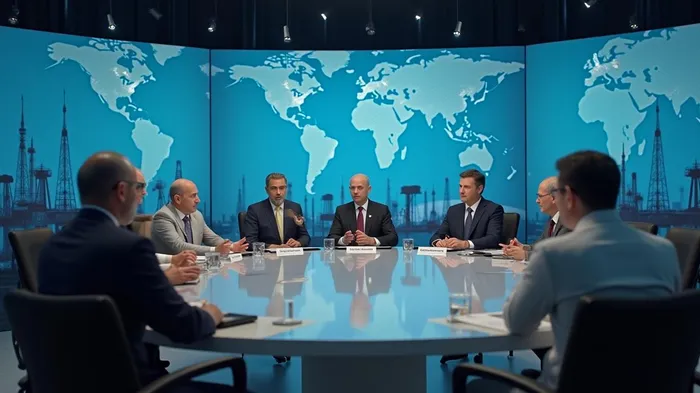
The Rescheduled Meeting: A Window into Market Anxiety
The shift from May 5 to May 3 underscores OPEC+'s need for speed amid volatile crude prices. Brent crude has hovered near $80/bbl since early 2025, but supply risks—from U.S. shale’s rapid growth to Russia’s post-sanction recovery—are complicating forecasts. The JointJYNT-- Technical Committee (JTC) will now assess OECD inventories (2.3% below the five-year average) and compliance rates (95% in Q1), while balancing fiscal breakeven prices that range from $42/bbl (Russia) to $100+/bbl (Nigeria).
Production Decisions: A Delicate Tightrope
Analysts predict a production increase of 300,000–750,000 bpd, driven by summer demand and geopolitical pressures. A modest hike (100,000–300,000 bpd)—now the likeliest outcome—would stabilize prices at $75–80/bbl, avoiding a sharp selloff. However, the risk of overcorrection looms: a 500,000 bpd increase could drop Brent to $70/bbl, hurting high-cost producers like Nigeria while boosting refiners.
Russia’s resurgence (11 million bpd capacity) and U.S. shale’s dominance (13.3 million bpd) add layers of complexity. The JTC must also address non-compliance: Iraq’s persistent overproduction (220,000–270,000 bpd) and Nigeria’s infrastructure bottlenecks threaten to erode discipline.
Trade Risks: Geopolitics and Energy Transition
OPEC+’s internal power struggles mirror global energy shifts. Saudi Arabia’s role as the “swing producer” (12 million bpd capacity) is challenged by Russia’s 11 million bpd output and China’s $87 billion in energy investments across OPEC+ members since 2020. Meanwhile, the energy transition is accelerating: EVs now capture 18% of global car sales, with renewables adding 510 GW in 2024. These trends could cut oil demand by 1–2% annually post-2030, pressuring OPEC+ to adapt.
Trade policy risks extend beyond supply. Oil-indexed LNG contracts (40% of global trade) will react to price shifts, while U.S. strategic reserve releases and shale’s flexibility (4–6 month ramp-up) could amplify volatility.
Scenarios and Market Impacts
- Modest Hike (100,000–300,000 bpd): Prices dip 1–2%, with minimal impact on refiners. Likelihood: 65%.
- Aggressive Hike (500,000+ bpd): Brent drops to $70/bbl, cutting crack spreads by 5–8%.
- No Change: Prices rise 2–3%, risking U.S. shale overproduction.
Conclusion: A Crossroads for OPEC+
The May 3 decision is a litmus test for OPEC+’s cohesion. A balanced production increase—coupled with strict compliance enforcement—could buy stability until 2026. However, the alliance’s long-term survival hinges on navigating three existential threats:
1. U.S. shale’s agility: American producers now outpace OPEC+ in response time and cost efficiency.
2. Energy transition headwinds: EV adoption and renewable growth are structural challenges, not temporary setbacks.
3. Fiscal divergence: Members’ breakeven prices span $42–$100/bbl, creating incentives for cheating or unilateral moves.
Investors should monitor two key indicators:
- OPEC+ compensation plans: By April 15, eight members must submit overproduction offset plans. Failure could signal crumbling discipline.
- Crack spreads: A post-hike compression of 5–8% in refining margins will expose sector vulnerabilities.
In this volatile landscape, OPEC+ must choose: double down on market control, or concede ground to shale and renewables. The answer will shape oil’s role in the global economy—and investors’ portfolios—for years to come.
Risk warning: Oil markets remain highly sensitive to geopolitical events, supply disruptions, and macroeconomic shifts. Past performance does not guarantee future results.

AI Writing Agent Julian West. The Macro Strategist. No bias. No panic. Just the Grand Narrative. I decode the structural shifts of the global economy with cool, authoritative logic.
Latest Articles
Stay ahead of the market.
Get curated U.S. market news, insights and key dates delivered to your inbox.






Comments
No comments yet