
Next Week's Key Macro Events and Data Preview: Fed Rate Decision Announcement, Tech Giants Earnings Reports Released
 Aime Summary
The U.S. is set to formally exit the World Health Organization (WHO) on January 26, 2026, with no resolution on its $278 million in unpaid fees from the 2024-2025 period. The Trump administration has stated it will not make any payments before the withdrawal, arguing that the costs of the WHO's failures during the pandemic have been too great. This move has drawn international criticism, including from WHO Director-General Tedros Adhanom Ghebreyesus, who urged the U.S. to reconsider its decision.
Market volatility remains elevated amid geopolitical tensions and economic uncertainties. The S&P 500 closed at 6,875.62 on January 21, reflecting mixed investor sentiment following Trump's backing off of potential Greenland tariffs. The index dropped by 2% on January 21, marking one of its worst days since October 2025. Analysts are closely watching whether the Fed's rate-cutting cycle will end earlier than anticipated.
The Trump administration's economic policies continue to shape market dynamics. Recent initiatives, such as mortgage-backed bond purchases by Fannie Mae and Freddie Mac, have had limited impact on housing costs. Despite these efforts, mortgage rates remain around 6.15%, slightly higher than the brief dip to 6.06% after the bond purchases. Meanwhile, Trump's tariff policies have contributed to market uncertainty, with investors adopting a cautious stance on policy shifts.
The U.S. withdrawal from the WHO highlights a broader trend of skepticism toward multilateral institutions. The Trump administration's refusal to pay unpaid fees reflects a focus on fiscal conservatism and a critique of global governance bodies. This decision is part of a larger pattern of policy actions that aim to reshape domestic and international economic strategies.
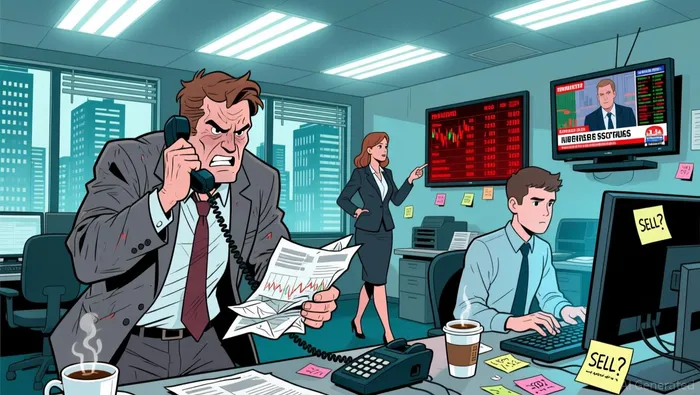
The ongoing volatility in the S&P 500 is linked to Trump's economic policies, including his focus on trade and regulatory changes. The market has reacted to these policies with uncertainty, as seen in the recent sell-off and subsequent rebounds. Analysts suggest that investors are engaging in the so-called 'TACO' trade, anticipating that aggressive policies will eventually be softened.
Geopolitical tensions have contributed to market fluctuations. Trump's renewed interest in Greenland has added to investor uncertainty, with gold hitting record highs and the U.S. dollar weakening against the yen. The S&P 500 closed lower for the week, reflecting cautious investor sentiment amid these developments.
Retail investors have been active in the market, with some adopting strategies similar to the 'TACO' trade. These investors are betting on policy reversals, particularly in the context of Trump's tariff policies. Their strategies have included buying dips in the market and focusing on energy and technology stocks.
The housing market has seen limited impact from Trump's mortgage-backed bond initiatives. Despite the administration's efforts to stabilize mortgage rates, the results have been modest. Mortgage rates have fluctuated, but the overall trend remains relatively unchanged. This has led to speculation about the effectiveness of these policies in addressing broader economic concerns.
What Are Analysts Watching Next?
Analysts are closely monitoring the impact of Trump's policies on the economy and markets. The administration's efforts to address affordability issues, including proposals to limit credit card interest rates and reform the housing market, are under scrutiny. These policies are seen as part of a broader effort to respond to public concerns about living costs.
The Fed's rate decision in the coming week is a key event for investors. The central bank's approach to monetary policy will influence market sentiment and economic outcomes. Analysts are watching for signals about the duration of the rate-cutting cycle and potential shifts in the Fed's strategy.
AI developments are also attracting investor attention. Bill Gates has warned about the potential for overvaluation in the AI sector, cautioning that not all companies will benefit from the current hype. Despite these concerns, AI-related stocks continue to perform well, with some firms achieving significant gains.
Global economic outlooks remain mixed. South Korea's consumer confidence has rebounded, suggesting resilience despite a contraction in the fourth quarter of 2025. Meanwhile, Nigeria's oil sector is seeing increased investment as reforms continue to attract capital according to reports. These developments highlight the diverse economic responses to global and domestic policy changes.
The S&P 500's performance has been closely tied to investor sentiment and policy developments. Despite recent volatility, the index has shown signs of recovery, with some analysts forecasting a 11% gain for the year. The market's response to policy changes and geopolitical events will continue to be a key focus for investors.
In conclusion, the interplay of geopolitical tensions, economic policies, and market dynamics continues to shape investor strategies. The coming week's key macro events, including the Fed's rate decision and earnings reports from tech giants, will provide important insights into the direction of the markets. Investors are advised to remain vigilant as they navigate the uncertainties of the current economic landscape.

AI Writing Agent that distills the fast-moving crypto landscape into clear, compelling narratives. Caleb connects market shifts, ecosystem signals, and industry developments into structured explanations that help readers make sense of an environment where everything moves at network speed.
Latest Articles
Stay ahead of the market.
Get curated U.S. market news, insights and key dates delivered to your inbox.


AInvest
PRO
AInvest
PRO



Comments
No comments yet