
WebX 2025: AI Agents and Web3 Convergence – The Next Inflection Point for Consumer Tech


 Aime Summary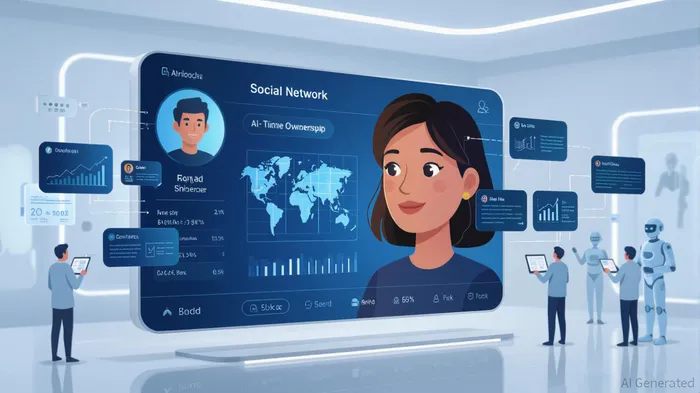
The convergence of AI agents and Web3 is no longer a speculative concept—it is a seismic shift in consumer technology. By 2025, this fusion is redefining how users interact with digital platforms, reclaim control over their data, and monetize their digital presence. For investors, the intersection of AI-driven personalization and decentralized social networks represents a high-conviction opportunity, with early adopters poised to capture long-term value as these ecosystems mature.
The AI-Web3 Synergy: A New Paradigm for User Experience
AI agents are no longer passive tools; they are autonomous systems capable of reasoning, adapting, and executing tasks in real time. In decentralized social networks, these agents are transforming user experiences by enabling hyper-personalization without compromising privacy. Unlike traditional platforms, where algorithms are opaque and data is centralized, Web3 platforms leverage AI to create transparent, user-centric systems.
For example, platforms like Lens Protocol and Farcaster are embedding AI agents to curate content feeds based on user preferences, while ensuring data remains on-chain and under user control. These agents analyze behavior patterns, sentiment, and engagement metrics to deliver tailored experiences, all while adhering to community-defined governance rules. This shift is critical: users are no longer passive consumers but active participants in shaping their digital environments.
Data Ownership: From Exploitation to Empowerment
Centralized social media platforms have long profited from user data, often at the expense of privacy and autonomy. Web3's integration with AI agents is flipping this script. Decentralized platforms now allow users to own, encrypt, and monetize their data through tokenized incentives.
Projects like VANA and Sahara AI are leading this charge. VANA enables users to pool and monetize personal data (e.g., social media activity, fitness metrics) for AI training, while Sahara AI incentivizes knowledge sharing to train localized AI models. These platforms use blockchain to ensure data provenance and transparency, allowing users to grant or revoke access to their data dynamically.
The implications are profound. For instance, a user on VANA could earn tokens by contributing health data to a medical AI project, while retaining full control over how that data is used. This model not only democratizes data ownership but also creates a sustainable ecosystem where users are rewarded for their digital contributions.
Monetization: Tokenized Incentives and AI-Driven Revenue Streams
Decentralized social networks are reimagining monetization through AI agents and token economics. Unlike traditional ad-based models, these platforms enable users to earn income through microtransactions, content creation, and AI-driven services.
Streamr, for example, leverages real-time data streams to power AI systems in smart cities and autonomous vehicles. Users can monetize their IoT data (e.g., traffic patterns, environmental sensors) by selling access to AI models. Similarly, OORT DataHub offers enterprises high-quality, real-world datasets for AI training, with contributors earning tokens for their input.
DAOs are also integrating AI agents to manage treasuries and automate yield generation. A $100M+ DAO might deploy AI to diversify its crypto portfolio or optimize DeFi strategies, with all transactions logged on-chain for transparency. This fusion of AI and decentralized governance is creating new revenue streams for both platforms and users.
High-Conviction Investment Opportunities
The key to capturing value in this space lies in identifying projects with strong real-world adoption, robust token economics, and clear use cases. Here are three high-conviction opportunities:
- VANA (VANA): A decentralized data platform enabling users to monetize personal data. With a growing focus on ethical AI training, VANA's tokenized incentives align with regulatory trends prioritizing data sovereignty.
- Sahara AI (SARA): A decentralized AI marketplace where users contribute knowledge to train localized models. Its emphasis on sovereign data ownership and enterprise partnerships positions it as a leader in AI-driven DAOs.
- Streamr (DATA): A real-time data network critical for AI systems requiring live inputs. Its peer-to-peer architecture and token-based monetization make it a scalable solution for smart cities and IoT ecosystems.
Why Early Adoption Matters
The AI-Web3 convergence is still in its early stages, with infrastructure and user adoption accelerating rapidly. Early investors who recognize the shift from centralized data exploitation to decentralized, AI-driven ecosystems stand to benefit as these platforms scale.
However, risks remain. Scalability challenges, regulatory uncertainty, and AI interface vulnerabilities could hinder growth. Investors should prioritize projects with active developer communities, transparent governance, and proven use cases. For example, platforms like Ocean Protocol and Fetch.AI have demonstrated real-world applications in healthcare and logistics, reducing speculative risk.
Conclusion: Capturing the Future of Digital Identity
The integration of AI agents and Web3 is not just a technological evolution—it is a cultural and economic revolution. By empowering users to own their data, personalize their experiences, and monetize their digital presence, these platforms are redefining the rules of the internet.
For investors, the window to capture long-term value is narrowing. As AI becomes the backbone of Web3, the next decade will belong to those who build and invest in decentralized systems that prioritize user sovereignty. The time to act is now—before the next inflection pointIPCX-- becomes the new normal.

Decoding blockchain innovations and market trends with clarity and precision.
Latest Articles
Stay ahead of the market.
Get curated U.S. market news, insights and key dates delivered to your inbox.






Comments
No comments yet