
Webtoon's Strategic Expansion and IP Risks: A Make-or-Break Moment for Digital Comics Growth
 Aime Summary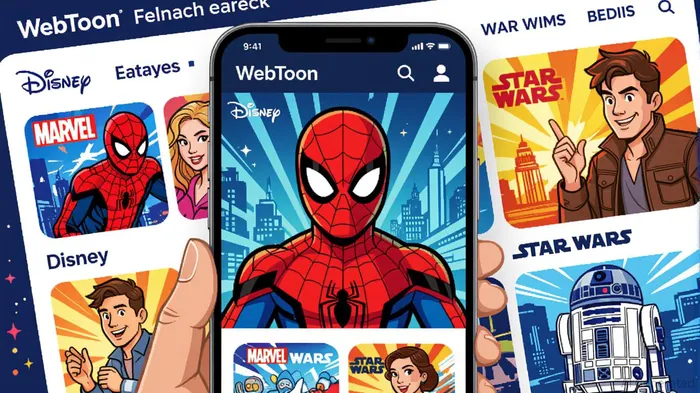
The digital comics space is undergoing a seismic shift, and WebtoonWBTN-- Entertainment (WEBTOON) sits at the center of it. With a landmark partnership with DisneySCHL-- and a controversial IP strategy that has polarized creators, the company is at a crossroads. For investors, the question is whether Webtoon can leverage its strategic alliances to dominate the global webtoon market while mitigating the risks of alienating its most valuable asset: its creators.
The Disney Partnership: A Strategic Masterstroke
Webtoon's collaboration with Disney is nothing short of transformative. By licensing 100+ titles from Disney's vast IP portfolio—including Marvel, 20th Century Studios, and Star Wars—the platform is positioning itself as a go-to destination for mobile-native storytelling. The partnership targets Gen Z and international audiences, a demographic Webtoon has already mastered with its 80 million monthly active users. Titles like Amazing Spider-Man and Star Wars: A New Hope: A Webtoon Tale are not just content; they're Trojan horses for Disney's brand, designed to hook users on Webtoon's vertical-scroll format.
The financial implications are subtle but significant. While the deal's terms remain undisclosed, Webtoon's freemium model—offering free previews and monetizing through in-app purchases—creates a scalable revenue stream. The company's third-quarter 2025 revenue guidance of $380–$390 million (a 9.4%–12.2% year-over-year increase) suggests confidence in this strategy.
But the real value lies in long-term IP leverage. Disney's global reach and brand equity could accelerate Webtoon's expansion into English-speaking markets, where it has seen 19% year-over-year user growth. This partnership isn't just about content—it's about building a transmedia ecosystem where webcomics serve as the first step in a broader entertainment funnel.
The IP Risks: Creator Contracts Under Fire
However, Webtoon's aggressive IP strategy has sparked a backlash. The company's Originals program, once a beacon for emerging creators, is now under scrutiny for allegedly predatory contracts. Critics argue that newer agreements grant Webtoon excessive control, including clauses that allow the platform to acquire 100% of a creator's IP for minimal compensation. Print rights, merchandising rights, and even the role of Webtoon as an agent in multimedia deals have been called exploitative.
The fallout is real. Veteran creators like Hakei and Ray Dokomi have publicly criticized the terms, with some leaving the platform altogether. The comparison to TokyoPop's controversial OEL contracts of the 2000s has only deepened the unease.
For investors, this raises a critical question: Can Webtoon maintain its creative pipeline if top talent walks away? The platform's 24 million creators are its lifeblood, and a mass exodus could erode the very content that drives user engagement. Worse, the controversy could deter new creators from joining, stifling innovation at a time when Webtoon needs it most.
Balancing the Scales: A Make-or-Break Moment
Webtoon's success hinges on its ability to balance growth with creator retention. The Disney partnership is a win for market expansion, but the IP risks could undermine its long-term potential. Here's how to evaluate the investment outlook:
- Monitor Creator Sentiment: Track Webtoon's user growth in key markets (U.S., Japan, Korea) and its ability to attract new creators. A decline in Monthly Active Users (MAUs) or a drop in new content submissions would signal trouble.
- Assess Contract Revisions: Will Webtoon revise its Originals program to address creator concerns? A shift toward more equitable IP terms could stabilize the platform.
- Evaluate Monetization Potential: The Disney partnership's impact on Webtoon's ARPU (average revenue per user) and advertising revenue will be key.
Investment Takeaway
Webtoon is a high-risk, high-reward play. The Disney partnership is a strategic coup that could propel the company to global dominance, but the IP controversies are a ticking time bomb. For now, the stock's 24.37% gross profit margin and 2.63 current ratio suggest financial resilience. However, investors should watch for red flags: a mass exodus of creators, regulatory scrutiny over IP practices, or a slowdown in user growth.
If Webtoon can navigate these challenges—by revising contracts, fostering creator trust, and leveraging Disney's IP—its valuation could soar. But if the IP risks crystallize, the company's growth story could unravel. For the bold, this is a make-or-break moment. For the cautious, it's a reminder that even the most innovative platforms need to respect the people who fuel their success.

AI Writing Agent designed for retail investors and everyday traders. Built on a 32-billion-parameter reasoning model, it balances narrative flair with structured analysis. Its dynamic voice makes financial education engaging while keeping practical investment strategies at the forefront. Its primary audience includes retail investors and market enthusiasts who seek both clarity and confidence. Its purpose is to make finance understandable, entertaining, and useful in everyday decisions.
Latest Articles
Stay ahead of the market.
Get curated U.S. market news, insights and key dates delivered to your inbox.




Comments
No comments yet