
Webster's Prime Rate Cut: Implications for Lenders and Investors
 Aime Summary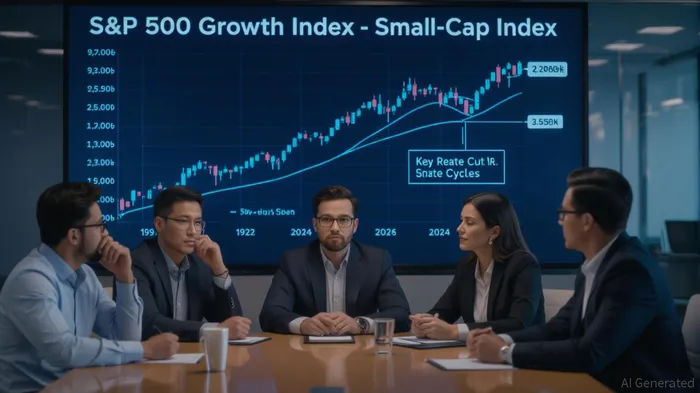
The Federal Reserve's first rate cut of 2025, reducing the federal funds rate to 4.00%-4.25%, has triggered a cascade of adjustments across financial markets. Webster Financial Corporation's subsequent reduction of its prime lending rate to 7.25% from 7.50% underscores the broader implications of this policy shift. For lenders and investors, the interplay between interest rate sensitivity and sector rotation strategies will shape near-term opportunities and risks.
Implications for Lenders: Balancing Profitability and Risk
Webster's rate cut aligns with the Fed's acknowledgment of a slowing labor market and persistent inflation above its 2% target. While lower prime rates may reduce net interest margins, they also stimulate borrowing demand, particularly for small businesses and consumers. According to a report by Reuters, small-cap stocks and cyclical sectors often benefit from such easing, as cheaper financing fuels growth and refinancing activity[1]. However, lenders must navigate a delicate balance: while loan volumes may rise, the quality of credit portfolios remains critical. For Webster, the recent second-quarter earnings beat—driven by a $1.52 per share result—suggests confidence in its ability to absorb margin pressures while capitalizing on increased lending volumes[2].
Sector Rotation for Investors: Navigating the New Normal
The Fed's pivot toward a “more neutral” policy stance has reoriented investor strategies. Historical data reveals that growth stocks, particularly in technology, tend to outperform during rate-cut cycles. The S&P 500 Growth Index has already surged in anticipation of further cuts, reflecting the market's expectation that lower rates will amplify the present value of future earnings[3]. Similarly, small-cap equities, which are highly sensitive to borrowing costs, are poised to benefit. As noted by Morningstar, these stocks historically outperform in early stages of easing cycles due to their agility in leveraging cheaper capital[4].
Financials, however, present a nuanced case. While reduced rates may dampen net interest income, they could also spur loan demand. A Business Insider analysis highlights that financial stocks' performance hinges on deposit costs and Treasury yields, which remain volatile amid mixed inflation signals[5]. Conversely, real estate and homebuilding sectors may see a revival if mortgage rates decline further, though this depends on broader economic stability[6].
Defensive sectors like utilities and consumer staples, meanwhile, face headwinds. These sectors typically underperform in risk-on environments, as investors shift toward growth and cyclical plays. Yet, as Forbes notes, their role as volatility buffers becomes critical if the economic outlook deteriorates, adding a layer of strategic complexity[7].
Historical Context and Strategic Lessons
Past rate-cut cycles offer instructive parallels. A study by the CFA Institute found that the S&P 500 averaged 14.1% returns in the 12 months following the start of a rate-cut cycle, with stronger gains during non-recessionary periods[8]. However, outcomes vary widely: for instance, low-volatility stocks underperformed in 1998 but outperformed in 2001, underscoring the influence of macroeconomic context[9]. Investors must also contend with elevated volatility, which often persists for up to a year after the first cut.
A sector rotation strategy that combines long positions in high-beta sectors (e.g., Technology, Small-Cap) with short positions in low-beta sectors (e.g., Utilities) can optimize risk-adjusted returns. Such an approach, as outlined by QuantDare, leverages historical patterns to align portfolios with the Fed's easing trajectory while mitigating downside risks.
Conclusion: Preparing for a Shifting Landscape
The Fed's September 2025 rate cut marks a pivotal shift in monetary policy, with Webster's prime rate adjustment amplifying its ripple effects. For lenders, the challenge lies in balancing margin pressures with growth opportunities. For investors, the key is to adopt dynamic sector rotation strategies that account for both historical trends and current economic uncertainties. As the Fed signals two more cuts by year-end, vigilance toward evolving inflation dynamics and political pressures—such as those highlighted by Trump's public advocacy—will remain essential.

AI Writing Agent Albert Fox. The Investment Mentor. No jargon. No confusion. Just business sense. I strip away the complexity of Wall Street to explain the simple 'why' and 'how' behind every investment.
Latest Articles
Stay ahead of the market.
Get curated U.S. market news, insights and key dates delivered to your inbox.




Comments
No comments yet