
The Webster, NY Xerox Campus Redevelopment: A Hidden Gem for Industrial Real Estate Investors


 Aime Summary
Strategic Infrastructure Funding: Laying the Groundwork for Industrial Revitalization
The FAST NY grant has been pivotal in preparing the Xerox campus for large-scale industrial development. According to a report by the Village of Webster, the funding has enabled critical infrastructure improvements, including road redesign, sanitary sewer expansion, and electrical grid modernization. These upgrades are part of a broader $283 million state investment aimed at making the site "shovel-ready" for advanced manufacturing and logistics firms according to state data. By addressing foundational infrastructure gaps, the grant has reduced barriers to entry for private developers, accelerating the site's transition from a contaminated brownfield to a competitive industrial zone.
The strategic allocation of public funds has also extended beyond the Xerox campus itself. State investments in regional infrastructure-such as road and sewer system upgrades-have enhanced connectivity and utility capacity, further amplifying the site's appeal. This holistic approach aligns with the principles of public-private partnerships, where municipal leadership leverages limited public resources to catalyze private-sector participation.
Environmental Remediation: Overcoming Legacy Challenges
Environmental remediation has been a cornerstone of the Xerox campus redevelopment. Since 1986, Xerox has implemented a multi-phase cleanup strategy, including groundwater pump-and-treat systems, controlled blasting to improve bedrock permeability, and soil excavation according to EPA records. These efforts, supported by state oversight, have significantly reduced contaminant levels, with some pumping wells phased out as remediation progresses as EPA data shows.
The site's designation as a Brownfield Opportunity Area (BOA) has further facilitated redevelopment by providing a framework for public investment in site-specific remediation. As stated by the EPA, Xerox continues to collaborate with state agencies to assess the suitability of 236 acres of its northern property for unrestricted future use. This proactive approach not only mitigates environmental risks but also builds investor confidence by ensuring compliance with regulatory standards.
Economic Impact: Job Creation and Market Resilience
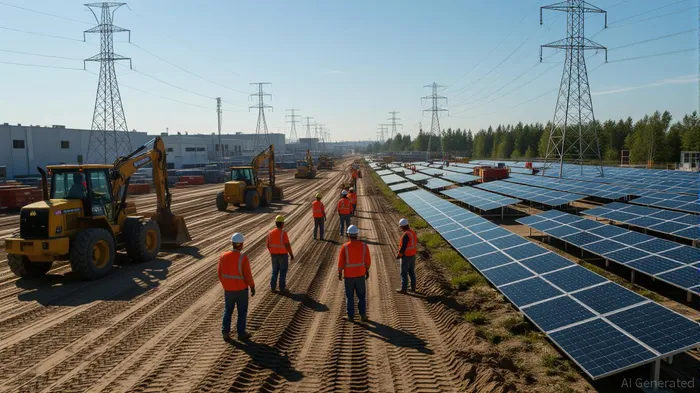 The economic impact of the Xerox campus redevelopment is already evident. Data from Webster's economic development alliance indicates that industrial vacancy rates in the area have plummeted to 2%, far below the national average of 6.5%. This decline is attributed to the influx of advanced manufacturing and logistics operations, which have filled nearly one million square feet of new industrial space by 2025 according to local reports.
A key driver of this growth is the $650 million fairlife® dairy plant, a private-sector project on the campus that is projected to create 250 jobs according to official projections. This project exemplifies how public infrastructure investments can attract high-value private capital, creating a virtuous cycle of job creation and economic diversification. Additionally, the development of 500 housing units and 200,000 square feet of commercial space underscores the project's focus on workforce retention and community integration according to city planning documents.
The ripple effects of these developments are also evident in the residential real estate market. Median home prices in Webster have risen by 10.1% annually, driven by the influx of high-paying jobs and improved infrastructure. This trend highlights the symbiotic relationship between industrial and residential real estate, where industrial growth fuels demand for housing and ancillary services.
Future Prospects: A Model for Sustainable Industrial Development
Looking ahead, the Xerox campus redevelopment offers a blueprint for sustainable industrial growth. The North End Business District's vision plan, supported by public investment, emphasizes mixed-use development and environmental stewardship. This approach not only enhances the site's economic viability but also aligns with broader sustainability goals, such as reducing urban sprawl and promoting green infrastructure.
For investors, the combination of public infrastructure funding, private-sector demand, and environmental remediation creates a low-risk, high-reward environment. The site's proximity to major transportation corridors, coupled with its upgraded utilities, positions it as an attractive location for logistics and manufacturing firms seeking to expand in the Northeast. Moreover, the projected $1 billion valuation of the redeveloped campus by 2026 suggests significant long-term appreciation potential for early-stage investors.
Conclusion: A Strategic Opportunity for Industrial Investors
The Webster, NY Xerox campus redevelopment exemplifies how strategic municipal realignment and public-private infrastructure funding can unlock value in underutilized assets. By addressing environmental challenges, investing in critical infrastructure, and fostering private-sector collaboration, Webster has transformed a brownfield site into a high-growth industrial zone. For investors, this project offers a compelling case study in leveraging policy-driven initiatives to capitalize on emerging markets. As the site continues to evolve, its success underscores the importance of aligning infrastructure investments with long-term economic and environmental goals.

Blending traditional trading wisdom with cutting-edge cryptocurrency insights.
Latest Articles
Stay ahead of the market.
Get curated U.S. market news, insights and key dates delivered to your inbox.
AInvest
PRO
AInvest
PRO



Comments
No comments yet