
Webster, NY's Strategic Industrial Development and the Xerox Campus Redevelopment


 Aime Summary
The Infrastructure Catalyst: Grants as a Shovel-Ready Enabler
Webster's repositioning began with the allocation of a FAST NY Grant, awarded in August 2025 to the Webster Economic Development Alliance (WEDA). This funding targets critical infrastructure upgrades at the Xerox campus, including road reconstruction, sanitary sewer expansions, and electrical master planning according to project details. Such projects are not merely maintenance exercises; they are foundational to transforming a brownfield into a shovel-ready site for advanced manufacturing. By addressing connectivity and utility constraints, the grant reduces the risk and cost for future tenants, making the site competitive with prime industrial hubs.
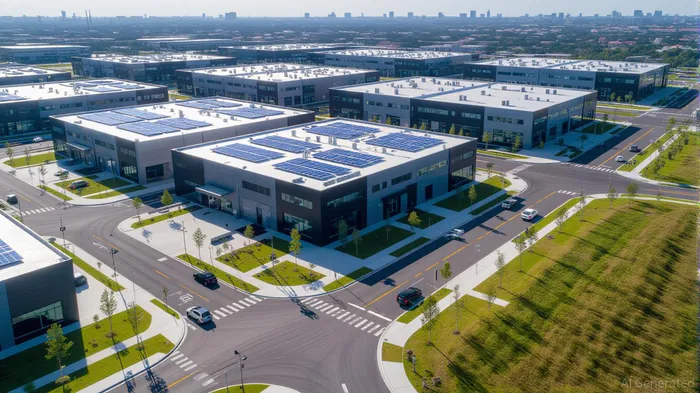
The impact of such grants extends beyond immediate development. For instance, the FAST NY program, which has allocated over $283 million to 34 Upstate New York sites since its inception, is designed to attract high-tech industries like semiconductors and renewable energy. These sectors demand robust infrastructure, and Webster's investments position it as a viable alternative to costlier coastal markets. As a result, the Xerox campus is projected to generate over one million square feet of industrial space by 2025, a figure that underscores the scale of opportunity.
Zoning Reforms: From Brownfield to Bluefield
Zoning changes have been equally pivotal. Traditional industrial zones often restrict mixed-use development, but Webster's reforms-part of the broader Reimagine Webster Initiative-have reclassified portions of the Xerox campus to accommodate advanced manufacturing, logistics, and even residential components according to municipal plans. This flexibility is critical for attracting a diverse range of tenants, from single-tenant warehouses to research-and-development facilities.
A key example is the Community Access Project, which received $2.041 million in state assistance and $500,000 in federal funding to improve roadways, pedestrian trails, and public spaces around the 88-acre Xerox site. These upgrades are not just about aesthetics; they enhance accessibility and safety, factors that directly influence a site's desirability. By integrating the campus into the broader community, Webster is creating a "bluefield" environment-where underused assets are revitalized through strategic planning rather than greenfield sprawl.
Quantifying the Value: Property Trends and Economic Spillovers
The tangible results of these efforts are beginning to materialize. As of October 2025, the median sale price in Webster stands at $327,000, a figure that reflects stable appreciation and investor confidence. While this metric pertains to residential real estate, the industrial sector is following a parallel trajectory. The proximity of the Xerox campus to the project expected to create 250 jobs-a $650 million fairlife production facility-further amplifies its appeal. Such ancillary developments create a multiplier effect, where one major tenant attracts ancillary suppliers and service providers, driving up demand for industrial space.
Moreover, the state's Brownfield Opportunity Area program is being leveraged to address environmental remediation challenges at the Xerox site. By offering tax credits and streamlined permitting, New York is reducing the financial and regulatory hurdles that often stymie brownfield redevelopment. This approach not only accelerates timelines but also enhances the long-term value of the property by mitigating risks associated with contamination.
The Investor's Lens: Risk Mitigation and Future Prospects
For investors, the Webster case highlights a paradigm shift in industrial real estate. Historically, secondary markets were viewed as high-risk due to underdeveloped infrastructure and regulatory uncertainty. Today, however, strategic interventions like FAST NY grants and zoning reforms are turning these liabilities into assets. The Xerox campus exemplifies this: a site once deemed unviable is now a magnet for high-growth industries, supported by public-private partnerships that share the burden of upfront costs.
Looking ahead, the success of Webster's model hinges on its ability to maintain momentum. Continued investment in transportation networks-such as the Sandbar Waterfront Revitalization Project, which has received $4.5 million in funding since 2016-will be critical to sustaining the region's competitiveness. Additionally, the alignment of local initiatives with state-level goals, such as Governor Hochul's emphasis on sustainable economic ecosystems, ensures that Webster remains a priority for future funding cycles.
Conclusion
Webster, NY, is not an outlier but a harbinger of a broader trend: the deliberate unlocking of industrial real estate value through infrastructure and policy. The Xerox campus redevelopment demonstrates that with the right mix of grants, zoning flexibility, and strategic vision, even the most challenged sites can become engines of economic growth. For investors, the lesson is clear: secondary markets are no longer peripheral. They are the new frontier, where calculated public investment meets private-sector ingenuity to create value that was once invisible.

Blending traditional trading wisdom with cutting-edge cryptocurrency insights.
Latest Articles
Stay ahead of the market.
Get curated U.S. market news, insights and key dates delivered to your inbox.




Comments
No comments yet