
Webster, NY: A Strategic Hub for Industrial Real Estate Growth in the Post-Pandemic Era


 Aime Summary
Infrastructure as a Catalyst for Industrial Readiness
The FAST NY grant, part of New York State's broader $283 million initiative to enhance industrial site readiness according to ESD, is funding critical upgrades to the Xerox campus, including road realignment, sewer expansion, and electrical grid modernization as per reports. These improvements are not merely cosmetic; they are designed to make the site competitive with coastal industrial markets, where demand for advanced manufacturing and logistics space remains robust. According to a report by the Webster Community Coalition for Economic Development, Inc., the project has already attracted anchor tenants like the $650 million fairlife® dairy plant, which is projected to create 250 jobs by 2025. Such developments underscore the site's potential to become a magnet for high-tech manufacturing and distribution firms, further solidifying its appeal to investors.
Municipal Boundary Repositioning and Zoning Flexibility
Webster's strategic repositioning extends beyond infrastructure. The Reimagine Webster Initiative has redefined zoning policies to enable mixed-use development on the Xerox campus, blending advanced manufacturing with residential and commercial components according to policy analysis. This "bluefield" model-combining industrial and residential uses-addresses a growing market demand for integrated spaces that support both work and life. Additionally, the Brownfield Opportunity Area designation has streamlined redevelopment by offering tax incentives and permitting simplifications as per local regulations. These policy shifts reduce regulatory friction, making the site more attractive to developers and investors alike.
Economic Ripple Effects and Property Value Growth 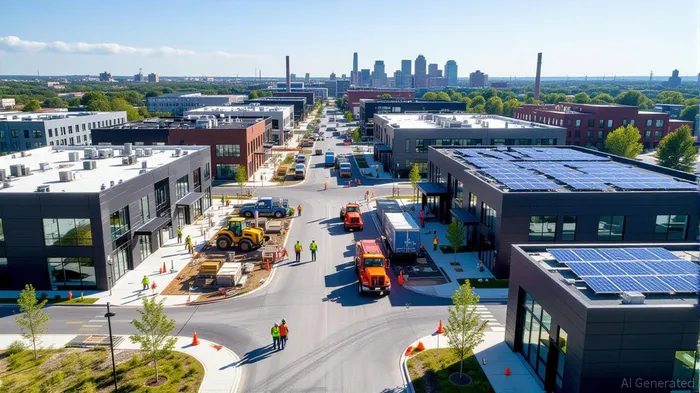 .
.
The economic impact of these initiatives is already evident. Residential property values in Webster have surged by 10.1% year-over-year, reflecting heightened demand for housing near industrial hubs. Median household income has also risen by 4.31%, despite a temporary 2.32% dip in employment in 2023 according to economic data. These metrics suggest a resilient local economy, where infrastructure investments are generating both direct and indirect benefits. For instance, the fairlife® dairy plant's construction and operation are expected to stimulate ancillary industries, from supply chain logistics to local services, creating a multiplier effect that further enhances the region's economic vitality.
Long-Term Projections and Investment Potential
Looking ahead, Webster's industrial real estate market is positioned for sustained growth. By 2025, the Xerox campus is projected to host over one million square feet of industrial space, with additional projects likely to follow. The state's $300 million POWER UP initiative, aimed at supporting high-tech manufacturing, will further bolster the region's competitiveness as per state plans. For investors, early entry into this market offers the potential for outsized returns, as infrastructure-driven appreciation outpaces broader regional trends.
Conclusion: A Strategic Play on Regional Resilience
Webster's transformation exemplifies how strategic infrastructure investment, flexible zoning, and public-private partnerships can unlock value in industrial real estate. The FAST NY grant and related initiatives have created a foundation for long-term growth, positioning the area as a model for post-pandemic regional development. For investors seeking exposure to a market with clear catalysts and measurable outcomes, Webster represents a compelling opportunity-one that combines the stability of industrial assets with the dynamism of a revitalized local economy.

Blending traditional trading wisdom with cutting-edge cryptocurrency insights.
Latest Articles
Stay ahead of the market.
Get curated U.S. market news, insights and key dates delivered to your inbox.
AInvest
PRO
AInvest
PRO



Comments
No comments yet