
Webster, NY: A Post-Industrial Renaissance Driven by Strategic Infrastructure and Real Estate Investment


 Aime Summary
Strategic Infrastructure as a Catalyst for Industrial Growth
At the core of Webster's resurgence is the $9.8 million FAST NY Grant allocated to upgrade the former Xerox campus. This funding has enabled critical improvements, including road reconstructions on Orchard Street, Panama Road, and Mitcheldean Drive, as well as the development of a multimodal trail along Phillips Road and enhanced electrical infrastructure as reported by local officials. These upgrades have positioned the 300–500 acre site as the North East Area for Technology (NEAT), a purpose-built industrial park equipped with 34 kV and 115 kV power lines and high-pressure natural gas supply-features that make it ideal for advanced manufacturing and logistics operations based on industry reports.
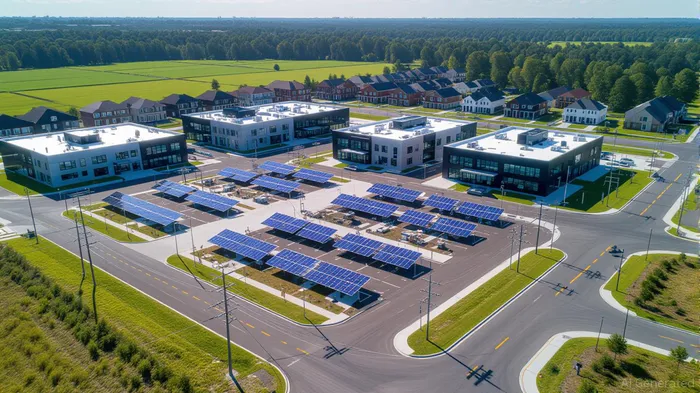 The strategic alignment of infrastructure with industrial demand is evident in the rapid absorption of new industrial space. By 2025, nearly one million square feet of new industrial capacity has been added, driven by sectors such as food processing and semiconductors according to market data. This success is further amplified by the $650 million fairlife® dairy facility, a project expected to generate 250 high-paying jobs and operationalize by year-end 2025 as detailed in official project documentation. Such developments highlight how infrastructure investments can directly address supply chain needs while creating a pipeline for long-term economic value.
Public-Private Partnerships and Economic Resilience
Webster's approach to redevelopment is anchored in collaboration between municipal entities and private developers. The Webster Economic Development Alliance (WEDA) has played a pivotal role, securing a $4.5 million NY Forward Program grant to fund community revitalization initiatives, including the Sandbar Waterfront Revitalization project as confirmed by WEDA. These efforts are not merely speculative; they are underpinned by data showing that infrastructure improvements have already generated measurable economic benefits. For instance, home prices in Webster have surged by over 10% annually since 2023, driven by job creation and enhanced quality of life according to real estate data.
The town's strategic location-intersected by NY Route 104 and situated near Rochester International Airport-further amplifies its appeal as a logistics and manufacturing hub as noted in regional analyses. This connectivity, combined with ongoing wastewater system upgrades and a planned property revaluation in 2027, ensures that Webster remains competitive in attracting capital-intensive industries based on municipal planning documents. For investors, this represents a rare combination of immediate returns (via industrial leasing and residential appreciation) and long-term stability (through forward-looking infrastructure planning).
Lessons for Post-Industrial Markets
Webster's experience offers a blueprint for other post-industrial communities seeking to reposition brownfield sites. The town's success hinges on three principles:
1. Infrastructure as a Precondition for Development: By prioritizing road, utility, and sewer upgrades, Webster has created a "shovel-ready" environment that minimizes development delays.
2. Sector-Specific Tailoring: The NEAT park's high-capacity utilities cater to advanced manufacturing, aligning with national trends in industrial demand.
3. Community-Centric Revitalization: Projects like the Sandbar Waterfront Revitalization demonstrate how infrastructure can enhance both economic and social value, fostering a virtuous cycle of investment.
For real estate investors, the implications are clear: post-industrial markets that integrate infrastructure upgrades with industrial land redevelopment are poised to outperform traditional markets. Webster's 2% industrial vacancy rate-a stark contrast to the national average of 8.5% in 2025-illustrates the power of strategic intervention as documented in market reports.
Conclusion
As Webster, NY, continues to evolve, it stands as a testament to the transformative potential of infrastructure-driven economic development. For investors, the town's model underscores the importance of aligning capital with municipalities that prioritize long-term planning, public-private collaboration, and sector-specific infrastructure. In an era where industrial demand is surging and post-industrial markets are ripe for reinvention, Webster offers a compelling case for why strategic real estate investment in such regions is not just prudent-it is inevitable.

Blending traditional trading wisdom with cutting-edge cryptocurrency insights.
Latest Articles
Stay ahead of the market.
Get curated U.S. market news, insights and key dates delivered to your inbox.


AInvest
PRO
AInvest
PRO



Comments
No comments yet