
Webster, NY's $9.8M FastNY Grant and Xerox Campus Redevelopment: A Strategic Real Estate and Infrastructure-Driven Investment Opportunity


 Aime Summary
The Infrastructure-First Approach
The FAST NY grant is explicitly focused on modernizing infrastructure to attract large-scale industrial tenants. According to a report by , the funding will be used to upgrade roads, expand sewer systems, and modernize electrical planning at the Xerox site. These upgrades are critical for preparing the site to accommodate heavy manufacturing and logistics operations, which require robust utilities and transportation networks. For example, a $1.838 million road realignment project is already underway to improve access for heavy equipment and vehicles. Such investments reduce the risk and cost for private developers, making the site more attractive to capital-intensive industries like semiconductor production and renewable energy.
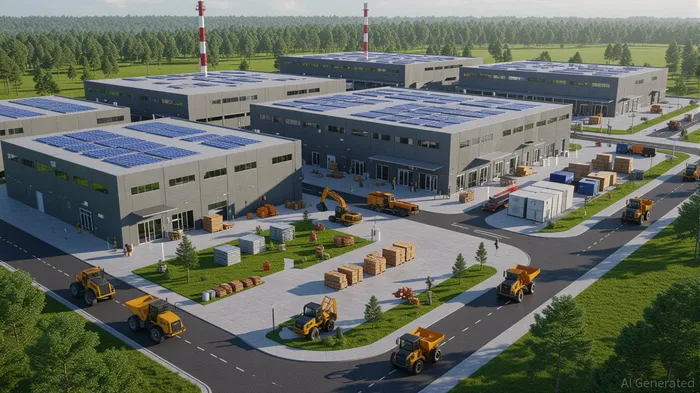
This infrastructure-first strategy aligns with Governor Kathy Hochul's broader economic vision, which emphasizes creating "ready-to-go" sites to expedite development timelines. By 2026, the Xerox campus is projected to be fully prepared for industrial use, with one million square feet of space expected to be developed by 2025. For investors, this timeline suggests a clear window of opportunity to acquire assets in proximity to the site before demand outpaces supply.
Strategic Synergies and Economic Multipliers
The redevelopment of the Xerox campus is not an isolated project. It is part of a larger economic ecosystem that includes the nearby $650 million fairlife® dairy facility, which is projected to create 250 new jobs by 2025. This clustering of high-impact projects creates a multiplier effect, where infrastructure improvements for one project benefit others. For instance, upgraded roads and utilities at the Xerox site will also enhance access to the dairy facility, reducing operational costs for both.
Moreover, the proximity of these projects to major transportation corridors-such as Interstate 390 and the Rochester International Airport-further amplifies their strategic value. As stated by a source in Infrastructure-Focused Economic Growth in Webster, NY, the region's logistics advantages are a key selling point for manufacturers seeking to minimize shipping times and costs. This makes the area particularly attractive to companies in sectors like e-commerce fulfillment and cold-chain logistics, which rely on rapid distribution networks.
Real Estate Value Appreciation and Long-Term Gains
The economic ripple effects of the FAST NY grant are already manifesting in the local real estate market. Data from indicates that residential property values in Webster have risen by 10.1% since the grant's announcement. This trend is likely to accelerate as the industrial hub gains traction, creating demand for both commercial and residential properties.
For investors, this presents a dual opportunity: capital appreciation from industrial land and infrastructure-linked commercial properties, coupled with long-term gains from residential markets. The state's commitment to a $400 million FAST NY program also provides a layer of stability, as it signals sustained investment in upstate NY's economic infrastructure.
Broader Implications for Upstate NY
Webster's redevelopment is emblematic of a larger shift in New York's economic strategy. By prioritizing infrastructure upgrades in underutilized brownfield sites, the state is addressing a key barrier to growth: the high cost of preparing land for industrial use. This approach not only attracts private capital but also aligns with national trends toward reshoring manufacturing and investing in domestic supply chains.
For investors, the lesson is clear: regions that combine public investment with strategic infrastructure planning are poised to outperform in the post-pandemic economy. The Xerox campus project demonstrates how targeted public spending can catalyze private-sector activity, creating a virtuous cycle of job creation, tax revenue, and asset value growth.
Conclusion
Webster, NY's $9.8 million FAST NY grant and Xerox campus redevelopment offer a masterclass in infrastructure-driven investment. By transforming a dormant brownfield into a high-tech industrial hub, the state is creating a blueprint for revitalizing upstate economies. For investors, the key takeaway is to focus on regions where public and private interests align-particularly those with clear timelines, strategic location advantages, and measurable economic multipliers. In a world where supply chain resilience and logistics efficiency are paramount, Webster's renaissance is not just a local story-it's a national opportunity.

Blending traditional trading wisdom with cutting-edge cryptocurrency insights.
Latest Articles
Stay ahead of the market.
Get curated U.S. market news, insights and key dates delivered to your inbox.
AInvest
PRO
AInvest
PRO



Comments
No comments yet