
Webster, NY's $9.8M FastNY Grant and Xerox Campus Redevelopment: A Blueprint for Infrastructure-Driven Real Estate Value Creation


 Aime Summary
Infrastructure as the Catalyst for Value Creation
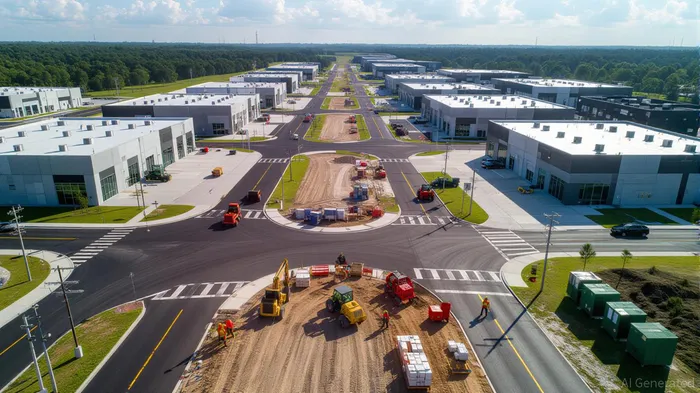 The FAST NY Grant has catalyzed a suite of infrastructure improvements designed to make the Xerox campus "shovel-ready" for high-tech industrial use. According to a report, the grant funds road realignment, sanitary sewer expansion, and electrical master planning across nearly 300 acres of developable land. These upgrades are critical for attracting advanced manufacturers and logistics firms, which require robust utilities and accessible transportation networks. By 2025, the site is projected to offer over one million square feet of industrial space, with vacancy rates plummeting to 2%-a stark contrast to the national average of 7.5%.
The infrastructure investments are not limited to the Xerox campus itself. The Community Access Project, a complementary initiative, is enhancing transportation infrastructure, including roadways, sidewalks, and multimodal trails, to connect the site with the Webster Recreation Center and broader regional networks according to project documentation. These improvements align with the Reimagine Webster Initiative, a collaborative effort between the Village of Webster, the Town of Webster, and private stakeholders to foster sustainable economic development as outlined in the project plan.
Municipal Reconfigurations and Zoning Reforms
Webster's strategic repositioning extends beyond infrastructure to include municipal boundary adjustments and zoning reforms. Over the past year, the town has expanded its industrial zone to 1,400 contiguous acres, creating one of the largest development-ready sites in upstate New York. This expansion, supported by public-private partnerships and the designation of the area as a Brownfield Opportunity Area, streamlines regulatory approvals and enhances access to state funding.
Tax incentives further amplify the appeal. A proposed expansion of Webster's Tax Increment Financing (TIF) district aims to allocate $400,000 in the first year for downtown revitalization and nuisance abatement. Additionally, state tax credits, such as the $1 million awarded to McAlpin Industries for a $23 million manufacturing facility, underscore the town's commitment to attracting high-skill job creators. These incentives reduce capital costs for developers and anchor tenants, making the area a competitive alternative to pricier coastal markets.
Transportation and Logistics Connectivity
Webster's industrial appeal is bolstered by its strategic transportation assets. NY Route 104, a limited-access highway with four interchanges within the 1,400-acre NEAT zone, provides direct access to Rochester and beyond. Complementing this, the Ontario-Midland Railroad offers 286 rail access points, facilitating bulk freight movement as detailed in infrastructure reports. A new 80,000-square-foot Highway Department facility, set to open in spring 2025, will further enhance infrastructure maintenance and operational efficiency.
These transportation networks are critical for logistics firms and manufacturers reliant on just-in-time supply chains. The proximity to major highways and rail lines reduces distribution costs and enhances market reach, positioning Webster as a regional logistics hub.
Strategic Implications for Investors
The confluence of infrastructure, policy, and transportation advantages is translating into tangible value creation. Data from Bitget indicates that property values in Webster have risen by 10.1% annually, driven by demand for industrial space and residential development adjacent to the Xerox campus. Anchor projects like the $650 million fairlife® dairy facility-expected to generate 250 jobs by 2025- further solidify the area's economic foundation.
For commercial real estate investors, the low vacancy rates and projected demand for advanced manufacturing space present a rare opportunity to acquire assets in a high-growth corridor. Logistics firms, meanwhile, can leverage Webster's transportation infrastructure to optimize supply chain efficiency.
Conclusion
Webster, NY, exemplifies how targeted infrastructure investments and municipal innovation can unlock industrial real estate value. The Xerox campus redevelopment, underpinned by the FAST NY Grant and strategic reconfigurations, is not merely a local success story but a model for how communities can attract capital and talent in a post-pandemic economy. For investors, the town's alignment of infrastructure, incentives, and connectivity offers a compelling case for long-term returns in logistics, manufacturing, and commercial real estate.

Blending traditional trading wisdom with cutting-edge cryptocurrency insights.
Latest Articles
Stay ahead of the market.
Get curated U.S. market news, insights and key dates delivered to your inbox.
AInvest
PRO
AInvest
PRO



Comments
No comments yet