
Webster, NY's $9.8 Million FAST NY Grant: A Catalyst for Industrial Repositioning and Real Estate Growth
 Aime Summary
Infrastructure as a Foundation for Industrial Repositioning
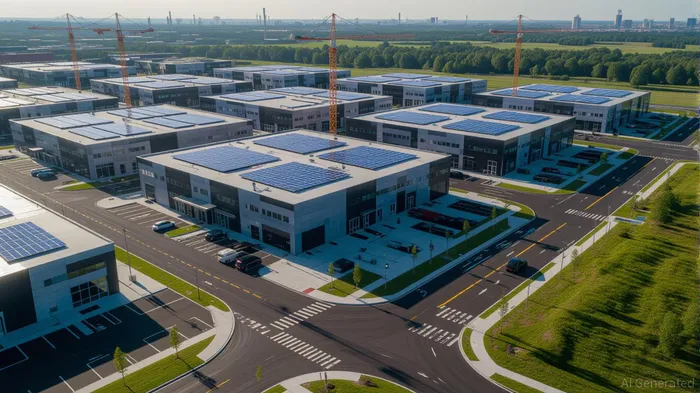
The FAST NY grant is funding critical upgrades to Webster's industrial corridor, including roadway realignment, sanitary sewer system enhancements, and electrical master planning near the former Xerox Wilson Campus according to project documents. These improvements are turning a historically underdeveloped brownfield into a "shovel-ready" site, a term used to describe properties fully prepared for immediate construction. By 2025, nearly one million square feet of industrial space is expected to be available, with full site readiness projected by 2026 according to development timelines. Such readiness is a key factor for manufacturers and logistics firms seeking to minimize development timelines and costs-a critical advantage in a post-pandemic economy where supply chain resilience is paramount.
The project aligns with the 2024 Reimagine Webster Brownfield Opportunity Area (BOA) Nomination Study, which identified the site's potential to attract high-tech industries and advanced manufacturing according to the study. By addressing infrastructure gaps, Webster is positioning itself as a competitive alternative to larger metropolitan hubs, leveraging its strategic location near I-390 and the Rochester International Airport according to transportation analysis.
Economic Impact: Jobs, Property Values, and Investor Confidence
 The economic benefits of the FAST NY grant are already materializing. According to a report by the Webster Economic Development Alliance (WEDA), residential property values in the town have surged by 10.1% year-over-year, a direct reflection of the area's improving industrial and commercial prospects according to WEDA data. This growth is further amplified by major private-sector investments, such as the $650 million fairlife® dairy facility, which is projected to create 250 new jobs by 2025 according to investment projections.
While the transition period has seen temporary challenges-such as a 2.32% dip in employment in 2023 due to brownfield redevelopment-the long-term trajectory is upward. Median household income in Webster has risen by 4.31% since 2020, driven by high-paying jobs in advanced manufacturing and logistics according to economic data. These trends highlight the grant's role in fostering a diversified, resilient local economy.
Investor confidence is further bolstered by Webster's proactive approach to environmental and infrastructure coordination. The town's synchronized schedule for completing infrastructure projects by 2025 reduces uncertainty for developers, ensuring that sites are ready for immediate occupancy according to project planning. This alignment with corporate timelines is a rare advantage in real estate development, where delays often deter investment.
Strategic Location and Broader Statewide Implications
Webster's proximity to major transportation corridors positions it as a logistics and manufacturing nexus. The town's infrastructure upgrades are designed to support energy-intensive industries, a need underscored by New York's $300 million POWER UP initiative, which ensures industrial sites have reliable power infrastructure according to state planning. This focus on energy reliability is particularly appealing to companies in e-commerce and renewable energy sectors, which require robust and scalable infrastructure.
The success of Webster's FAST NY project also reflects a statewide trend. Governor Hochul's $400 million FAST NY program has allocated over $175 million to 20 sites across New York, with plans to expand funding by an additional $100 million in the FY2025 budget according to state budget documents. These investments are part of a broader strategy to prepare industrial sites for the next generation of manufacturing, logistics, and technology firms.
Challenges and the Path Forward
Despite its promise, the project is not without hurdles. The 2023 employment dip illustrates the short-term disruptions inherent in brownfield redevelopment. However, these challenges are outweighed by the long-term gains, as evidenced by Webster's rising income levels and industrial output. The town's commitment to environmental sustainability-such as a $20 million wastewater treatment upgrade-also mitigates regulatory risks for developers according to environmental plans.
Looking ahead, the synchronized completion of infrastructure by 2025 presents a unique window for investors. Developers and manufacturers seeking to capitalize on Webster's strategic advantages must act swiftly, as the town's "shovel-ready" sites will likely attract significant competition once fully operational.
Conclusion: A Model for Future-Proofing Real Estate
Webster, NY, offers a compelling case study in how municipal infrastructure development can drive commercial real estate value growth and industrial investment. By transforming a brownfield into a modern industrial hub, the FAST NY grant is not only addressing immediate economic needs but also future-proofing the region against shifting market demands. For investors, the lessons from Webster are clear: strategic infrastructure spending, when aligned with private-sector needs and environmental sustainability, can unlock decades of value. As the town moves toward full site readiness in 2026, its success will likely inspire similar initiatives across the state and beyond.

Blending traditional trading wisdom with cutting-edge cryptocurrency insights.
Latest Articles
Stay ahead of the market.
Get curated U.S. market news, insights and key dates delivered to your inbox.


AInvest
PRO
AInvest
PRO



Comments
No comments yet