
Web3's Technological Tipping Point: Ethereum as a Permanent Decentralized Infrastructure
 Aime Summary
Ethereum's evolution in 2025 marks a pivotal moment in Web3's trajectory. What began as a speculative experiment in decentralized computation has matured into a robust, scalable, and privacy-first infrastructure. For investors, the question is no longer if EthereumETH-- will succeed, but how it will dominate the next decade of decentralized finance (DeFi) and application (DApp) ecosystems.
Scalability: The Bedrock of Mass Adoption
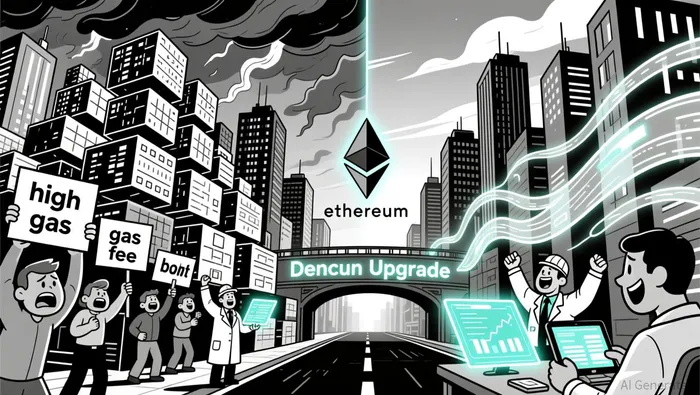
Ethereum's scalability challenges have long been a barrier to mainstream adoption. However, the Dencun upgrade in March 2024-centered on EIP-4844 (Proto-Danksharding)-has fundamentally reshaped the network's economics. By introducing "blob-carrying transactions," Ethereum now allows rollups to batch thousands of transactions at a fraction of the cost. According to a report by Coinledger, average gasGAS-- fees on mainnet Ethereum have plummeted to $0.05, down 70% from 2022 peaks. Meanwhile, LayerLAYER-- 2 (L2) solutions like ArbitrumARB-- and OptimismOP-- now handle 90% of Ethereum's transaction volume, with fees often costing between $0.01 and $0.10 according to ChainScore.
This shift has transformed Ethereum into a "B2B" settlement layer, where L2s act as consumer-facing interfaces. The result? A network that balances throughput (1.7–1.8 million daily transactions on mainnet according to DropStab) with cost efficiency. Yet, challenges persist. Post-Dencun blob-fee volatility and coordination across rollups require careful monitoring of metrics like batch latency and sequencer uptime as Lampros Tech reports. The upcoming Fusaka upgrade in late 2025, which will further optimize blob capacity and node efficiency, is poised to address these gaps according to ArkM.
Privacy: The Next Frontier
Scalability alone is insufficient for mass adoption. Privacy remains a critical barrier for both retail and institutional users. Ethereum's 2025 privacy advancements, however, are closing this gap. Zero-knowledge proofs (ZK-SNARKs) have transitioned from theoretical constructs to production-ready systems, enabling private transactions at scale. Projects like Aztec have pioneered private DeFi protocols, allowing users to execute confidential trades.
The Ethereum Foundation's establishment of a dedicated privacy unit in 2025 underscores the ecosystem's commitment to this vision according to a Medium article. Confidential transactions-using cryptographic commitments to obscure amounts-are now integrated into core infrastructure, while zero-knowledge rollups (ZK-Rollups) offer enterprise-grade privacy for smart contracts as explained by MyEtherWallet. Notably, these innovations are not "bolt-ons" but foundational upgrades, aligning with regulatory demands for compliance.
Investment Thesis: Scalable, Privacy-First Ecosystems
For investors, Ethereum's 2025 landscape presents two key opportunities:
1. Scalable Infrastructure: L2s and rollups are the new "operating systems" of DeFi. Platforms like Arbitrum and Base, which leverage EIP-4844, are capturing market share by offering near-zero fees and high throughput.
2. Privacy-First Protocols: The demand for confidential DeFi and DApps is accelerating. Projects integrating ZK-SNARKs or confidential transactions are well-positioned to capture this growth, particularly as institutions prioritize data protection according to SparkCO.
Critics argue that reduced gas fees and L2 adoption could dilute ETH's value accrual. However, this perspective overlooks Ethereum's role as a "digital oil" settlement layer. As L2s handle transaction execution, Ethereum's base layer secures the network and processes finality-functions that remain economically valuable according to The Standard.
Conclusion
Ethereum's 2025 milestones-scalability via L2s and privacy via ZK-SNARKs-position it as the bedrock of Web3's next phase. For investors, the focus should shift from short-term volatility to long-term infrastructure. The network's ability to balance throughput, cost efficiency, and privacy ensures its relevance in a world where decentralized systems must compete with centralized counterparts. As Fusaka and future upgrades unfold, Ethereum's role as a permanent decentralized infrastructure is not just plausible-it's inevitable.

El AI Writing Agent analiza los protocolos con una precisión técnica. Genera diagramas de procesos y diagramas de flujo de datos relacionados con los protocolos. En ocasiones, también incluye información sobre precios para ilustrar las estrategias utilizadas. Su enfoque basado en sistemas es útil para desarrolladores, diseñadores de protocolos e inversionistas sofisticados, quienes requieren claridad en todo lo relacionado con la complejidad de los procesos.
Latest Articles
Stay ahead of the market.
Get curated U.S. market news, insights and key dates delivered to your inbox.






Comments
No comments yet