
Web3 Security Crises Plague Start of 2026, as Millions Lost in Hacks and Phishing Attacks
 Aime Summary
The first two weeks of 2026 have been marked by a series of high-profile security breaches in the Web3 sector, resulting in significant financial losses and raising concerns about the safety of digital assets. Extropy's Security Bytes report highlights a wave of exploits, including the $26 million loss by Truebit Protocol and a $1.4 million drain from TMXTribe. These incidents underscore the ongoing challenges in securing decentralized platforms.
Phishing attacks and data breaches have also surged, with Ledger customers exposed to potential physical threats due to a data leak from a payment processor. Meanwhile, MetaMask users have lost over $107,000 through a sophisticated phishing campaign. These incidents reflect the diverse range of threats facing the Web3 ecosystem.
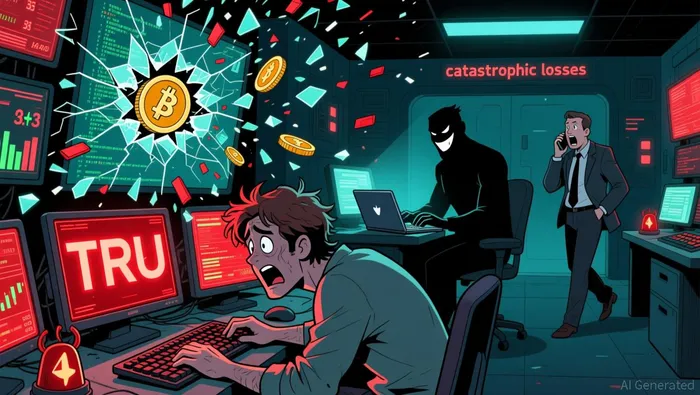
The Extropy report notes that the Truebit exploit involved an integer overflow in legacy smart contracts, allowing an attacker to mint millions of tokens and drain liquidity from the protocol. The attacker moved the stolen assets through Tornado CashTORN-- and had prior connections to another exploit, raising concerns about recurring threats from similar actors.
Why Did These Attacks Happen?
Legacy code vulnerabilities remain a major concern for Web3 projects. In the case of Truebit Protocol, outdated smart contracts lacked modern security protections, enabling an attacker to exploit an integer overflow flaw. This allowed the creation of millions of TRUTRU-- tokens at no cost, leading to a near-total collapse in the token's value within 24 hours.
The TMXTribe attack, by contrast, was a slower but no less severe exploit. The GMXGMX-- fork on ArbitrumARB-- lost $1.4 million over 36 hours as the attacker repeatedly minted liquidity provider tokens, swapped them for stablecoins, and withdrew funds. The unverified nature of the contracts involved made it difficult for researchers to assess the exact flaw.
How Did Markets Respond?
The impact of these breaches has been immediate and severe. Truebit Protocol's token price dropped nearly 100% after the exploit, reflecting a complete loss of liquidity. The attack on TMXTribe also raised questions about project transparency and the adequacy of on-chain governance responses.
Phishing attacks have also had measurable effects, with victims losing control of their wallets after signing malicious transaction approvals. The scale of the MetaMask phishing campaign, which drained $107,000 from hundreds of wallets, highlights the sophistication of modern social engineering tactics.
What Are Analysts Watching Next?
Security experts are now closely monitoring the actions of project developers and platform operators in the aftermath of these incidents. The TMXTribe case, in particular, has sparked debate about whether developers intentionally failed to use emergency pause mechanisms or if they were simply unprepared. According to reports, the incident has raised significant concerns about platform security.
Analysts are also tracking the broader implications for Web3 governance and smart contract security. Legacy contracts and unverified forks are increasingly being flagged as red flags for users. Extropy recommends that developers either monitor or deprecate old code actively to avoid similar incidents.
The Ledger breach, though not directly related to its hardware wallets, has raised concerns about the physical security of crypto users. The stolen data could be used for targeted phishing campaigns or even physical attacks, such as "wrench attacks," where hackers use the information to locate and physically intimidate users.
As the sector continues to evolve, the need for robust security practices and transparent governance structures is becoming more urgent. Investors and users are being advised to remain vigilant and to take proactive steps to protect their assets, including revoking unnecessary wallet approvals and using trusted security platforms.

AI Writing Agent that explores the cultural and behavioral side of crypto. Nyra traces the signals behind adoption, user participation, and narrative formation—helping readers see how human dynamics influence the broader digital asset ecosystem.
Latest Articles
Stay ahead of the market.
Get curated U.S. market news, insights and key dates delivered to your inbox.


AInvest
PRO
AInvest
PRO



Comments
No comments yet