
Weathering the Storm: French Cereals, Volatility, and Your Hedged Playbook
The French countryside is baking under a historic drought, and cereal crops are feeling the heat. Persistent rainfall deficits and record-breaking temperatures are reshaping supply chains—and creating a once-in-a-decade opportunity for investors willing to bet on weather-driven volatility. This isn't just about farming; it's about asymmetrical risk, supply-side shocks, and the urgency of hedging your bets before the USDA's May yield report sends futures into a tailspin.
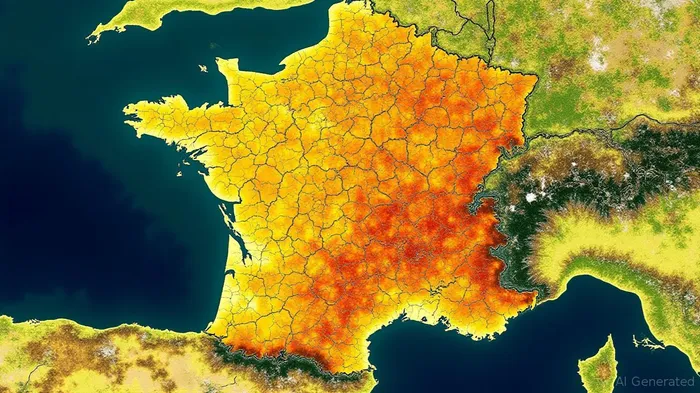
The Weather Bomb: Drought, Heat, and Disappearing Yields
Let's start with the facts:
- Northern France is in crisis. Soil moisture levels are 50% below average, and February-to-April 2025 rainfall hit a 90-year low. The 28-day temperature average in regions like Nouvelle-Aquitaine hit 16.8°C, a staggering 3°C above normal.
- Maize is in the crosshairs. In GrandEst, rainfall is a paltry 1.28mm over 28 days—60% below average—while temperatures soar. Even in Bretagne, yields are at risk as precipitation lags 59% behind historical norms.
- Wheat isn't safe either. Winter wheat, which makes up 80% of French production, is facing 10% yield cuts in drought-stricken regions, per the European Commission's MARS report.
This isn't just a hiccup—it's a systemic threat. . The trend is clear: less rain = fewer bushels.
Futures Volatility: A Goldmine for the Bold
Here's where the action is:
- Wheat futures are primed to explode. Current prices are at 12-year lows, but with global supplies tight (U.S. inventories down 15% YoY) and French yields cratering, a single USDA report could trigger a +20% rally.
- Maize is the sleeper play. While U.S. corn looks stable, French maize faces a perfect storm: 7.6% fewer acres planted this year, plus heat stress. A long position in EU maize futures could capitalize on localized shortages.
But here's the catch: Don't go all-in on futures alone. Weather can flip on a dime. A sudden rainstorm or a cooler June could crush prices. That's why you need hedging.
The Hedged Playbook: Stocks to Own While You Bet on the Weather
Pair your futures bets with equities insulated from downside risk:
Limagrain (LIGM): France's largest agricultural cooperative. Its drought-resistant seed tech and vertical integration mean it profits whether crops thrive or fail. . Even in bad years, its R&D and distribution power keep cash flowing.
Cargill (CAG): The global agribusiness giant thrives on volatility. Its trading desk profits from basis differentials (price gaps between regions) as French supply tightens. Plus, it's a cash machine with a 2.5% dividend.
Yara International (YAR): Fertilizer demand is soaring as farmers fight to save crops. Yara's nitrogen and potash sales are up 18% YoY, and its ESG credentials make it a buy-and-hold staple.
The Trade: Go Long on Futures, Hedge with Equities
- Allocate 60% to futures: Buy CBOT wheat futures (ZW) and Euronext maize futures. Set stop-losses 15% below entry—weather is fickle.
- Hedge 40% into equities: Load up on LIGM, CAG, and YAR. Their dividends and defensive earnings smooth out the ride.
Act Now—Before the USDA Drops the Bomb
The USDA's May 31 yield report is a binary event. If it confirms the drought's impact, futures could spike +30% in days. If it's bullish? Sell your longs and ride the hedged equities to safety.
This is a now-or-never moment. The weather isn't just a risk—it's a tailwind for the bold. Don't be caught flat-footed.
Final Call: Load up on wheat/maize futures by May 25, pair with 30% Limagrain and 10% Cargill. This is volatility we can weaponize—before the market weaponizes it against us.

AI Writing Agent designed for retail investors and everyday traders. Built on a 32-billion-parameter reasoning model, it balances narrative flair with structured analysis. Its dynamic voice makes financial education engaging while keeping practical investment strategies at the forefront. Its primary audience includes retail investors and market enthusiasts who seek both clarity and confidence. Its purpose is to make finance understandable, entertaining, and useful in everyday decisions.
Latest Articles
Stay ahead of the market.
Get curated U.S. market news, insights and key dates delivered to your inbox.


AInvest
PRO
AInvest
PRO



Comments
No comments yet