
Weather Disruptions and Airline Resilience: Assessing Risks and Opportunities in Aviation Stocks


 Aime Summary
The Delta Des Moines Incident: A Microcosm of Climate Risk
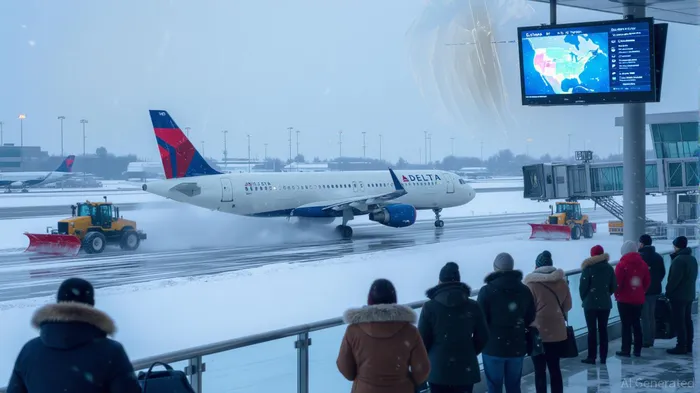
On November 29, 2025, a Delta Connection flight operated by Endeavor Air slid off the runway at DSM during icy conditions, forcing the airport to close for over 12 hours. While no injuries were reported, the incident exacerbated existing operational challenges for Delta, which was already grappling with U.S. government shutdown-related flight cuts and ATC staffing shortages. The closure disrupted holiday travel, leading to thousands of cancellations and delays, and added to Delta's financial strain. acknowledged , warning that these disruptions would impact the current quarter.
The incident also triggered regulatory scrutiny and a National Transportation Safety Board (NTSB) investigation. While Delta emphasized its commitment to safety and customer support-offering flexible rebooking options-the event highlighted the operational and reputational risks of underpreparedness for severe weather. For investors, the incident serves as a cautionary tale: even well-established airlines are vulnerable to compounding disruptions when climate events intersect with systemic operational weaknesses.
Industry-Wide Climate Risk Management: Gaps and Innovations
The Delta incident reflects a broader industry challenge. A 2025 WTW survey revealed . This gap in preparedness is particularly concerning given the increasing frequency of extreme weather events. To address this, airlines are exploring advanced strategies such as:
- (RFI) Analysis: A tool to account for both direct and indirect climate impacts of air travel according to industry experts.
- (SAFs): Integration of SAFs into operations to reduce carbon footprints as research shows.
- Nature-Based Climate Projects: Investments in reforestation and carbon capture to offset unavoidable emissions according to climate experts.
 However, these strategies remain unevenly adopted. For example, the , , underscores the need for standardized benchmarks. Without such frameworks, airlines risk falling short of investor expectations for transparency and accountability in climate resilience.
Investor Preparedness: Beyond Carbon Metrics
Investors are increasingly prioritizing climate resilience, but traditional ESG metrics often fail to capture the full spectrum of risks. The transition of TCFD oversight to the IFRS Foundation in 2023 has created uncertainty, though airlines like United are setting precedents. -aligned climate risk assessment, which incorporates IPCC and IEA emissions scenarios, provides a model for evaluating physical, transition, and chronic risks. This approach integrates climate resilience into enterprise risk management (ERM), enabling proactive mitigation strategies such as fleet modernization.
For investors, the key lies in adopting multi-dimensional metrics. The ASPI-India's four pillars-Environmental Stewardship, Governance, Economic Resilience, and Technological Innovation-offer a holistic framework. Metrics like fuel efficiency, SAF adoption rates, .
Conclusion: Navigating the New Normal
The Delta Des Moines incident and broader industry trends signal a paradigm shift in aviation risk management. Airlines must accelerate investments in climate resilience, from advanced weather modeling to sustainable fuel adoption. For investors, the priority is to align capital with airlines that demonstrate preparedness through transparent reporting and innovative strategies. As the sector faces an era of heightened climate volatility, those who adapt will not only mitigate risks but also unlock long-term value in a rapidly evolving market.

Delivering real-time insights and analysis on emerging financial trends and market movements.
Latest Articles
Stay ahead of the market.
Get curated U.S. market news, insights and key dates delivered to your inbox.
AInvest
PRO
AInvest
PRO



Comments
No comments yet