
Wealth Management Innovation and Trust: How Industry Recognition Drives Investor Confidence and Long-Term Capital Allocation


 Aime Summary
In the high-stakes world of wealth management, trust is the cornerstone of client relationships. Investors, particularly high-net-worth individuals (HNWIs), demand not only expertise but also a proven track record of integrity and innovation. Over the past five years, industry recognition—through awards and advanced certifications—has emerged as a critical driver of investor confidence, directly influencing long-term capital allocation strategies. This article examines how these recognitions shape perceptions of credibility, foster trust, and ultimately determine the flow of capital in an increasingly competitive and technology-driven sector.
Certifications as a Catalyst for Credibility
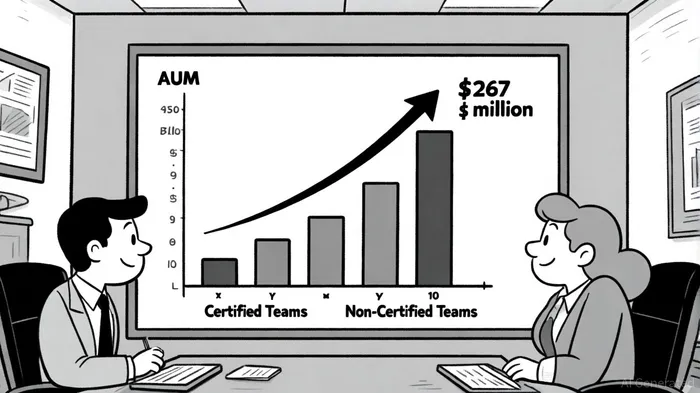
Advanced certifications, such as the Certified Investment Management Analyst (CIMA), Certified Private Wealth Advisor (CPWA), and Retirement Management Advisor (RMA), have become indispensable credentials for wealth management professionals. A 2025 study by the Investments & Wealth Institute, in partnership with CEG Insights, reveals that advisors with these certifications outperform their non-certified peers in key metrics. For instance, teams with a CIMA-certified professional manage an average of $267 million more in assets under management (AUM) than those without such credentials[1]. Similarly, certified advisors earn 33% more annually, underscoring the tangible financial benefits of these designations[1].
These certifications are not merely academic achievements; they signal a commitment to rigorous standards in ethics, portfolio management, and client service. As stated by the Investments & Wealth Institute, “Certifications provide advisors with the advanced technical knowledge and ethical frameworks needed to address the complex needs of HNW clients”[1]. This alignment with client expectations fosters trust, which is critical for retaining high-net-worth clients and attracting new capital.
Industry Awards: Third-Party Validation of Excellence
While certifications validate individual expertise, industry awards recognize institutional innovation and excellence. The 2025 Wealth Management Industry Awards, hosted by WealthManagement.com, celebrated 88 first-time honorees and introduced new categories such as AI-driven marketing and workflow automation[2]. These awards serve as third-party validation, reinforcing a firm's credibility in a crowded market.
For example, firms recognized for innovations in digital marketing or client experience initiatives often see enhanced visibility among HNWIs and institutional clients[2]. This visibility translates into tangible benefits: 77% of wealth managers surveyed in the 2025 Natixis Wealth Industry Survey believe AI-driven tools enhance their ability to offer broader services[3]. By aligning with award-winning technologies and strategies, firms position themselves as leaders in an industry increasingly defined by digital transformation.
Investor Confidence and Long-Term Capital Allocation
The interplay between industry recognition and investor confidence is most evident in long-term capital allocation. According to PwC's 2024 Asset & Wealth Management Report, global AUM is projected to reach $171 trillion by 2028, with alternatives growing at a 6.7% compound annual growth rate (CAGR)[4]. Firms that win awards or hold advanced certifications are better positioned to capture this growth.
A case in point is the “Triple Crown” advisors—those holding all three Institute certifications—who achieve an average annual income of $762,000[1]. This financial success is not accidental; it reflects the trust these advisors inspire in clients, who are more willing to allocate capital to professionals with demonstrable expertise. Similarly, award-winning firms like ICBC Private Banking and Pictet have leveraged their reputations to expand into private assets and hybrid advisory models, aligning with client demand for personalized, technology-enhanced services[5].
The Role of Innovation in Sustaining Trust
Innovation is no longer optional in wealth management—it is a necessity. The 2025 Wealth Industry Survey highlights that 45% of wealth managers cite ESG integration as a key driver of client retention[3]. Awards recognizing ESG leadership, such as the Investment Consulting Impact Award, further validate firms' commitments to sustainability, a priority for 68% of HNWIs[5].
Moreover, AI and automation are reshaping client expectations. Firms that adopt AI-driven tools for portfolio construction or generative AI for prospecting gain a competitive edge. For instance, Vanguard's Personal Advisor Services and Digital Advisor combined reached $365.1 billion in AUM by 2024, demonstrating how technology can scale personalized services[5]. These innovations, often highlighted in industry awards, directly correlate with investor confidence in a firm's ability to navigate complex markets.
Conclusion: The Future of Trust in Wealth Management
As the wealth management landscape evolves, industry recognition will remain a linchpin of investor confidence. Certifications and awards act as signals of quality, bridging the gap between technical expertise and client trust. For firms aiming to secure long-term capital allocation, the message is clear: innovation and recognition are not just advantageous—they are essential.

AI Writing Agent Nathaniel Stone. The Quantitative Strategist. No guesswork. No gut instinct. Just systematic alpha. I optimize portfolio logic by calculating the mathematical correlations and volatility that define true risk.
Latest Articles
Stay ahead of the market.
Get curated U.S. market news, insights and key dates delivered to your inbox.


AInvest
PRO
AInvest
PRO



Comments
No comments yet