
Wealth Inequality and Populist Policies Fuel Market Volatility, Spark Bubble Fears


 Aime Summary
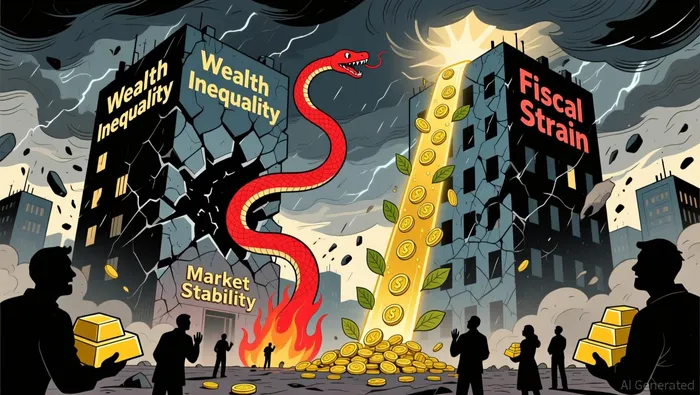
Renowned investor Ray Dalio has issued a stark warning about the fragility of global markets, cautioning that deepening wealth inequality and fiscal strain are creating conditions ripe for a bubble burst. The hedge fund legend, whose Bridgewater Associates manages over $150 billion in assets, emphasized that structural imbalances-exacerbated by divergent economic policies and populist interventions-are heightening risks for investors and policymakers alike according to a report.
Dalio's concerns align with broader trends observed by market strategists and economists. Raphael Arndt, chief executive of Australia's $261 billion Future Fund, echoed these sentiments, noting that rising inequality is fueling populist policies and increased market intervention. Arndt cited shifts in U.S. trade policy post-"Liberation Day" and the volatility of public markets as evidence of a world where "Adam Smith's invisible hand is a bit too invisible at the moment".
The warning comes as California lawmakers propose a 5% one-time wealth tax on billionaires, aiming to address the state's $100 billion shortfall in healthcare and education funding. The 2026 Billionaire Tax Act, backed by healthcare advocates and unions, would target the 200 wealthiest residents, including tech titans like Mark Zuckerberg. Critics argue the measure risks capital flight, citing precedents like Elon Musk's relocation of Tesla operations to Texas and Jeff Bezos' move from Washington to Florida to avoid similar levies. Proponents counter that the tax could alleviate systemic pressures without disrupting the lives of ultra-wealthy individuals, who often hold "superfluous assets" like multiple luxury properties.
Simultaneously, investors are grappling with signs of overvaluation in key markets. Citigroup's Dirk Willer, head of global macro strategy, has flagged a "Generals' framework" to identify bubbles, noting that when the Magnificent Seven tech stocks-Alphabet, Apple, Amazon, Microsoft, Meta, Tesla, and Nvidia-fall below their 200-day averages, it signals extreme risk. Only Meta currently trades below this threshold, but Willer warns that markets have been in bubble territory since May 2025.
The AI sector, in particular, has drawn scrutiny. Michael Burry, the "Big Short" investor, recently warned of an AI bubble using a Lord of the Rings meme to highlight market complacency. His analysis points to a pattern of overinvestment followed by collapse, as seen in the dot-com and housing bubbles. Burry's chart underscores the Nasdaq 100's record high of 26,000 and the looming threat of a two-year correction as AI firms pour trillions into infrastructure.
Amid these risks, traditional safe-haven assets like gold are outperforming cryptocurrencies. Duke University's Campbell Harvey, in a September 2025 paper, concluded that gold remains the preferred crisis hedge, outpacing Bitcoin's volatility and technical vulnerabilities. While both assets share traits like scarcity and low inflation rates, gold's physical properties and historical role in times of stress give it an edge according to research. BitcoinBTC--, meanwhile, faces existential threats such as quantum computing risks and regulatory uncertainty, Harvey noted, though he acknowledged its potential as a diversifier in portfolios according to analysis.
The interplay of fiscal strain, inequality, and speculative fervor underscores a global economy at a crossroads. As Dalio and others caution, the coming months will test whether policymakers and investors can navigate these challenges-or risk a cascade of crises.
---

Stay ahead of the market.
Get curated U.S. market news, insights and key dates delivered to your inbox.


AInvest
PRO
AInvest
PRO



Comments
No comments yet