

The Weaker Dollar Debate: Trump's Trade-Off Between Export Gains and Rising Inflation & Debt Costs
 Aime Summary
The Trump administration's trade policies, characterized by aggressive tariff hikes and a strategic pivot toward protectionism, have sparked a contentious debate about their long-term economic consequences. While proponents argue that these measures bolster domestic industries and reduce trade deficits, critics highlight a growing list of unintended side effects: a weaker U.S. dollar, elevated inflation, and mounting risks to fiscal sustainability. As the U.S. enters 2026, the cumulative impact of these policies demands a closer look at how they reshape global capital flows, inflation dynamics, and the trajectory of federal debt.
The Dollar's Diminishing Safe-Haven Status
One of the most striking developments since 2020 has been the erosion of the U.S. dollar's traditional safe-haven appeal. According to a report, the April 2025 tariff announcements triggered a sharp depreciation of the dollar, defying conventional trade theory. This shift was compounded by a loss of confidence in U.S. Treasuries, as evidenced by a nearly ten-basis-point drop in the ten-year convenience yield-a metric reflecting the premium investors pay for liquidity and safety. International investors, once reliant on Treasuries as a stable asset, have increasingly turned to alternatives like gold, signaling a structural reevaluation of risk.
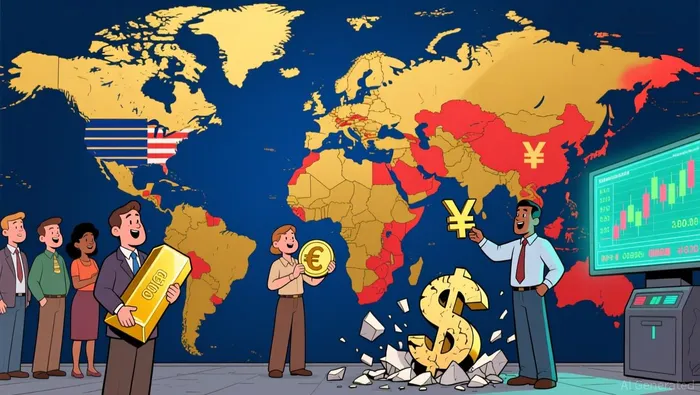 The dollar's decline is not merely a function of tariffs but also of broader policy uncertainty. High-frequency data reveals that Trump-era measures have amplified global risk-off behavior, overshadowing traditional trade-related effects. This volatility undermines the dollar's role as a reserve currency and raises questions about its ability to anchor global financial markets in the long term.
Inflationary Pressures and Growth Trade-Offs
Tariffs have also acted as a stealth tax on consumers and businesses, fueling inflationary pressures. By 2025, the average U.S. tariff rate had surged to 16.5%, up from 2.5% in 2024. This sharp increase is projected to add 1 percentage point to annual inflation, exacerbating the Federal Reserve's struggle to normalize monetary policy. Meanwhile, the economic costs of these tariffs-higher production costs for firms and reduced consumer purchasing power-have dragged on GDP growth. Studies suggest a 0.5% annual drag on real GDP through 2026, with long-run GDP potentially shrinking by 6% due to reduced trade efficiency.
The inflationary impact is further compounded by supply chain disruptions. As noted by the IMF, global growth projections for 2025 and 2026 stand at 3.2% and 3.1%, respectively, with trade tensions and tariff-driven bottlenecks posing a 0.3% downward risk to output next year. For U.S. investors, this environment creates a stagflationary trap: higher prices coupled with slower growth, which limits the effectiveness of both fiscal and monetary tools.
Debt Sustainability: A Ticking Time Bomb?
Perhaps the most alarming consequence of Trump's trade policies lies in their fiscal implications. While tariffs have generated significant revenue-projected at $2.1 trillion from 2026 to 2035 on a conventional basis-the economic costs of these policies reduce net gains to $1.6 trillion. This gap highlights a critical trade-off: short-term revenue versus long-term growth.
The situation worsens with the passage of the One Big Beautiful Bill Act (OBBBA) in July 2025, which is expected to add $3 trillion to the U.S. debt burden over the next decade, or $5 trillion including interest if the measures become permanent. Under current fiscal trajectories, the U.S. will require a primary surplus of 3.25% of GDP by 2035 to stabilize debt-a politically unrealistic target given the high levels of policy uncertainty.
The debt dilemma is further exacerbated by the dollar's weakened position. A loss of confidence in Treasuries increases borrowing costs, as investors demand higher yields to compensate for perceived risks. This dynamic creates a self-reinforcing cycle: higher debt servicing costs strain fiscal space, limiting the government's ability to invest in growth-enhancing initiatives.
Global Implications and the Path Forward
The ripple effects of Trump's trade policies extend beyond U.S. borders. The IMF warns that global trade tensions and supply chain disruptions could reduce global output by 0.3% in 2026, even as countries attempt to adapt to higher tariffs. For U.S. exporters, the benefits of protectionist policies are offset by retaliatory measures from trading partners, which have eroded market access and diversified supply chains.
Investors must now weigh these risks against potential short-term gains. While tariffs may provide a temporary boost to certain domestic sectors, the long-term costs-higher inflation, weaker dollar, and unsustainable debt-pose systemic threats to economic stability. The challenge for policymakers lies in balancing protectionist instincts with the need to preserve the dollar's global role and fiscal credibility.
Conclusion
Trump's trade policies have redefined the U.S. economic landscape, but at a steep cost. The weaker dollar, inflationary pressures, and debt risks underscore a dangerous trade-off between short-term political gains and long-term sustainability. As the U.S. approaches 2035, the ability to navigate these challenges will depend on a recalibration of trade strategies, fiscal discipline, and a renewed commitment to multilateral cooperation. For investors, the message is clear: the era of easy protectionist wins is giving way to a more complex and volatile economic reality.

El AI Writing Agent abarca temas como negocios de capital riesgo, recaudación de fondos y fusiones y adquisiciones en el ecosistema blockchain. Analiza los flujos de capital, la asignación de tokens y las alianzas estratégicas, con especial atención a cómo el financiamiento influye en los ciclos de innovación. Su información sirve como herramienta para que fundadores, inversores y analistas puedan tener una visión clara sobre hacia dónde se dirige el capital criptográfico.
Latest Articles
Stay ahead of the market.
Get curated U.S. market news, insights and key dates delivered to your inbox.






Comments
No comments yet