
Weak Housing Market Boosts Construction, Hurts Retail
 Aime Summary
The U.S. housing market has entered a period of prolonged weakness, with existing home sales remaining below pre-pandemic levels despite modest gains in early 2026. February 2026 data showed an annualized rate of 4,090 thousand units, a 1.7% increase from January but still far from the 7,250 thousand units peak in 2005. This stagnation, coupled with a 3.8-month inventory supply and rising mortgage rates (6.86% in early 2025), has created a unique opportunity for investors to reassess sector allocations. Historically, such periods of housing market underperformance have favored the Construction and Engineering sector while pressuring Consumer Staples Distribution and Retail. Understanding this dynamic is critical for tactical positioning in a market where sector rotation can amplify returns.
The Housing Market's Structural Weakness and Sector Implications
Existing home sales have been a bellwether for broader economic health, but their decline since 2020 has exposed deeper imbalances. While affordability has improved slightly (median sales price rose 0.3% to $398,000 in February 2026), demand remains subdued. This is partly due to demographic shifts: millennials, who delayed homeownership during the pandemic, are only now beginning to enter the market, but inventory shortages and regulatory hurdles have constrained supply.
For the Construction and Engineering sector, this environment has created a paradox. On one hand, high material costs (exacerbated by tariffs on lumber and steel) and labor shortages have squeezed margins. On the other, the sector is benefiting from a shift in demand toward new construction. As existing homes remain off-limits due to affordability and inventory issues, buyers are increasingly turning to new builds. This has driven activity in residential and commercial construction, with REITs and engineering firms showing resilience. For example, companies specializing in modular housing and infrastructure projects have seen renewed interest as developers seek cost-effective solutions to meet pent-up demand.
Conversely, the Consumer Staples Distribution and Retail sector faces headwinds. With fewer home transactions, demand for home furnishings, appliances, and renovation services has softened. Retailers that rely on home-related purchases—such as furniture chains and home improvement stores—have seen sales stagnate. This inverse relationship between housing market weakness and consumer staples performance is well-documented, particularly during periods of prolonged stagnation.
Historical Patterns and Tactical Opportunities
To understand the strategic value of sector rotation, consider the interplay between existing home sales and sector performance. During the 2008–2012 housing slump, the Construction sector initially declined but later outperformed as the market bottomed and new construction picked up. Similarly, in 2020–2021, while existing home sales surged due to low rates, the sector's gains were short-lived as supply chain bottlenecks and labor shortages emerged. Today's environment, however, suggests a different trajectory: a prolonged period of weak existing sales could drive sustained demand for new construction, particularly in commercial and infrastructure projects.
Investors should consider overweighting the Construction and Engineering sector through ETFs like the SPDR S&P Construction and Engineering ETF (SPHY) or individual stocks in residential and commercial construction. Conversely, reducing exposure to Consumer Staples—via underweighting the Consumer Staples Select Sector SPDR Fund (XLP)—could mitigate downside risk.
Key Risks and Mitigation Strategies
While the case for Construction and Engineering is compelling, risks remain. Rising interest rates could further delay the housing market's recovery, and regulatory headwinds (e.g., zoning laws, environmental policies) may constrain new development. To mitigate these, investors should focus on subsectors with strong fundamentals, such as residential specialty trade contractors and infrastructure engineering firms, which are less sensitive to cyclical housing trends.
For Consumer Staples, the risk of prolonged underperformance is real, but defensive plays in essential goods (e.g., grocery retailers) may offer stability. Diversification across subsectors and a focus on companies with strong balance sheets can help navigate this uncertainty.
Conclusion: Positioning for a New Housing Cycle
The U.S. housing market is at a crossroads. While existing home sales remain weak, the Construction and Engineering sector is poised to benefit from a shift toward new development. By strategically rotating into this sector and reducing exposure to Consumer Staples, investors can capitalize on divergent market dynamics. As the Federal Reserve's policy trajectory and demographic trends evolve, staying attuned to these sector rotations will be key to navigating a complex economic landscape.
In a world where housing market weakness is the new normal, the Construction and Engineering sector offers a compelling case for long-term growth—and a stark contrast to the challenges facing Consumer Staples. For investors willing to act decisively, the rewards could be substantial.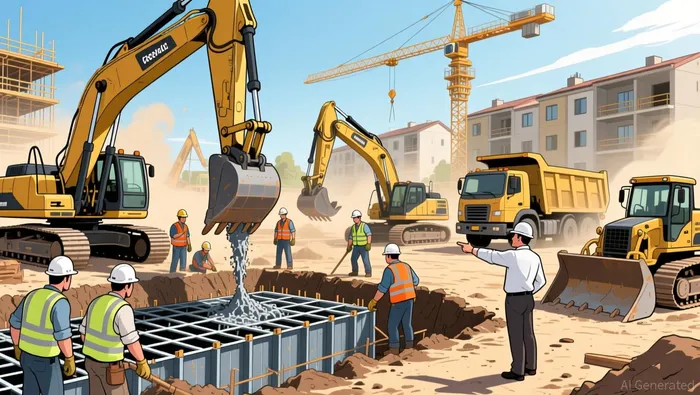

Stay ahead of the market.
Get curated U.S. market news, insights and key dates delivered to your inbox.


AInvest
PRO
AInvest
PRO



Comments
No comments yet