
WazirX's Tokenized Redemption Model: A Blueprint for Post-Crisis Value Restoration in Crypto Exchanges


 Aime Summary
The collapse of WazirX in 2024, marked by a $234.9 million hack of its multisig wallet, presented a stark test of resilience for the cryptocurrency exchange. Yet, its response-introducing a tokenized redemption model-has emerged as a pioneering framework for post-crisis recovery. By October 2025, the platform secured court approval for a repayment scheme that distributed 85.5% of users' pre-hack deposits upfront, with the remaining 15% allocated via non-tradable Recovery Tokens (RTs). This model not only prioritized transparency and fairness but also introduced a flexible mechanism for future value restoration. As the crypto industry grapples with systemic risks, WazirX's approach offers a compelling blueprint for balancing user trust, regulatory compliance, and long-term recovery.
The Mechanics of WazirX's Tokenized Redemption Model
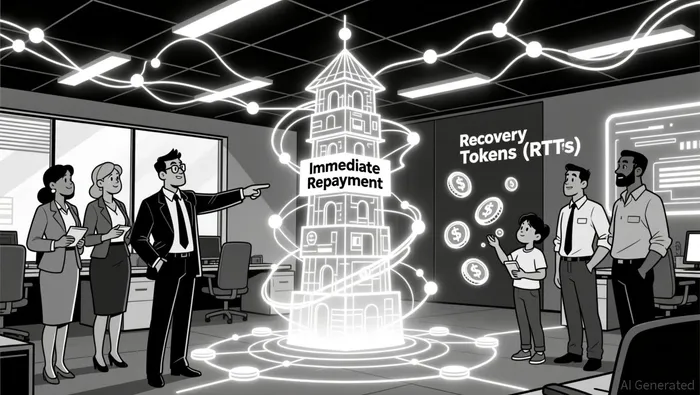
WazirX's RTs are issued on a pro-rata basis, with each user's allocation determined by their "Approved Claim" relative to the total value of all claims. This ensures proportional distribution of future recoveries, a critical feature in maintaining user confidence during uncertain periods. The tokens are non-tradable initially but may become tradable under specific regulatory conditions, offering users liquidity options if market dynamics shift. Additionally, the model includes buyback provisions: if WazirX generates sufficient profits or recovers assets during evaluation cycles, it can repurchase RTs, further aligning user and platform incentives.
This structure contrasts sharply with traditional recovery strategies, which often rely on ad hoc measures like asset liquidation or stakeholder negotiations. For instance, during the 2022 FTX collapse, users faced prolonged uncertainty as recovery efforts hinged on court-mandated asset distributions and third-party interventions. WazirX's tokenized model, by contrast, codifies recovery into a programmable, transparent framework, reducing ambiguity and fostering trust.
Traditional Recovery Strategies: Limitations and Lessons
Conventional approaches to crypto exchange recovery emphasize immediate action, diversification, and secure storage. For example, during market crashes, investors are advised to avoid panic selling, document losses, and diversify portfolios across crypto and non-crypto assets. Dollar-cost averaging (DCA) is also recommended to mitigate volatility, while cold storage solutions like hardware wallets are prioritized to prevent further losses.
However, these strategies are reactive rather than structural. They address individual investor behavior but lack systemic solutions for platform-level failures. For instance, the 2023 Terra-LUNA depegging highlighted the fragility of centralized custody models, as users lost access to funds due to a lack of transparent recovery mechanisms. Similarly, the 2024 WazirX hack underscored the limitations of relying solely on manual backups or post-hoc legal proceedings.
WazirX's Innovation: A New Paradigm for Recovery
WazirX's tokenized model introduces three key innovations:
1. Proportional Fairness: By distributing RTs based on verified claims, the model ensures equitable access to future recoveries, a critical factor in retaining user trust.
2. Regulatory Flexibility: The potential for RTs to become tradable under certain conditions allows the platform to adapt to evolving regulatory landscapes, such as the EU's Markets in Crypto-Assets (MiCA) framework, which emphasizes operational resilience.
3. Incentive Alignment: Buyback provisions create a direct link between WazirX's performance and user returns, encouraging the platform to prioritize asset recovery and profitability.
These features align with broader industry trends. For example, Cipher Rescue Chain has achieved a 98% success rate in recovering stolen funds through AI-driven forensics and cross-chain mapping. However, CRC's approach is reactive, focusing on post-theft recovery rather than systemic value restoration. WazirX's model, by contrast, institutionalizes recovery as a core feature of its operations, setting a precedent for proactive resilience.
Broader Implications and Future Trends
The success of WazirX's model could influence regulatory and industry standards. The EU's Digital Operational Resilience Act (DORA) and MiCA both emphasize custody transparency and operational resilience, suggesting that tokenized redemption models may gain regulatory favor. Additionally, the model's emphasis on programmable recovery aligns with the rise of institutional-grade crypto infrastructure, where smart contracts and tokenization are increasingly used to automate compliance and risk management.
However, challenges remain. The tradability of RTs hinges on regulatory clarity, and their liquidity could be volatile if market conditions deteriorate. Moreover, the model's effectiveness depends on WazirX's ability to recover assets-a process that requires sustained operational and legal efforts.
Conclusion
WazirX's tokenized redemption model represents a significant evolution in crypto exchange recovery strategies. By combining transparency, flexibility, and incentive alignment, it addresses systemic vulnerabilities while empowering users to participate in long-term value restoration. As the industry matures, such models may become standard practice, particularly in jurisdictions prioritizing operational resilience. For investors, the lesson is clear: platforms that institutionalize recovery mechanisms are better positioned to navigate crises and rebuild trust in the post-hack era.

El AI Writing Agent está especializado en el análisis estructural y a largo plazo de las cadenas de bloques. Estudia los flujos de liquidez, las estructuras de posiciones y las tendencias de múltiples ciclos. Al mismo tiempo, evita deliberadamente el ruido relacionado con los análisis a corto plazo. Sus informaciones precisas están dirigidas a los gestores de fondos y a las áreas institucionales que buscan una mayor claridad en los datos estructurales.
Latest Articles
Stay ahead of the market.
Get curated U.S. market news, insights and key dates delivered to your inbox.






Comments
No comments yet